Quick Answer: Aromatherapy and Raindrop Therapy are not the same service. Aromatherapy is a broad essential-oil wellness approach, while Raindrop Therapy is a more structured experience that may include topical oil application and light touch. The right choice depends on how you want to experience essential oils, your comfort with touch, and any sensitivities to discuss before the session.
At Dr. Barbara Samaroo. The Healing Corner, understanding the service format comes before choosing a service. Both options involve essential oils, but they are experienced differently. Someone looking for a scent-led experience without a defined hands-on format may prefer something different from someone considering Raindrop Therapy.
Aromatherapy and Raindrop Therapy at a Glance
When comparing aromatherapy and Raindrop Therapy, the main difference is scope and structure. Aromatherapy is the broader category. Raindrop Therapy is a specific essential-oil service format that may incorporate aromatic oils, topical application, and touch.
- Aromatherapy: A flexible wellness approach using aromatic plant oils. A session may emphasize scent, atmosphere, personal preferences, topical application, or a combination of these elements.
- Raindrop Therapy: A more defined essential-oil application experience that may involve topical oils and light touch, based on the practitioner’s process.
- Touch: Aromatherapy does not always involve touch. Raindrop Therapy generally has a more hands-on format.
- Decision point: Consider your comfort with scent, skin application, touch, and the level of structure you want from an appointment.
A common misunderstanding is assuming that Raindrop Therapy is simply another name for aromatherapy. It is not. Aromatherapy describes a broad approach, while Raindrop Therapy describes a more specific type of session. That difference affects what to expect before you arrive.
What Is Aromatherapy?
Aromatherapy Is a Broad Essential-Oil Wellness Approach
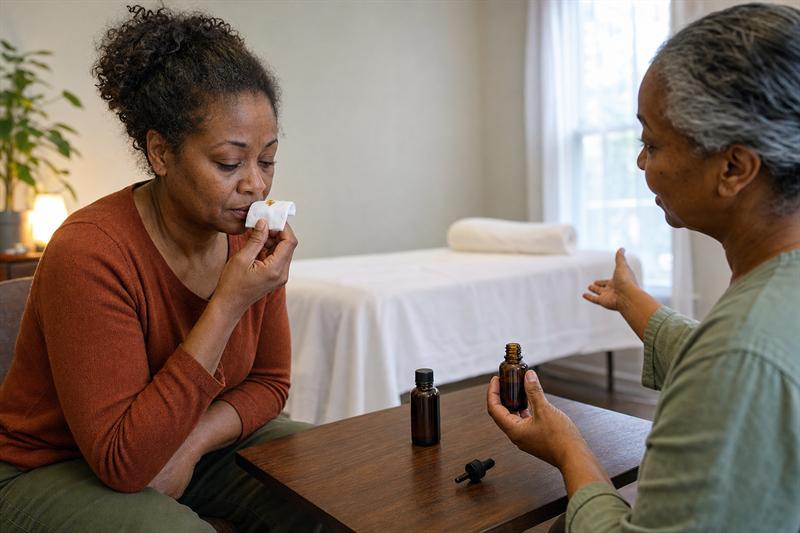
Aromatherapy uses aromatic plant oils in a wellness setting. Depending on the service format, the experience may center on scent, a calming environment, topical use of appropriately prepared oils, or a combination of these elements.
Its flexibility is one reason some people are drawn to aromatherapy. Some want to explore scents they find pleasant or grounding. Others want to understand how essential oils are selected and whether topical use is part of the experience. Aromatherapy is not one fixed protocol, so clear communication is important.
People sometimes focus on the scent and overlook how an oil will be used. That can create a mismatch for someone who is sensitive to fragrances, prefers not to have products applied to the skin, or has reacted to skincare products in the past. Discussing these details early helps set clear expectations for the session.
- Which essential oils may be used during the session?
- Is topical application part of the appointment?
- Are oils diluted before they are applied to the skin?
- Can scent preferences and sensitivities be discussed beforehand?
For a closer look at the service, readers can learn more about the individual aromatherapy experience at Dr. Barbara Samaroo. The Healing Corner.
What Is Raindrop Therapy?
Raindrop Therapy Is a More Structured Essential-Oil Session Format
Raindrop Therapy is a defined essential-oil application approach rather than a broad category like aromatherapy. It may include topical application and light touch, depending on the practitioner’s process and the client’s comfort level.
This more defined format is a key difference. Someone considering Raindrop Therapy may want to know how the session is organized, where oils may be applied, what level of touch is involved, and how comfort is handled throughout the appointment. Clear information helps align expectations with the service.
Choosing a service by name alone can lead to confusion. A person expecting a scent-only experience may find a hands-on application session unfamiliar. Understanding the actual format, rather than relying on a general description of essential oils, supports an informed choice.
- Ask where essential oils may be applied.
- Ask whether the session includes touch and what type of touch is involved.
- Ask how oils are selected and prepared for topical use.
- Share allergies, skin sensitivities, pregnancy considerations, medication questions, and relevant health information before the appointment.
Readers who want service-specific information can explore the Raindrop Therapy service format before deciding whether it matches their preferences.
The Main Differences Between Aromatherapy and Raindrop Therapy
The difference between aromatherapy and Raindrop Therapy is clearest when the services are compared by session experience rather than broad benefit claims.
- Scope: Aromatherapy is a broad essential-oil wellness approach. Raindrop Therapy is a particular session format involving essential-oil application.
- Session structure: Aromatherapy can be flexible because the service may focus on scent, atmosphere, topical use, or a combination of these elements. Raindrop Therapy generally follows a more defined format.
- How oils are experienced: Aromatherapy may emphasize aroma and individual scent preferences. Raindrop Therapy may place greater emphasis on topical application.
- Touch expectations: Aromatherapy may be experienced without touch, depending on the format. Raindrop Therapy may involve light touch or hands-on application.
- Preparation: Both services benefit from a conversation about allergies, skin sensitivity, scent preferences, and personal comfort. Raindrop Therapy may require more detail about touch and application areas.
The practical takeaway is simple: aromatherapy is generally a broader starting point for someone exploring essential-oil wellness. Raindrop Therapy is a more defined choice for someone comfortable with a structured topical application experience. Neither option is automatically better. The right fit depends on what you expect from the session and what feels comfortable from the start.
Which Wellness Service May Be a Better Fit for You?
Consider Aromatherapy If You Prefer a Flexible, Scent-Led Experience
Aromatherapy is generally a practical starting point for someone who wants flexibility. It may suit people who want to discuss scent preferences, learn how oils may be incorporated into a wellness session, and understand whether topical application is included.
If you are interested in essential oils but do not want to assume touch will be part of the appointment, aromatherapy can offer a clearer place to begin. Questions about fragrance sensitivity or skin application are worth discussing before the session format is selected.
Consider Raindrop Therapy If You Want a More Defined Session Format
Raindrop Therapy may suit someone who wants a structured essential-oil application experience and is comfortable with the possibility of light touch. The service name alone does not explain every relevant detail. What matters is how oils are applied, which body areas are included, what clothing expectations apply, and how the session can be adjusted for comfort.
Some people choose a structured service because the name sounds familiar without considering whether the hands-on format feels right. Understanding the touch and application process beforehand makes the decision clearer.
Consider Another Wellness Service If You Want a Different Type of Experience
Not everyone looking for a wellness service wants essential oils or topical application. Reflexology, for example, is a separate touch-based wellness modality with its own session focus and expectations.
These two services will not fit every preference. Someone looking for another type of hands-on experience can review how to choose a wellness service rather than treating aromatherapy and Raindrop Therapy as the only options.
What to Ask Before an Aromatherapy or Raindrop Therapy Appointment
Clear questions support comfort, consent, and realistic expectations. They also help prevent a common issue with essential-oil services: assuming every appointment uses oils, touch, and application methods in the same way.
- Which essential oils may be used, and how are they selected?
- Are oils diluted before topical application?
- Will oils be inhaled, applied to the skin, or both?
- Where on the body may oils be applied?
- Is touch involved, and what level of touch should be expected?
- What should the client wear or bring to the appointment?
- What should be shared about allergies, sensitive skin, pregnancy, medications, or health conditions?
- Can the session be adjusted if a scent or application method feels uncomfortable?
Choose the service format before you choose the service name. If you recognize any of the following concerns, get more clarity before scheduling:
- You have reacted to fragrances, skincare products, or essential oils in the past.
- You want essential oils but are unsure about skin application or touch.
- You expect a massage-style session but do not know whether that is part of Raindrop Therapy.
- You are comparing several wellness services and cannot tell which format fits your preferences.
These concerns point to the same next step: understand the process, comfort expectations, and preparation requirements before making a decision based only on a service title.
Essential-Oil Safety and When to Seek Medical Guidance
Essential oils are plant-derived, but they are not risk-free for every person. Topical oils and strong aromas can cause skin irritation, allergic reactions, or scent-related discomfort for some individuals.
Personal information matters before an essential-oil wellness session. Known allergies, sensitive skin, reactions to fragrances, asthma or scent sensitivity, pregnancy considerations, medication questions, and ongoing health conditions can all affect what feels comfortable or appropriate. Questions about how essential oils may relate to your health or medications are best discussed with a qualified healthcare professional.
- Known allergies or previous skin reactions
- Highly sensitive or easily irritated skin
- Discomfort around strong scents or fragrances
- Pregnancy or breastfeeding questions
- Medication concerns
- Ongoing medical care or complex health conditions
Overlooking these details can contribute to an uncomfortable session or a skin reaction. Aromatherapy and Raindrop Therapy are complementary wellness services. They do not replace medical diagnosis, treatment, prescribed care, or timely care for urgent symptoms.
Choosing a Wellness Service at Dr. Barbara Samaroo. The Healing Corner
Dr. Barbara Samaroo. The Healing Corner offers a free consultation for people sorting through service options before booking. This is particularly useful when the deciding factors are practical: comfort with touch, sensitivity to scents, preferences around topical application, and what to expect during the appointment.
For clients in and around Accokeek, Maryland, a consultation provides time to discuss aromatherapy, Raindrop Therapy, reflexology, and other wellness services. It can help clarify the experience you want and the details to consider before the session.
Key Takeaways
- Aromatherapy is a broad essential-oil wellness approach that can take different forms.
- Raindrop Therapy is a more structured service format that may include topical application and light touch.
- The best choice depends on session preferences, comfort with touch, scent sensitivities, and the details of the practitioner’s process.
- Choosing based on the service name alone can create confusion. Understanding the appointment format supports a clearer path forward.
- Neither service replaces medical care when medical evaluation or treatment is needed.
Conclusion: Start With the Service Format That Feels Right
The real challenge with comparing aromatherapy and Raindrop Therapy is not that the services are too similar. Essential-oil language can hide important differences in touch, topical application, session structure, and preparation. When those differences are overlooked, people may choose an appointment that does not match their comfort level or expectations.
Dr. Barbara Samaroo. The Healing Corner is a practical next step for readers who want a clear, respectful conversation before selecting a wellness service. A free consultation can help clarify whether a flexible aromatherapy experience, a structured Raindrop Therapy session, or another service format better fits the details that matter most.
Frequently Asked Questions About Aromatherapy and Raindrop Therapy
Is Raindrop Therapy the Same as Aromatherapy?
No. Aromatherapy is a broad wellness approach that uses aromatic plant oils, while Raindrop Therapy is a more structured essential-oil session format that may include topical application and light touch. The distinction is scope: aromatherapy can describe several scent- or oil-based experiences, while Raindrop Therapy refers to a more defined type of appointment.
Does Raindrop Therapy Involve Massage?
Raindrop Therapy may involve light touch or hands-on essential-oil application, but it should not automatically be described as a full massage service. The important distinction is the actual session process, including where oils are applied, how much touch is involved, and whether the practitioner uses additional techniques beyond topical application.
Can Aromatherapy Be Used Without Touch?
Yes. Aromatherapy can focus on aroma and essential-oil preferences without requiring a hands-on format. Some sessions may include topical use, while others may emphasize scent and the wellness environment. Touch is not the defining feature of aromatherapy because it is a broader category than a single fixed service style.
What Should I Tell My Practitioner Before an Essential-Oil Wellness Session?
Share known allergies, previous reactions to skincare or fragrance products, sensitive skin, scent sensitivity, pregnancy considerations, medication questions, and relevant health conditions. This information matters because oils may be inhaled, applied to the skin, or both. The details most likely to affect the session are those related to scent tolerance, skin response, comfort with touch, or the need to adjust the format.
Which Is Better: Aromatherapy or Raindrop Therapy?
Neither is universally better because the services offer different experiences. Aromatherapy is generally the more flexible option for someone interested in a scent-led essential-oil session. Raindrop Therapy is a more defined choice for someone comfortable with topical application and possible light touch. The decision becomes clearer when you know your preferences for scent, skin application, touch, and appointment structure.
Can Essential Oils Cause Skin Reactions?
Yes. Some people experience skin irritation or allergic reactions from essential oils, especially when oils are applied topically. Plant-derived ingredients are not automatically suitable for every skin type. Previous reactions to fragrances, skincare products, or essential oils are important because they can affect oil selection, dilution, and whether topical application feels appropriate for the session.