People turn to an online wellness discussion group when they need a clearer answer than another article can provide. The format is easy to confuse. Some groups are peer support spaces. Some are educational conversations. Some quietly steer toward a service.
At The Healing Corner, Real Talk Health Talk is built for that decision point. It helps you understand what the conversation is, what it is not, and where a personalized next step usually begins.
What Is an Online Wellness Discussion Group?
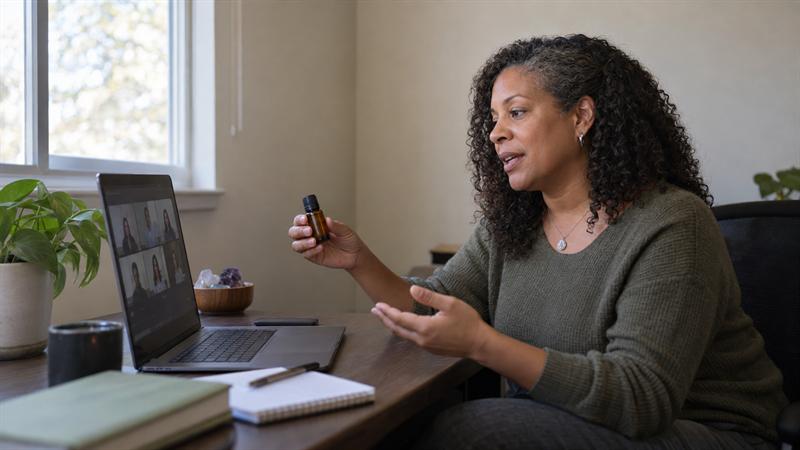
An online wellness discussion group is a practitioner-led virtual conversation focused on everyday wellness education. It is not a setting for diagnosis, treatment, or emergency help. Its purpose is to give participants a guided space to ask questions, compare options, and think through next steps.
A support group is usually organized around a shared lived experience. The value comes from people talking through a similar situation. A wellness discussion group is different. It is education-led and can include a range of concerns without requiring a specific condition.
A workshop is also different. A workshop usually has a defined topic, a set structure, and sometimes a practiced skill or take-away. A discussion group is more conversational and adapts to the questions that appear in the room.
Real Talk Health Talk uses that conversational model. It gives people a way to ask questions before deciding whether a one-to-one step is useful.
How a Wellness Conversation Differs From a Support Group
In this practice, the common starting point is uncertainty about whether you need education, peer support, or a hands-on service. That distinction drives the whole decision.
- Purpose: A support group focuses on shared experience around a specific condition. A wellness discussion group focuses on education and practical clarity.
- Facilitation: A support group is often peer-led. A wellness discussion group is practitioner-led and gives participants a guided space to ask questions.
- Commitment: A support group usually asks for ongoing participation. A wellness discussion group can be attended once or joined as a recurring low-commitment option.
Why a Live Discussion Format Works for Wellness Education
A common pattern in wellness information is that people collect ideas but do not build a clear sequence. They read about reflexology, aromatherapy, assessments, and habit work, then feel less certain than before. The next step blurs.
A live conversation helps because it makes the question visible. A question typed in chat, asked aloud, or worked through quietly all gets the same kind of general response. That makes the education feel useful for your own situation.
Who Can Benefit From Real Talk Health Talk?
Real Talk Health Talk is not presented as a clinical diagnostic setting. It is a wellness education conversation for people who want direction before a service decision. People may come from curiosity about holistic options, a free consultation they are considering, or a desire to understand a local practitioner’s approach.
When routines shift, small decisions can matter. When sleep, energy, or stress levels feel out of place, a conversation can help you name the issue before choosing a next step.
People Curious About Holistic Wellness
If you have heard terms like reflexology, aromatherapy, or Raindrop Therapy, you may have a practical question rather than a vague interest. The conversation gives you a low-pressure place to ask what the approach is based on and how it is used in a practical setting.
It also helps you see how these options fit within a broader holistic framework. That is especially useful when you are trying to understand which service matches the concern, not just which service sounds interesting.
Readers Between Services or Before a Free Consultation
Some people are interested in one-to-one sessions but want clarity first. A first session can feel heavy when you are still comparing options. The group gives a lower-pressure place to hear how a practitioner handles questions before deciding whether a personal session is the right fit.
The group is not a funnel. It is a low-pressure way to gather clarity before choosing a next step.
Local Participants in Accokeek and Prince George’s County
For readers in Accokeek and Prince George’s County, local context can matter. Online access removes the travel barrier for the conversation, but a local practice makes a follow-up step feel practical rather than abstract.
A familiar area, a known practice name, and a direct path to contact can all matter when someone is choosing a wellness service. That is where a local wellness conversation becomes more useful than a distant webinar.
How a Live Wellness Conversation Typically Works
The session follows a simple structure. The focus is conversation, not a long lecture.
- Check-in and ground rules: The facilitator welcomes participants, states privacy expectations, and confirms the topic.
- Guided topic conversation: The facilitator introduces a wellness theme such as sleep patterns, stress recovery, or daily energy habits. The focus is education, not a lecture.
- Open participant questions: Participants ask questions by voice or chat. The facilitator responds with clear educational context and follows the direction of the room.
- Closing reflection and next steps: The facilitator summarizes the key points and mentions optional next steps when relevant.
The structure is conversational because the facilitator listens and adapts. If the room focuses on one topic, the conversation can stay there. If the room shifts to another topic, the conversation can follow that shift.
Session Length and Participation Expectations
The session is built to be manageable. Participation is optional. Attendees can listen, ask a question, or share briefly if they choose to.
The format is designed to be accessible, so participants can join without extensive preparation. A person can attend once and stop there, or join the recurring series. Both choices are normal.
Guided Conversation, Questions, and Group Reflection
The facilitator sets the topic but does not deliver a monologue. A practical pattern in these conversations is that the facilitator pauses for reflection so participants can connect the topic to their own routine. That keeps the conversation grounded without requiring personal disclosure.
Questions are handled with clear boundaries. In a well-structured wellness conversation, the facilitator offers educational context and names the limits of the format. When a question moves into medical territory, a well-run conversation names that boundary and points the person toward the appropriate licensed provider.
Privacy and Online Etiquette
Participants should understand the privacy expectations before joining. The host states those expectations at the start, which gives participants a clear baseline before the conversation begins.
Online etiquette is usually simple. Participants adjust cameras, microphones, and chat involvement according to the host’s guidance and what feels comfortable. Typing instead of speaking is a normal option for many people.
Wellness Topics That May Be Covered
Topics are guided by the facilitator and shaped by the questions in the room. The range is broad enough to serve a general wellness audience, but the focus remains practical.
Daily Habits, Stress, Sleep, and Energy
Common topics include seasonal sleep patterns, stress recovery, energy management, and small habit changes that fit into a busy day. These topics are usually handled as practical wellness guidance rather than medical advice.
When daily habits get out of sync, small issues can feel larger than they are. A clearer look at routine often helps you separate what is worth changing from what is normal day-to-day variation. That is where a conversation can make the next decision easier.
Holistic Approaches to Everyday Wellness
Holistic approaches are introduced as frameworks for thinking, not as service pitches. Reflexology, aromatherapy, Raindrop Therapy, and Perception Reframing are presented as options that can be considered alongside different wellness goals.
The goal is understanding. A participant should leave with a clearer sense of how the pieces connect, not a sense that one service is being pushed as the only answer.
Women’s Wellness Education With Care and Boundaries
Women’s wellness topics are a common part of the conversation. Perimenopause and menopause can bring noticeable shifts in energy, sleep, and routines. Hormonal changes are also commonly associated with fatigue, sleep disruption, and mood changes.
The conversation provides general educational context and a space to ask questions. It is not a substitute for medical evaluation, hormonal testing, or gynecological care. If you have specific medical concerns, the appropriate step is to speak with a qualified healthcare provider. That boundary keeps the conversation useful and safe.
How the Conversation Connects to Broader Wellness Support
The conversation is one layer in a broader wellness path. It is not a standalone sales tool, and it is not a required step before booking a service. It is a menu, not a pipeline.
A person can attend the conversation and stop there. A person can attend and then choose a workshop. A person can attend and then book a free consultation to explore one-to-one support. All three choices can be valid.
From Group Conversation to Personalized Guidance
If any of these patterns are familiar, a free consultation can be the clearer next step:
- You have researched several wellness services and still cannot tell which one fits your situation.
- You keep returning to the same question during the day or before a medical appointment.
- You are unsure whether reflexology, aromatherapy, an assessment, or a conversation is the clearest first step.
The same issue shows up in the decision-making stage: people may have enough information but still lack a clear sequence. At The Healing Corner, the response is to turn scattered questions into a practical direction. A free consultation can help with that. It is also the place to bring questions to ask at a wellness consultation before that first conversation.
Workshops, Services, and the Free Consultation Path
The practice offers a range of holistic wellness options. Reflexology, aromatherapy, Raindrop Therapy, Perception Reframing, Yoni Steaming, and Iconic Foot Detox are presented as options to consider, not as a single required path.
Workshops offer deeper education on specific topics. A free consultation is one way to get personalized guidance when someone wants help choosing a service or understanding where to start. Neither is required unless you want more support.
Realistic Expectations and Professional Boundaries
Real Talk Health Talk is an educational conversation. It is intended to stay within an educational scope and is not a setting for diagnosing conditions, prescribing treatments, interpreting lab results, or providing crisis support. That boundary keeps the conversation useful.
A common risk is treating a wellness conversation as a place for medical decisions. When that happens, the discussion can drift into guesswork. A person can leave with more anxiety than clarity, and delaying appropriate professional care can prolong uncertainty.
What the Conversation Is Designed to Help With
- Clarifying wellness questions before a consultation so you know what to explore.
- Gaining general education on holistic approaches in a conversational format.
- Reducing the isolation of wellness research by talking through concerns with a practitioner.
- Making small, practical habit adjustments with clear group guidance instead of generic advice.
When a Reader Should Seek Licensed Medical or Mental Health Care
If you are experiencing persistent or worsening symptoms, acute distress, or a condition that requires diagnosis, the appropriate step is to seek licensed medical or mental health care. The wellness conversation can complement that care, but it does not replace it.
If you are seeing a pattern of unexplained changes that worry you, do not wait for a wellness group to sort it out. Bring the questions to a qualified provider. The conversation group can help frame those questions, but it is not the place to make medical decisions.
How to Join or Prepare for the Next Conversation
The conversation is generally low-commitment, and participants can come with no question or with one they have been considering. No extensive preparation is usually needed.
The decision is simple after reading this page. If the format matches what you are looking for, join the next session. If it does not, no further step is needed.
Scheduling, Access, and What to Bring
The current lineup and participation details are available on the Real Talk Health Talk page. Joining an online conversation generally requires the meeting details provided by the host.
To join, you usually only need a quiet space where you can hear and, if you choose, speak. A notebook is optional.
Deciding Whether the Format Is the Right Fit
The format is a fit if you want general wellness education in a conversational setting. It is also a fit if you want a low-pressure way to ask questions before a consultation, or if you want a local connection around holistic wellness.
The format is not a fit if you need urgent medical or mental health support, a peer support group for a specific condition, or a structured course with a certificate. In that case, the right resource is different, and this page is not meant to fill that gap.
Local Relevance in Accokeek and Prince George’s County
Wellness choices are shaped by proximity, trust, and convenience. For readers in Accokeek and Prince George’s County, a local wellness conversation can feel more relevant than an anonymous webinar.
The online format removes the travel barrier, while the local practice keeps the follow-up step concrete. If you want to continue, the next step is easier to identify when the practice, service list, and contact path are all within reach.
Key Takeaways
- An online wellness discussion group is a practitioner-led educational conversation, not a support group or sales call.
- Real Talk Health Talk is a recurring live conversation relevant to readers in Accokeek and Prince George’s County.
- The session is intended to be low-commitment and optional.
- Privacy, professional boundaries, and educational scope are built into every session.
- The conversation can lead to workshops, a free consultation, or services when you want personalization.
- The group is not a substitute for medical or mental health care.
Conclusion: A Clear, Low-Pressure Path Into Wellness Conversation
The real problem is not a lack of wellness information. The problem is deciding what a wellness conversation is for, where it ends, and when a personal step is needed. If that decision is left unclear, people can delay the first appointment or choose a service that does not match their situation.
The Healing Corner handles that by keeping Real Talk Health Talk educational, local, and low-pressure. The conversations are designed to clarify what you need before any service is considered. That is why a free consultation can be a practical next step when you want a personal path.
Start with a free consultation when you are ready to turn the conversation into a clear plan. The Services page offers a direct path to take that next step.
The practice’s approach. The Healing Corner treats the first wellness conversation as a decision tool, not a sales moment. The practice names the boundary between education and medical care, keeps participation flexible, and leaves the next step to you. This helps make the decision clearer from the start.
Frequently Asked Questions
Is an online wellness discussion group the same as a support group?
No. A support group is peer-led and organized around a shared lived experience, often a specific diagnosed condition. An online wellness discussion group is practitioner-led, education-focused, and open to a range of wellness topics. The difference matters because the value of a support group comes from mutual recognition of a specific experience, while the value of a wellness discussion group comes from a practitioner helping the room think through common patterns and practical next steps. If the goal is peer support for a specific condition, a support group is the better fit. If the goal is structured wellness education with a guide, this conversation format is a fit.
Do I need to be a current client or patient to join?
In this context, no. Real Talk Health Talk is described as an educational conversation, not a clinical visit tied to an existing care plan. That is what makes it useful before a first consultation. The current Real Talk Health Talk page lists the access details for the next available session.
What happens if I have a medical question during the conversation?
In a wellness conversation of this kind, the facilitator provides general educational context rather than diagnosing, interpreting specific symptoms, recommending medications, or giving treatment-specific advice. When a question moves into medical territory, the appropriate response is to identify the kind of licensed provider who should address it. That boundary is part of the format, not an afterthought. It keeps the conversation useful while preventing you from making a medical decision in the wrong space.
How is the conversation different from a wellness workshop or class?
A workshop is structured around a single topic with a defined curriculum and often a practice component. A discussion group is conversational and responsive. The facilitator introduces a theme, and the shape of the conversation follows the questions participants raise. A workshop asks for a block of time and a defined outcome. A discussion group asks for focused attention and offers a flexible, question-driven conversation. Some people use both, but they serve different decision-making needs.
Can I attend just the online conversation, or do I have to book a service afterward?
You can attend just the conversation. Attending a wellness conversation does not create a requirement to book a service, workshop, or consultation. Optional next steps may be mentioned, but the decision belongs to the participant. Many people attend a single conversation and decide what, if anything, is useful for them. The conversation is designed to be useful on its own, and any further step is made intentionally.
Is the session recorded or shared after it ends?
Privacy depends on the host’s stated expectations. Recording, transcription, and sharing should be clear before the session begins. If privacy is a concern, review the stated privacy expectations in advance. That tells you what stays within the participant group and what may be retained.