The question “what is holistic wellness?” deserves a clearer answer than a list of therapies. The word describes an approach, but it does not tell you what a service involves, whether its claims are supported, or what qualifications a practitioner holds.
For adults exploring services at The Healing Corner with Dr. Barbara Samaroo in Accokeek, Maryland, those distinctions matter before choosing an appointment. Start with your goal, then consider the options, evidence, and limits relevant to it.
Key Takeaways
- Holistic wellness considers connected aspects of life rather than viewing each concern in isolation.
- Everyday routines, relationships, and personal priorities matter. Paid services are not required.
- Evidence and safety differ between practices. The holistic label is not proof of effectiveness.
- Wellness support does not replace diagnosis, prescribed treatment, or appropriate medical and mental health care.
What Does Holistic Wellness Mean?
A practical holistic wellness definition is an approach that considers the whole person and the circumstances shaping their well-being. It broadens the questions being asked without assuming that one explanation or treatment fits everyone.
An Approach to Well-Being, Not a Single Treatment
Holistic wellness is a perspective, not a standardized appointment type. Someone exploring it might consider sleep, movement, emotional support, or an optional complementary service.
The important distinction is between the philosophy and the practice. A whole-person perspective does not prove that every treatment described as holistic works. Each service needs to be evaluated on its own purpose, evidence, and risks.
What “Mind, Body, and Spirit” Means in Everyday Life
“Mind, body, and spirit” describes different parts of a person’s experience. It does not require a particular religious belief or spiritual practice.
- Body: Physical needs, comfort, movement, nourishment, and rest.
- Mind: Thoughts, emotions, stress, attention, and coping.
- Spirit: Values, meaning, purpose, or a sense of connection.
For one person, meaning comes from faith. For another, it comes from relationships, creative work, or time outdoors. The interpretation should reflect the person, not a belief imposed by a service.
What Does Whole-Person Wellness Include?
Whole-person wellness includes daily routines, emotional needs, social connections, and life circumstances. Wellness models group these dimensions differently; the categories below are a practical guide, not a diagnostic checklist.
Physical Routines and Needs
Physical wellness includes sleep, movement, nutrition, rest, and appropriate healthcare. Considering these together can reveal practical obstacles, such as a work schedule that leaves little time for sleep.
That broader view does not identify the cause of a symptom. Persistent exhaustion deserves appropriate evaluation rather than being explained away as a general “imbalance.”
Mental and Emotional Well-Being
Mental and emotional wellness includes recognizing stress, finding workable coping strategies, and having access to support. Licensed mental health care has a distinct role when concerns require assessment or treatment.
A relaxing bodywork session and psychotherapy serve different purposes. Feeling calmer after an appointment does not mean that it treats a mental health condition. Match the type of support to the concern being addressed.
Relationships, Surroundings, and Personal Meaning
Relationships and circumstances influence what a person can realistically do for their well-being. Advice that ignores caregiving, finances, work schedules, or access to care misses part of the picture.
- Connection: Supportive relationships and opportunities to belong.
- Surroundings: Living and working conditions that affect daily life.
- Responsibilities: Time, financial, and caregiving demands.
- Meaning: Activities and commitments that reflect personal values.
A useful starting plan fits those conditions. Limited time or resources should not be mistaken for a lack of commitment.
How Does Holistic Wellness Fit Alongside Medical Care?
Holistic wellness fits alongside medical care when supportive choices respect the need for diagnosis, treatment, and appropriate professional qualifications. It should expand the conversation about well-being, not provide a reason to avoid necessary care.
Holistic, Complementary, Alternative, and Integrative: What Is the Difference?
These terms are not interchangeable. Some describe a perspective; others describe how an approach relates to conventional healthcare.
- Holistic: A perspective that considers the whole person.
- Complementary: An approach used alongside conventional care.
- Alternative: An approach used instead of conventional care.
- Integrative healthcare: Coordinated care bringing conventional and complementary approaches together with attention to evidence.
A service described as holistic is not automatically part of coordinated integrative healthcare. The label alone does not confirm communication between practitioners or describe the clinical care being provided.
What Wellness Support Cannot Replace
Wellness support does not replace medical diagnosis, prescribed treatment, or licensed mental health care. New, persistent, or worsening symptoms warrant appropriate medical advice.
A broad wellness explanation becomes a problem when every symptom is attributed to stress or imbalance. An underlying concern can remain unassessed, and adding more wellness appointments does not resolve that gap.
- Do not stop prescribed treatment because a service is described as natural.
- Do not treat a relaxation response as evidence that an illness has been treated.
- Do not postpone symptom evaluation while trying optional supportive services.
What Does Holistic Wellness Look Like in Practice?
In practice, holistic wellness means identifying a need, considering relevant options, and understanding their limits. The broader view should clarify a decision, not produce an endless list of things to fix.
An Everyday Example: Need, Option, Boundary
Consider a hypothetical adult who wants more opportunity to unwind after work. Before choosing an appointment, it helps to identify what is interfering with rest.
- Need: Consider whether the main obstacle is an overcrowded schedule, limited quiet time, or lack of support.
- Option: Try a manageable change, such as protecting a short break, or explore an optional service that fits the person’s preferences.
- Boundary: Neither a quieter evening nor a relaxing appointment shows the cause of persistent symptoms.
The practical lesson is to match the option to the need. Choosing a service first and defining the goal afterward can make its usefulness harder to judge.
Where Reflexology and Aromatherapy May Fit
Reflexology and aromatherapy are optional practices, not requirements for whole-person wellness. Suitability depends on the person, how the service is delivered, and its intended purpose.
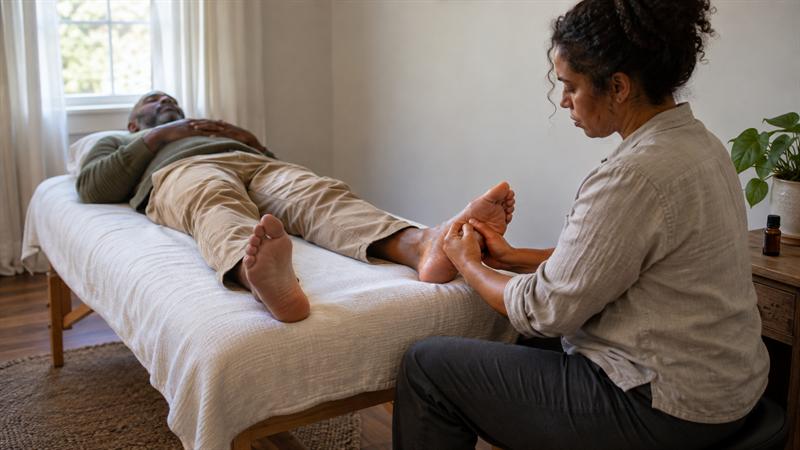
Reflexology involves applying pressure to areas such as the feet or hands. It should not be presented as a way to diagnose organ problems or confirm that an internal condition has been treated.
Aromatherapy uses aromatic plant oils in different applications. Scent preferences, sensitivities, and the way an oil is used matter. Essential oils are not suitable for everyone, and skin exposure can cause irritation.
When exploring local holistic wellness services, separate the description of an appointment from claims about its results. Knowing what happens during a session is different from knowing what evidence supports a particular benefit.
How to Evaluate Holistic Wellness Claims Safely
Evaluate the specific claim, the practitioner’s qualifications, and the risks before deciding whether a service fits. An appealing philosophy does not answer those questions.
Look at the Specific Claim, Not Just the Holistic Label
Evidence applies to particular practices and outcomes, not to the holistic label as a whole. Traditional use, positive reviews, and reports of relaxation do not show that a service treats disease.
A positive experience also does not support an unrelated promise. Enjoying a session does not prove that it removes toxins, corrects hormones, or treats an illness.
- Promises to cure conditions or guarantee results deserve scrutiny.
- “Natural” does not mean it is safe.
- Pressure to buy a package before discussing suitability puts the purchase ahead of an informed decision.
- Advice to abandon medical treatment is a serious warning sign.
The guide to how to choose a wellness service helps you compare options around your goal rather than the most persuasive description.
Ask About Qualifications, Risks, and Expectations
Useful questions connect training and safety to the exact service being offered. A certificate in one practice does not confirm medical licensure or qualifications in another field.
- What training is relevant to this particular service?
- What does the appointment involve, including touch or products?
- What health conditions or sensitivities affect suitability?
- What outcomes are realistic, and what is outside the service’s scope?
- How are consent and requests to stop handled?
- What does it cost, and when would another professional be more appropriate?
Reviewing Dr. Barbara Samaroo’s background and approach is part of understanding the practice. Assess qualifications by what they support, rather than assuming medical licensure from a title alone.
Pause the booking decision when the service is still unclear. Resolve the uncertainty first if you recognize any of these situations:
- You cannot explain what the session involves.
- You have heard an outcome promise without an explanation of its limits.
- A relevant sensitivity, health condition, or treatment has not been discussed.
Get those specific questions answered before paying for or proceeding with the service.
How to Begin Without Changing Everything at Once
A practical starting point is one priority and one manageable action. Making many changes at once can make it harder to see what fits your life and what is useful.
Choose One Priority and a Manageable Next Step
Begin with something specific enough to act on, rather than a general goal to “be more balanced.” Use this simple framework:
- Identify one priority: More time for rest, movement, or supportive connection.
- Name the constraint: Consider time, cost, responsibilities, or access.
- Choose one action: Select a small change that fits those conditions.
- Review its usefulness: Notice whether the action is practical and supports the intended goal.
This is a planning tool, not a health assessment. Starting small keeps the focus on a manageable choice rather than purchases or a complete lifestyle overhaul.
Decide Whether Professional Support Would Help
Professional support is worth exploring when you need clarity about a service, its suitability, or its limits. It is not a requirement for beginning everyday wellness habits.
Exploring support at The Healing Corner with Dr. Barbara Samaroo: The practice offers a free consultation for adults considering its services in Accokeek, Maryland. Use that conversation to discuss your goal and the available options rather than assuming that a particular service is the answer.
- What do you want support with?
- What preferences, sensitivities, or health considerations matter?
- What do you need explained before choosing a service?
Reading what to expect from your first holistic wellness consultation helps you prepare for the conversation. Use the consultation to compare goals and options, not to receive medical diagnosis or a clinical assessment.
Frequently Asked Questions About Holistic Wellness
Holistic wellness does not require particular beliefs, purchases, or a departure from medical care. The distinctions below explain what matters when considering it.
Is Holistic Wellness Scientifically Supported?
Evidence depends on the specific practice and claim, not the holistic label. Considering several aspects of well-being does not show that every associated treatment works. For example, feeling relaxed after a session does not prove that the session treats a medical condition.
Do I Need Spiritual or Religious Beliefs to Practice Holistic Wellness?
No. Spiritual well-being can mean personal values, purpose, or connection rather than religious belief. Time in nature, meaningful relationships, or creative activities may fit that dimension. A whole-person approach does not require adopting a particular belief system.
Can I Explore Holistic Wellness While Taking Prescription Medication?
Yes, but the activity or product matters. Making time for rest is different from adding a supplement that could interact with medication. Before adding a supplement, speak with a pharmacist or prescribing clinician about possible interactions. Do not change prescribed treatment independently.
Do I Need to Buy Treatments or Supplements to Get Started?
No. Holistic wellness does not require purchases. It can begin with a more consistent rest routine, manageable movement, or time with supportive people. Paid services are optional; they are not what makes an approach whole-person.
Does a Holistic Practitioner Have the Same Qualifications as a Medical Doctor?
Not necessarily. “Holistic practitioner” does not by itself confirm medical licensure. Training in a particular wellness service is different from being qualified to diagnose or treat illness. What matters is the practitioner’s actual credentials and the work those credentials qualify them to perform.
What Should I Ask Before Booking a Holistic Wellness Service?
Ask what the service involves, what training supports it, what risks apply, what it costs, and what outcomes are realistic. A useful explanation separates the session’s activities from its expected benefits. Describing an experience is not the same as showing a health outcome.
Conclusion: Understand the Approach Before Choosing a Service
For adults in Accokeek considering local wellness services, start with a free consultation at The Healing Corner in Accokeek with Dr. Barbara Samaroo. Choosing a service without a clear goal or an understanding of its limits can lead to mismatched expectations and spending that does not address the original need.
Write down one priority and your unanswered questions, then request a free consultation. Clarifying the service before committing time or money is a practical next step. Seek appropriate clinical care for medical concerns, and choose wellness support for a purpose you understand.