When comparing holistic wellness and alternative medicine, the practical question is what choosing a service means for your existing care. A whole-person focus does not mean replacing medical treatment, and an “integrative” label does not establish a provider’s qualifications.
For people exploring services at Dr. Barbara Samaroo, The Healing Corner, in Accokeek, Maryland, these distinctions help clarify what to look for. Start with the service’s purpose, its limitations, and its relationship to your healthcare needs.
Key Takeaways
- Holistic wellness considers the whole person rather than describing one treatment.
- Complementary care uses nonconventional approaches alongside conventional care; alternative medicine uses them instead.
- Integrative health emphasizes coordinated conventional and complementary approaches.
- No label alone establishes qualifications, effectiveness, safety, or suitability.
Holistic Wellness vs. Alternative Medicine: The Main Difference
Holistic wellness describes a perspective that considers physical, emotional, social, and lifestyle factors. Alternative medicine describes how a nonconventional approach is used: in place of conventional care. These terms answer different questions. A holistic outlook does not require alternative treatment, and conventional medical care can also take a whole-person approach.
The National Center for Complementary and Integrative Health’s terminology guidance distinguishes complementary, alternative, and integrative approaches by their relationship to conventional care.
- Holistic: A whole-person perspective that can apply within conventional or nonconventional settings. It does not identify a specific treatment or credential.
- Complementary: A nonconventional approach used alongside conventional care. It does not mean the providers are coordinating.
- Alternative: A nonconventional approach used instead of conventional care. It does not mean the replacement is effective or safe.
- Integrative: Conventional and complementary approaches brought together in a coordinated way. The label does not prove every offered intervention works.
What Holistic, Complementary, Alternative, and Integrative Mean
The distinction becomes clearer when you separate the outlook behind a service from its role in a care plan.
Holistic Wellness: A Whole-Person Perspective
Holistic wellness considers connected aspects of well-being rather than treating a single concern as the whole picture. A discussion about feeling overwhelmed, for example, might explore sleep habits, daily responsibilities, emotional strain, and social support.
That perspective is not a treatment or professional license. Understanding what holistic wellness means helps separate whole-person support from claims that a particular service diagnoses or treats illness.
Complementary Care: Used Alongside Conventional Care
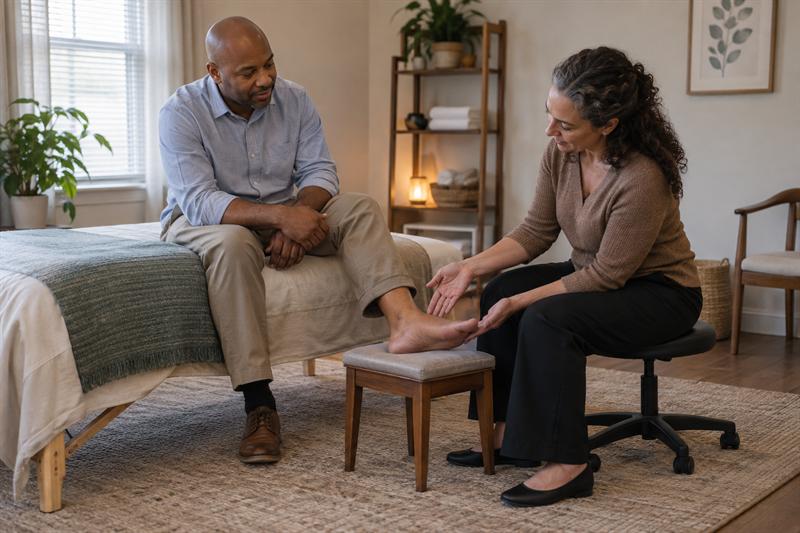
Complementary care means a nonconventional approach accompanies conventional care rather than replacing it. Someone who continues medical treatment while choosing reflexology for relaxation, for example, is using reflexology in a complementary role. That example describes its use, not a proven outcome.
“Alongside” does not mean the providers share a plan. The guide to complementary wellness services offers further context for choosing an appointment by its purpose. Evidence, risks, and suitability still need separate consideration.
Alternative Medicine: Used Instead of Conventional Care
Alternative medicine means using a nonconventional approach in place of conventional care. Replacement is the defining feature, not whether the approach is called natural, traditional, or holistic.
This distinction matters when someone considers abandoning recommended assessment or treatment. Delaying recommended care can leave an underlying problem unaddressed. Discuss proposed treatment changes with the treating clinician rather than assuming a wellness service provides an equivalent substitute.
Integrative Health: A Coordinated Approach
Integrative health brings conventional and complementary approaches together in a coordinated way, with attention to the whole person, evidence, and safety. It describes how approaches work together, not simply how many services appear on a menu or how many practitioners someone visits.
“Integrative health” is the broader health-and-wellness concept; “integrative medicine” commonly appears in clinical contexts. Neither label removes the need to evaluate individual services and practitioner qualifications.
The Difference Between Holistic and Integrative Care
Holistic describes perspective; integrative describes coordination. Both can involve whole-person goals, but the integrative label typically signals an intention to bring conventional and complementary approaches together.
Why the Terms Can Overlap
A practice can take a holistic outlook while offering services that clients use alongside conventional care. Integrative care can also be holistic because a coordinated plan can consider physical health, emotional well-being, lifestyle, and personal goals.
Confusion starts when a broad philosophy is treated as a complete service description. If a page says “whole-person support” but does not explain the appointment, it tells you only the stated outlook, not what the practitioner is qualified to do. Look for the actual service description and professional scope.
Why Multiple Providers Do Not Automatically Mean Integrative Care
Separate appointments do not create coordination by themselves. A medical clinician and a wellness practitioner could both support the same person without knowing what the other is doing.
Look for concrete processes rather than assuming a shared plan exists:
- Communication: Relevant information is exchanged with appropriate permission.
- Shared goals: Each provider understands the intended role of their contribution.
- Existing-care awareness: Recommendations account for current treatment and relevant risks.
If no one has explained how information is shared, coordination has not been established. Clarify who handles that communication rather than assuming it happens between appointments.
How the Differences Look in Everyday Decisions
The relationship to conventional care changes the classification. These hypothetical examples illustrate the distinction without claiming that a service produces a particular outcome.
- Alongside treatment: Someone continues prescribed care and books a nonconventional wellness service for relaxation. This is complementary use. The useful question is whether the service is appropriate given their health circumstances.
- Instead of treatment: Someone replaces recommended medical treatment with a nonconventional service. This is alternative use. The critical question is what medical need could remain unaddressed.
- Within a shared plan: Conventional and complementary providers communicate about goals, limitations, and existing treatment. This illustrates integration. The practical question is who coordinates the plan and follows up on concerns.
The classification explains the arrangement. It does not establish effectiveness.
Resolve the role of a service before committing to it. Pause your selection if:
- The description promises broad wellness benefits but does not explain the appointment.
- You cannot tell whether the service supports or replaces existing care.
- Several providers are involved, but nobody has explained how information is shared.
For a service at Dr. Barbara Samaroo, The Healing Corner, use the free consultation to clarify its purpose and boundaries before choosing an appointment. Those gaps need answers before they shape your care decisions.
What to Check Beyond the Label
Compare the actual services, qualifications, evidence, and risks. Those details reveal more than whether a provider uses “holistic” or “integrative” in a description.
Qualifications and Scope of Practice
Qualifications indicate training; in regulated professions, scope of practice defines the activities a practitioner is permitted to perform. Academic degrees, certifications, and professional licenses are not interchangeable.
- What qualifications are relevant to this service?
- Does a professional license apply, and what does it authorize?
- What is included in the appointment, and what falls outside the practitioner’s role?
Neither “Dr.” nor “holistic” alone identifies medical licensure or prescribing authority. Where a license applies, official professional records help distinguish a stated title from an authorized role.
Evidence, Risks, and Realistic Goals
Evidence needs to match the service and the outcome being discussed. Supporting a relaxation goal is different from establishing that an intervention treats disease.
- What is the service intended to support?
- What evidence supports that particular use?
- What adverse effects or health circumstances could make it unsuitable?
- What would a realistic benefit look like?
Expectations become misleading when a modest wellness claim turns into a medical promise. Feeling relaxed after an appointment does not establish that an underlying condition has been treated. Traditional use, natural ingredients, and testimonials also do not establish safety or effectiveness on their own.
NCCIH’s informed-consumer guidance provides a framework for evaluating health information and claims.
Communication With Existing Healthcare Providers
Relevant health information connects a wellness decision to the rest of your care. Make the information exchange explicit:
- What medications, products, conditions, or recent treatments should be disclosed?
- How are potential treatment conflicts handled?
- What concerns require medical evaluation rather than a wellness appointment?
As appointments and products accumulate, incomplete information can make the overall picture harder to assess. Do not use repeated wellness appointments to postpone medical assessment of new, persistent, or worsening symptoms.
Where the Services at Dr. Barbara Samaroo, The Healing Corner Fit
Services at Dr. Barbara Samaroo, The Healing Corner include holistic medicine, reflexology, and aromatherapy. Those service names identify an area of focus or an individual offering, but they do not independently establish a coordinated care model.
For someone exploring appointments in Accokeek, Maryland, start with the purpose of the specific service. Review the holistic medicine services at The Healing Corner with this distinction in mind: whole-person language describes an outlook; appointment details explain the support offered.
Questions to Bring to a Free Consultation
Use the free consultation to understand the service before selecting an appointment. Bring questions tied to your goals:
- What happens during the service being considered?
- What goals are appropriate, and what is outside its purpose?
- What health information or product details should be shared?
- What risks, limitations, or reasons to avoid the service apply?
- Does the concern belong within another professional’s scope?
The aim is to understand the offering and its boundaries. Do not assume that a wellness consultation includes medical diagnosis, treatment planning, or communication with other providers.
Frequently Asked Questions
Is Holistic Wellness the Same as Alternative Medicine?
No. Holistic wellness describes a whole-person perspective, while alternative medicine describes a nonconventional approach used instead of conventional care. A service can reflect a holistic outlook and still be complementary when used alongside medical treatment. The distinction depends on perspective and use, not the service name alone.
Can Conventional Medical Care Be Holistic?
Yes. Conventional clinicians can consider sleep, emotional well-being, lifestyle, social circumstances, and personal goals alongside medical assessment and treatment. “Holistic” describes this broader perspective; it does not require avoiding medication or using nonconventional therapies.
Can I Use Holistic Wellness Services While Taking Prescription Medication?
Some wellness services can be used alongside prescription medication, but the specific service, products involved, and health circumstances matter. A “holistic” label does not establish safety. Share those details with the treating clinician or pharmacist so they can evaluate potential interactions or reasons a service might be unsuitable.
Does “Integrative” Mean Every Offered Treatment Is Proven?
No. “Integrative” describes an approach to coordinating care, not proof that every offered treatment works. Evidence must match the specific intervention and intended outcome. Support for a relaxation benefit, for example, would not establish that the same intervention treats a disease.
Does a Holistic Practitioner Have the Same Qualifications as a Medical Doctor?
Not necessarily. “Holistic practitioner” alone does not identify a medical degree, license, or scope of practice. Some practitioners hold medical licenses; others have different qualifications. The meaningful distinction is the actual credential and, where applicable, the professional activities that licensure permits.
What Should I Ask Before Booking a Holistic Wellness Service?
Ask what the service is intended to support, what evidence and risks apply, and what falls outside the practitioner’s scope. Also ask how it relates to existing care. The answers should distinguish wellness support from medical diagnosis, treatment, or documented coordination between providers.
Conclusion: Choose Based on Scope, Evidence, and Fit
Use the free consultation at Dr. Barbara Samaroo, The Healing Corner as the next step for clarifying the practice’s offerings. The real problem is not unfamiliar vocabulary alone: unclear labels can leave you expecting medical treatment, provider coordination, or benefits that an appointment does not provide.
Before selecting a service, write down questions about its purpose and limits. Read what to expect at a first holistic wellness consultation, then bring those questions to the discussion. Clarifying the role now helps you make an informed choice before committing to an appointment.