
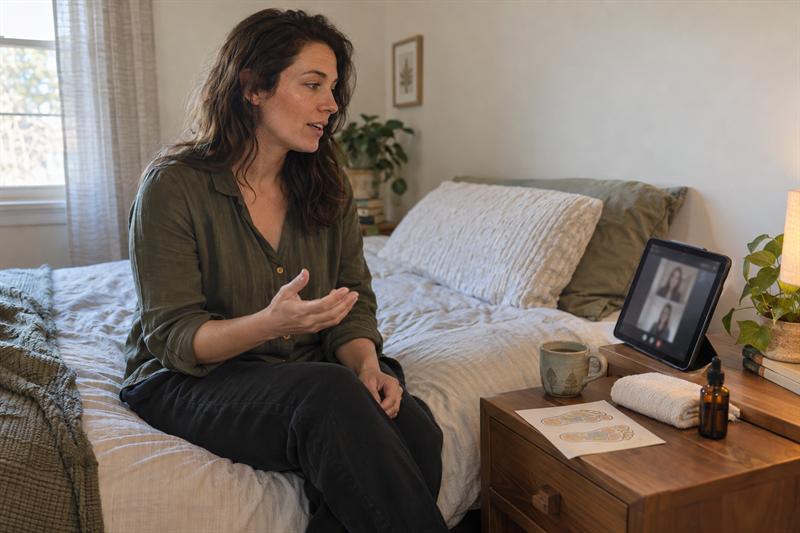
If You’re Unsure Where to Start, the Consultation Format Can Shape the Experience
Many people do not get stuck on whether they want support. They get stuck on how to begin. That is where the format matters.
A first consultation is not just a scheduling choice. It can affect how easily you talk, how comfortable you feel bringing up sensitive concerns, and how clear the next step becomes. At Dr. Barbara Samaroo, The Healing Corner, this is a common starting point for people who want guidance but are not yet sure whether they need a conversation, a clearer sense of direction, or an in-person wellness service.
If you want a broader overview of the first-visit process, what to expect from your first holistic wellness consultation explains how that first conversation usually works.
Why this decision matters before booking
The wrong format usually does not ruin the experience, but it can slow things down. One common pattern is booking in person when what is really needed first is time to talk things through. Another is choosing virtual even though face-to-face conversation would likely feel easier and more focused.
When the format does not match your comfort level, the conversation can feel more guarded, important questions may get skipped, and the next step can stay unclear.
Choosing a format is not the same as choosing a service
You do not need to know exactly which service you want before booking a consultation. That uncertainty often keeps people waiting longer than necessary.
A consultation helps sort out the path. The format simply decides where that conversation happens. That distinction matters if you are curious about holistic wellness support, Reflexology, Aroma Therapy, Raindrop Therapy, Perception Reframing, Yoni Steaming, or Ionic Foot Detox but are not ready to move straight into a hands-on session.
What a Virtual Holistic Wellness Consultation Is Best For
Virtual works well when the main goal is clarity. If you need space to ask questions, describe what has been going on, and understand what kind of support makes sense, a virtual consultation can give you that with less friction.
This format is especially practical when travel time, scheduling pressure, or privacy concerns are part of the hesitation. Once the barrier of getting there is removed, many people find it easier to begin the conversation.
- You want to talk through concerns, stressors, or recurring patterns first
- You are not sure which service fits your goals
- You want a lower-pressure first step
- You need flexibility around work, caregiving, or transportation
Virtual can also make sense when the first step is conversation-based support. That includes general holistic wellness questions or early discussion around thought patterns, stress, and Perception Reframing.
If you are leaning toward this option, how to prepare for a 30-minute virtual wellness consultation can help you use that time well.
Good fit for questions, health background, and early guidance
This is often the right choice when you do not need a hands-on setting yet. You need a conversation that helps organize what you are noticing.
This can be especially helpful when several concerns are happening at once and it is hard to tell what matters most. Virtual creates space to describe patterns, ask direct questions, and get grounded before choosing a more specific next step. When that stage is skipped, it is easier to bounce between options without feeling sure about any of them.
Situations where convenience and privacy matter most
Convenience is not a small factor. It is often the difference between finally scheduling and putting it off again.
If a busy schedule, caregiving demands, commute time, or transportation issues are making it hard to begin, virtual removes an obstacle that often keeps the process stalled. It also helps people who feel more open in their own space. That said, home is not automatically more private. If interruptions, family presence, or limited quiet space are part of your reality, that may point back toward in-person.
What an In-Person Holistic Wellness Consultation Is Best For
In-person is often the better fit when comfort comes from being physically present in a calm wellness setting. Some people talk more openly face-to-face. Others feel more settled once they are out of their daily environment and fully focused on the appointment.
This is also a practical option when you are already leaning toward a hands-on service. If you are considering Reflexology, Aroma Therapy, Raindrop Therapy, Yoni Steaming, or Ionic Foot Detox, in-person may line up better with where the conversation is likely headed.
Good fit when body-based services may be part of the next step
If you already know that touch-based or setting-based support is likely part of what you want, in-person often makes more sense from the start. It puts the conversation in the same environment where those services happen.
This can make the decision process feel smoother. Instead of using the first conversation only to reduce uncertainty, you are using it to connect your questions to a likely in-person path. That is often more efficient for someone already considering services such as Reflexology or essential oil-based support.
When physical presence helps someone feel more at ease
Some people simply do better in the room. They feel less distracted, less guarded, and more able to stay present.
This is not about one format being more serious than the other. It is about knowing what helps you speak honestly. People who already know they struggle to focus at home often get more from an in-person visit because the setting removes some of the noise that gets in the way.
Virtual vs. In-Person: The Main Differences at a Glance
Comfort: Virtual usually feels easier for people who want to start from home. In-person usually feels better for people who settle more fully in a dedicated wellness space.
Privacy: Virtual works well if home feels private and uninterrupted. In-person works better if home is busy, shared, or distracting.
Convenience: Virtual cuts out travel, commute time, and some scheduling friction. In-person takes more effort to get to, but that effort can create better focus for the right person.
Ability to discuss sensitive concerns: Some people open up faster online because it feels less intense. Others need face-to-face conversation to feel fully heard. If you are unsure where you speak more honestly, that is one of the clearest clues in the decision.
Readiness for hands-on services: Virtual is usually best when you are still sorting out your questions. In-person is usually best when body-based support already feels like a likely next step.
Which Option May Fit Different Wellness Goals
The easiest way to decide is to match the format to your real goal. Many people do better once they stop asking, “Which one is better?” and start asking, “What do I need this first appointment to do?”
If you want to talk through concerns or patterns first
Virtual is often a strong starting point. It gives you space to explain what has been happening, what you have noticed, and what feels unclear without the extra step of preparing for an office visit first.
This is especially useful when the issue is not one single concern but a group of concerns that feel connected. In that situation, the first job is clarity. Virtual supports that well.
If you are considering Reflexology, Aroma Therapy, or Raindrop Therapy
In-person is often the more natural fit if these services are already on your mind. It keeps the conversation close to the environment where those services happen and helps you connect questions to a likely next step.
That does not mean virtual is wrong. If you still need help deciding whether a body-based service fits your comfort level, virtual can still work as the first layer of decision-making. If you are comparing essential oil-based options specifically, questions to ask before an essential oil wellness service can help you think through that choice more clearly.
If you prefer a conversation-only or low-touch first step
Virtual is often the most practical place to start. It keeps the focus on your questions and reduces the pressure some people feel when they are not ready for a more physical service experience.
This is common for people who want support but need to build confidence first. Starting low-touch does not mean you are unsure in a negative way. It often means you are trying to make a thoughtful decision. For more help with that choice, read how to choose a conversation-only or low-touch wellness session.
If you are exploring more sensitive services and want to ask questions first
A conversation-first format is often the better move. Sensitive topics are easier to sort through when you are not also trying to decide everything else at the same time.
This matters with personal services or concerns that take time to discuss comfortably. If what is holding you back is not lack of interest but uncertainty about how the process works, starting with questions can remove some of the hesitation that keeps people stuck.
If any of these sound familiar, the next step may be a clear consultation decision, not more research.
- You keep reading about services but still do not know where to start
- You want support but delay booking because the first appointment feels unclear
- You know you need a questions-first conversation before choosing a service
- You have narrowed it down to virtual or in-person and keep second-guessing both
When the same uncertainty keeps repeating, waiting longer does not usually create clarity. A defined first consultation is often what helps break the cycle.
Questions to Ask Before Choosing a Consultation Format
A good decision becomes clearer once the right questions are asked. If you are stuck, use these to narrow it down.
What kind of questions do I want answered first?
If your questions are broad, pattern-based, or about where to begin, virtual usually makes the most sense. If your questions are closely tied to an in-person service you already expect to pursue, in-person is usually the better fit.
If you are not sure how to frame those first questions, that often means the consultation itself is the right next step. You do not need perfect language before booking.
Do I want guidance before committing to a hands-on service?
If yes, virtual is often the clearer starting point. It lets you get direction first instead of forcing yourself to decide on a physical service before you feel ready.
This is where people commonly get stuck. They assume they must choose the service before they ask the questions, when the reality is often the opposite.
Will I feel more open at home or in a wellness office?
This question matters more than people expect. If home helps you relax and focus, virtual is often the stronger choice. If home is full of interruptions or makes it harder to speak freely, that usually points toward in-person.
Comfort affects honesty. Honesty affects clarity. That is what changes the value of the consultation.
A Simple Way to Decide
If you want the shortest answer, use this:
Choose virtual if…
- you want to ask questions before choosing a service
- you need a lower-pressure first step
- travel, scheduling, or caregiving makes in-person harder to start
- you want conversation and direction more than a wellness setting right now
Choose in-person if…
- you open up better face-to-face
- home is distracting or not private
- you already expect body-based services to be part of the next step
- being in a calm wellness environment helps you focus and feel supported
If you’re still unsure, start with the option that makes it easier to begin
The biggest mistake is treating this as a final, high-stakes choice. It is a starting-point choice.
If virtual gets you moving, start there. If in-person removes distractions and helps you show up fully, start there. What usually matters most is not choosing the perfect format. It is choosing the format that gets the conversation started instead of delayed again.
Key Takeaways
- Virtual is often best when your main need is questions, planning, and a lower-pressure first step.
- In-person is often best when face-to-face comfort or body-based next steps matter more.
- The right format depends on how you communicate best, not just what seems most convenient.
- When format confusion keeps delaying the appointment, the real issue is often lack of a clear starting point.
Conclusion: The Best Format Is the One That Helps You Ask the Right Questions
The real problem is not choosing between online and in-person in the abstract. The real problem is starting in a format that keeps you guarded, distracted, or stuck in more research instead of moving toward clarity.
If that is not handled well, the usual result is delay. Questions stay unanswered, uncertainty grows, and the first step can feel harder than it needs to. That is why the most practical next move is to choose the format that supports honest conversation and clear direction.
At Dr. Barbara Samaroo, The Healing Corner, that first step is designed to help people sort through uncertainty without pressure. If you are ready to stop circling the decision and start with the format that fits your comfort level, schedule a free consultation.
Dr. Barbara Samaroo, The Healing Corner Approach
At Dr. Barbara Samaroo, The Healing Corner, the first consultation is treated as a decision point, not just a formality. The goal is to help people understand what they are really looking for, what is getting in the way, and which path makes practical sense from there.
That approach matters because a common pattern is overcomplicating the first step. Some people think they must choose the exact service before they ever reach out. Others keep switching between options because they have not matched the format to the kind of support they actually need. A clear first conversation often solves that faster than more searching does.
FAQ
Can a virtual holistic wellness consultation be a good first step?
Yes. A virtual consultation is a strong first step when the main goal is to ask questions, talk through your health background, or get clear on what kind of support makes sense next.
This is especially useful when someone is interested in holistic support but is not ready to choose between a general wellness conversation, a more specific next step, or an in-person service. The key point is that a helpful first appointment does not need to begin with a hands-on experience. If the real need is direction, virtual usually handles that well.
When is an in-person holistic consultation the better choice?
In-person is often better when face-to-face conversation helps you open up or when body-based services already feel like a likely next step. It is also often the better choice when home is distracting and a dedicated wellness setting helps you focus.
For example, someone already thinking seriously about Reflexology, Aroma Therapy, or another in-person service often benefits from starting in that same environment. What changes the decision is not whether one format sounds more professional. It is whether the setting makes the conversation clearer and more useful.
Should someone choose virtual first if they are unsure which holistic service they need?
In many cases, yes. If the confusion is really about service fit, virtual usually makes the first step simpler because it separates the decision about format from the decision about the service itself.
That distinction matters. People often assume they need to know exactly what they want before they book, and that assumption is what keeps them stalled. A virtual consultation usually works best when the immediate need is to sort through options and narrow down what belongs next.
Are virtual wellness appointments only for follow-ups?
No. Virtual wellness appointments are not only for follow-ups. They also work well as first appointments when the purpose is discussion, planning, and next-step clarity.
What gets misunderstood is the limitation. The limitation is not that the appointment is virtual. The limitation is that some services themselves happen in person. That means a virtual first visit can still be the right starting point even if later support happens face-to-face.
What if someone wants a low-touch or conversation-only first appointment?
That is a practical and common way to begin. A low-touch first appointment often helps when someone wants support but needs time to ask questions before deciding whether a hands-on service feels right.
This preference does not mean the person is not ready. It often means they want to begin in a way that feels manageable and clear. That often leads to a better decision because the pressure to choose too quickly is removed.
Can a virtual consultation still lead to in-person services later?
Yes. A virtual consultation often works as the first step in a process that later includes in-person services.
For example, someone might begin virtually to talk through concerns and then decide that Reflexology, Raindrop Therapy, or another in-person service fits their goals better than they first realized. The important distinction is that choosing virtual first does not lock you into staying virtual. It simply gives you a lower-friction way to begin.