Quick Answer: A wellness workshop for community groups is a 30 to 60 minute facilitated education session built around one specific audience need, not a generic self-care lecture delivered to a mixed room. At Dr. Barbara Samaroo – The Healing Corner, these sessions run in Accokeek and Prince George’s County for caregiver groups, youth programs, senior activity centers, and local nonprofits. The topic, language, and pacing are shaped to the group before it starts, so participants leave with one or two ideas they can actually use.
A group leader searching for a wellness workshop usually hits the same wall. Most options online fall into two camps. One offers broad wellness content that could apply to anyone and lands with no one. The other reads like a medical bulletin. Neither tells you what a 45-minute session in a community center room actually looks like, what participants walk away with, or whether the facilitator will respect the group’s limited time.
This page answers those questions directly. It covers what a community wellness workshop teaches, how it fits the four main group types, and what the planning process looks like from the organizer’s side. If you are organizing a session in the next few weeks and need to decide whether a facilitated workshop fits your calendar, the structure below helps give you a clear yes or no.
What a Community Wellness Workshop Can Support
A community wellness workshop is a structured, facilitated education session designed for a specific group audience. It runs 30 to 60 minutes, includes a short interactive element, and centers on one or two practical takeaways. It is not a medical service, a lecture, or a treatment plan.
- Caregiver groups that need realistic, low-effort strategies for managing daily stress and boundaries.
- Youth and family-serving programs that want practical nutrition education without a rules-based framework.
- Senior activity groups and local nonprofits that are looking for stress-reduction education, body awareness, and social connection within an existing meeting.
The facilitator adjusts language, pacing, and depth to match the audience’s age, size, and current focus. A session for an after-school group sounds and moves differently from one held in a senior center conference room. That adjustment happens before the group arrives, not mid-session.
Stress Reduction and Everyday Self-Care
Community members walk into a group session carrying accumulated stress from work, family logistics, and caregiving duties. A stress reduction session focuses on short, repeatable techniques: breath pacing, grounding exercises, a small shift in a morning routine. The goal is a tool the participant can use in the next hour, not a lifestyle overhaul. A session can feel flat when a fatigued group needs a slower opening and a shorter active segment, but the delivery continues at a faster, uniform pace.
Caregiver Support and Sustainable Boundaries
Caregiver groups operate under a constraint that most wellness content ignores: the people in the room often do not control their schedule. A 30-minute daily self-care routine lands as another impossible task. The session works when it normalizes small adjustments: a brief reset between visits, a clear word for declining one extra obligation, a resequenced morning that protects a short block of still time. The tone centers on sustainability, not transformation. A 60-minute generic wellness talk delivered to a group that has been managing medical appointments for an extended period, with no acknowledgment of the weight they carry, often loses the room early.
Youth Wellness and Practical Healthy Eating
Youth nutrition education is less effective when it introduces a “good food versus bad food” framework. The session works when it builds practical skills: reading a label, building a plate, choosing a snack that holds energy through the afternoon. For younger groups, a short hands-on element such as sorting labels or mapping a week of meals keeps engagement up. The language matches the age. A group of 10-year-olds gets different vocabulary and pacing than a group of 14. A single script does not serve both.
How a Community Group Can Use a Wellness Workshop
From the organizer’s side, the process has three phases. The group leader does not need to prepare a proposal, write a justification, or manage a vendor intake. The flow is designed to take as little time as possible.
Before the Session
The group leader and facilitator align on four things: audience size and age range, time available, the group’s current focus, and what a useful session looks like to that specific group. This exchange takes a short call or a few emails. The facilitator proposes available dates and confirms whether the session runs at the group’s space, a community center, or a nearby accessible location. A common breakdown happens when the group leader books based on the workshop description alone, without confirming the group’s actual constraints. The session then arrives pre-built for a different room than the one it walks into.
During the Session
The facilitator leads a structured conversation or short interactive activity. Participants can ask questions. The pacing follows the group’s energy, not a fixed script. No one is required to share personal details, perform a physical exercise, or speak in front of the room. The session has a clear beginning, a working middle, and a defined end that fits the confirmed time block.
After the Session
The group leaves with a short summary of key points, either verbal or written. If the group wants a follow-up session next month or a recurring quarterly meeting, that becomes a separate planning call. Individual services such as a reflexology session or an aromatherapy consultation are available to participants who want to explore further, but they are not built into the group session’s agenda. The group workshop stands on its own.
Types of Group Sessions for Different Audiences
Four audience types are common in the Accokeek and Prince George’s County area. Each needs a different session shape. Treating them as interchangeable loses the group early.
Sessions for Caregivers
Typical length: 45 to 60 minutes. Focus: practical boundary-setting, micro-rest, reducing the emotional load of managing multiple responsibilities at once. The group may meet in a waiting room, a community center, or a virtual call. The format adapts to the setting. Participation is opt-in, especially when the conversation touches personal stress or daily strain. Caregiver groups usually do better when the language gives permission rather than adding another performance standard. “You do not owe the day a perfect execution” lands further than “try to add a few minutes of mindfulness to your routine.”
Sessions for Youth and Family-Serving Programs
Typical length: 30 to 45 minutes for younger groups, 45 to 60 for teens. Hands-on elements such as label reading, plate building, or simple movement breaks support engagement. After-school groups, scout troops, faith-based youth groups, and 4-H clubs work well when the session slots into an existing activity block rather than displacing one. The facilitator uses age-appropriate language and avoids jargon. A session that works for a troop of 9-year-olds will not work for a room of 15-year-olds without a full language and example shift.
Sessions for Senior and Community Activity Groups
Often integrated into an existing senior center schedule or Parks and Recreation program. Focus: gentle movement education, stress management, body awareness, and social connection. The session includes accessible alternatives for participants with mobility considerations. This format works well as a recurring monthly session within a larger senior programming calendar. A typical mistake is designing the movement segment for the fittest participant in the room and leaving the rest watching. The facilitator builds a seated or modified option into the exercise before the group arrives.
Sessions for Local Nonprofits and Work Teams
Often scheduled as a one-hour team meeting, a conference breakout, or a quarterly check-in. Focus: stress reduction, quick recharging techniques, group-level communication. The facilitator tailors the session to the team’s current pressures: funding cycles, volunteer burnout, project deadlines. No one has to do anything physical if they prefer not to. The session works seated or standing. Nonprofit groups often respond well to language that names the volunteer burnout cycle directly, because generic “workplace wellness” framing does not match the reality of a small team where a few people cover many roles.
Workshop Topics That Work Well in Community Settings
Not every wellness topic functions in a group setting. The topics below are regularly used with community audiences in the Accokeek and Prince George’s County area. Each can be adjusted in depth depending on the group’s age, experience, and available time. The full range is outlined in the group workshop menu, which lists current topics in detail.
- Stress reduction and calming routines
- Caregiver self-care education
- Healthy eating for young people
- Reflexology education and body awareness
- Aromatherapy and emotional wellness education
Stress Reduction and Calming Routines
Breath pacing, grounding techniques, short body-awareness exercises. Works across age groups with language adjustments. This is a frequently requested topic for nonprofit teams and caregiver groups. The deliverable is one or two techniques the participant can run on a Tuesday morning, not a long-term practice program.
Caregiver Self-Care Education
Boundary language, micro-rest, realistic routine adjustments. This is a 45-minute facilitated conversation with one or two actionable ideas, not a self-help curriculum. It works best in small groups of 6 to 15, where participants can nod, ask a question, or stay quiet without it being noticed. A short guided rest segment can be included when the space and pace allow.
Healthy Eating for Young People
Label reading, balanced plate construction, snack planning. The tone is non-judgmental. No “good” or “bad” food labels appear in the session. It works as a 30-minute segment within a larger youth program or as a standalone 45-minute session. Simple visual aids or sample labels support a brief hands-on moment.
Reflexology Education and Body Awareness
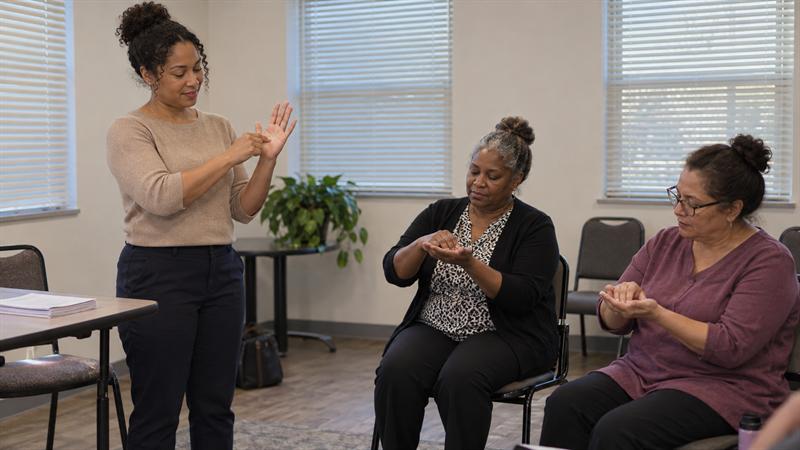
Introductory education on what reflexology is, how it is commonly offered as a complementary wellness practice, and what a session looks like. In a group setting, the focus is awareness. Participants are not receiving a treatment. A short demonstration or a simple self-massage technique can be included for groups comfortable with a hands-on element. This topic draws interest from senior groups, caregiver groups, and wellness-curious community members. The distinction between education and treatment is stated clearly at the start of the session.
Aromatherapy and Emotional Wellness Education
Introduction to scent association in complementary wellness, with examples of how scent can fit into a home or work environment. The group education setting covers what aromatherapy is, common scents used in complementary wellness, and practical ways to use scent in everyday routines. No product is required. The session can run fully informational. For individuals who want a deeper, individualized approach, the aromatherapy and emotional healing service is a separate option.
What Makes a Community Workshop Useful for an Organizer
The organizer handles sign-ups, the room, the calendar, and the members’ experience. The workshop has to fit that reality. Five qualities separate a session the organizer will repeat from one they will not book again.
- Clear format and reasonable duration
- Audience-appropriate language
- Practical takeaways for participants
- Low-pressure group dynamics
- Local scheduling and follow-up options
Clear Format and Reasonable Duration
Most community group workshops run 30 to 60 minutes. The format is confirmed before the session: what the group should expect, whether there is a hands-on component, and how much time is set aside for questions. A 45-minute session with a 10-minute question window is the most common structure. The facilitator does not overrun. Organizers have other items on their agenda, and a session that eats into the next program can erode trust in future programming.
Audience-Appropriate Language
A session for a youth after-school group sounds different from one for a senior center or a nonprofit board. The facilitator adjusts vocabulary, examples, and pacing to the room. Technical terms are explained in plain language if they come up. The session sounds like a conversation, not a lecture. When the language does not match the room, participants may disengage early and the group leader may not book a second session.
Practical Takeaways for Participants
A useful workshop gives participants one or two things they can do after they leave. A breathing exercise. A label-reading habit. A boundary phrase. A small self-care routine that fits into an existing morning. A short handout or verbal summary reinforces the points. The design principle is one useful idea, not a full curriculum. Retention in a group setting is limited, and the session is built around that reality.
Low-Pressure Group Dynamics
Participation is opt-in. No one is required to share, speak, or move in a way that makes them uncomfortable. The facilitator sets the tone for a respectful environment from the first minute. This matters most in caregiver groups, where members may be emotionally fatigued and not ready to open up in front of a mixed group. Questions are welcome. Speaking is not required.
Local Scheduling and Follow-Up Options
Sessions run at the group’s usual meeting space, a community center, or a nearby location accessible from Accokeek. The facilitator confirms the date, time, and location in advance. If the group wants a follow-up session or a recurring quarterly meeting, that is a separate scheduling conversation. Individual follow-up services are available but are never a condition of the group workshop.
Local Relevance for Maryland and Prince George’s County Groups
Community groups in Accokeek and Prince George’s County operate in a specific local context: neighborhood-level organizations, school-adjacent youth programs, local senior centers, small nonprofits serving a defined geographic community. A workshop that does not understand that context delivers a session that looks reasonable on paper and falls flat in the room.
Serving Accokeek and Nearby Communities
Dr. Barbara Samaroo – The Healing Corner is based in the Accokeek, Maryland area and serves nearby Prince George’s County organizations. In-person sessions run at the group’s location if the space is accessible. The approach to group work is built on one observation: a community group does not need another wellness lecture. It needs a session that fits the room it has, the time it has, and the people it has. The facilitator works within the local landscape: community centers, faith-based groups, scout troops, after-school programs, and senior activity centers. The scheduling conversation happens locally, and the session runs locally.
Fitting Into Seasonal Community Programming
Community groups plan in seasons. A new program year starts in fall. A winter check-in comes in January or February. A spring event series runs through March and April. A 30 to 60 minute wellness workshop slots into an existing meeting without requiring the group to build a separate series around it. For groups that want recurring sessions, a quarterly cadence is a sustainable format. The facilitator works around the group’s existing calendar, not the reverse.
Here is where the decision lands. If your group runs a regular meeting and you want one session that gives members a practical takeaway without rebuilding the calendar, a facilitated workshop fits. If your group needs a full nutrition program, a clinical assessment, or a multi-week training, a single workshop will not cover that. Getting the format wrong can waste the organizer’s time and the members’ attention.
- Your group meets monthly or quarterly and needs one useful session per meeting.
- The audience is mixed, but one topic can still address a specific need.
- You need something that fits in 45 to 60 minutes and does not require the group to travel.
- The current wellness content in your meetings is generic, and participants are not engaging.
If two or more of those apply, a facilitated group workshop is a strong fit. The next step is a short planning conversation.
Common Questions from Group Leaders
The questions below come up in nearly every planning conversation.
Who Can Attend the Workshop?
The workshop is open to the member base of the requesting group. A youth program may include parents. A caregiver group may include family members or support workers. There is no medical or professional prerequisite for attendance. The group leader sets the invitation scope, and the facilitator respects that boundary. If the audience is mixed-age, the session can run with age-appropriate language throughout or in two short segments. The group leader decides which fits the room.
How Long Does a Typical Session Take?
Most sessions run 45 minutes of facilitated content followed by a 10-minute question window, for a total of about an hour. For youth groups, the content portion is often shortened to 30 to 40 minutes because attention spans are shorter and the group may have other activities scheduled afterward. The exact length is confirmed during the planning conversation so the session fits the agenda rather than displacing other items. A 30-minute session works for a single-topic orientation. Sixty minutes works better when the group wants a fuller topic with more conversational time.
Can the Workshop Be Customized for a Specific Group?
Yes. The topic, language, examples, and format are adjusted based on what the group leader shares about the audience, size, and current focus. A caregiver group in a waiting room gets different pacing than a youth after-school program or a nonprofit volunteer team. The facilitator has a working range of topics, but the session is shaped around the group’s stated need. Customization does not mean the facilitator starts from a blank page each time. The core topic has structure. The delivery is tailored to the room. That distinction is what separates a well-prepared session from one that feels improvised.
Is This a Medical Service or an Educational Session?
No. The community workshop is an educational and wellness-awareness session. Participants are not asked to disclose medical history. No diagnosis, treatment plan, or clinical outcome is offered. The session focuses on practical self-care habits, awareness of complementary wellness practices, and group conversation. If a participant has a specific medical concern, the appropriate step is to discuss it with their healthcare provider. In practice, it is a group program that can be added to a community calendar, not a clinical encounter.
How Should a Group Request a Workshop?
The group leader sends a short message with four details: group size, audience, preferred time, and the topic or challenge the group wants to address. An email or a phone call is enough. No written proposal is needed. The facilitator responds with available dates, a brief description of the session, and any preparation notes. The group confirms the date and location. The process is a scheduling conversation, not a procurement process. The group can start that conversation through the contact page.
Key Takeaways
- A community wellness workshop is a structured, facilitated education session built for a specific audience, not a generic wellness talk.
- The content adapts to the group: caregivers, youth, seniors, and local nonprofits each get a session shaped to their context, language, and pacing.
- Core topics include stress reduction, caregiver self-care education, healthy eating for youth, reflexology awareness, and aromatherapy education.
- The format runs 30 to 60 minutes, includes a question window, and centers on one or two practical takeaways.
- The session is educational rather than medical. Participation is opt-in.
- Groups in Accokeek and Prince George’s County can request a session through a short planning conversation with Dr. Barbara Samaroo – The Healing Corner.
Conclusion: A Practical Next Step for Community Groups
The problem this page addresses is not a lack of wellness content. It is a lack of content that fits the specific group in front of you, on the specific day you are meeting, in the specific room you have. When that fit is missing, the session runs, members disengage early, and the group may not book a second one. The organizer may then conclude that wellness programming does not work for their group. More often, the first attempt simply missed the room.
Dr. Barbara Samaroo – The Healing Corner runs these sessions in the Accokeek and Prince George’s County area. The approach is built around the group’s constraints, not a facilitator’s preference for a longer talk. The session is shaped before the group arrives. The language matches the audience. The pacing fits the calendar. The group leaves with one or two things it can use, not a list of general tips that dissolves by the end of the week.
If your group is planning a meeting in the next few weeks and you need a session that fits the room you have, send a short message with the group size, audience, preferred time, and the topic you want to address. The rest is a scheduling conversation. Dr. Barbara Samaroo – The Healing Corner handles the session structure from there.