If you are considering a holistic iridology appointment, you may want to know what will happen, what to bring, and how the conversation may relate to your wellness priorities. Dr. Barbara Samaroo at The Healing Corner provides a space to discuss those questions clearly before you decide how to move forward.
This guide walks through how to prepare, what the appointment may include, the questions worth asking, and when medical care needs to come first. The purpose is to help you arrive informed and with realistic expectations about a complementary wellness service.
Why People Schedule a Holistic Iridology Appointment
People may schedule a holistic iridology appointment because they want a more focused conversation about wellness habits, daily routines, self-care, and personal goals. Some are exploring complementary wellness services for the first time. Others want help organizing the questions they already have.
Wellness efforts can sometimes feel scattered. You may be trying several routines at once, struggling to stay consistent, or unsure which area deserves attention first. Starting with a defined conversation can bring more structure to those decisions.
- Exploring personal wellness goals
- Discussing daily routines, rest, stress, and self-care consistency
- Learning about complementary wellness approaches
- Considering whether a broader wellness consultation would be useful
- Seeking wellness support alongside appropriate medical care
Holistic iridology is a complementary wellness service. New, severe, persistent, or concerning symptoms should be evaluated by an appropriate medical professional rather than relying on a wellness appointment for answers.
For a fuller overview of the service, explore Holistic Iridology at The Healing Corner.
How to Prepare for an Iridology Appointment
You do not need a complicated routine to prepare for an iridology appointment. The most useful preparation is knowing what you want to discuss, bringing relevant context if requested, and writing down the questions that will help you understand your options.
Think About Your Wellness Goals
Choose one to three wellness areas that matter most to you. You may want to discuss your daily routine, stress, sleep habits, self-care consistency, or interest in a specific wellness service. A clear starting point keeps the conversation connected to your priorities.
If you arrive with only a general feeling of being “off,” the discussion can become too broad to be useful. Naming the routines or patterns you want to explore gives the appointment a practical focus.
Bring Relevant Context and Questions
If requested, bring a short list of relevant wellness and lifestyle information. This may include current routines, supplements, medications, allergies, and health background that gives context to your questions.
This information can support an organized wellness conversation, but it does not replace a clinical medical history or lead to medical conclusions. Writing down your questions in advance also helps ensure the issues most important to you are addressed.
Know When Medical Care Should Come First
A wellness appointment should not delay medical care. Sudden, severe, worsening, or concerning symptoms should be evaluated by an appropriate medical professional, especially when they affect daily function or raise questions about a medical condition.
Complementary services should not be treated as substitutes for medical care. Stopping prescribed medication, changing treatment, or trying to self-diagnose from a wellness conversation can delay needed care. Medical decisions need qualified medical guidance.
For a broader first-visit checklist, review how to prepare for a wellness consultation before your appointment.
What Happens During a Holistic Iridology Appointment?
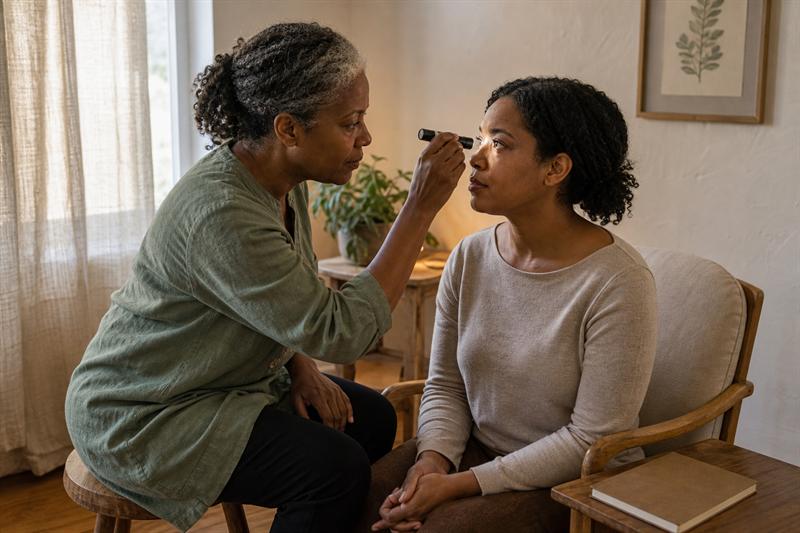
A holistic iridology appointment may include a discussion of your goals, iris observation as part of the wellness process, and a review of possible next steps. The appointment is intended to support a conversation about wellness priorities, not to make medical claims about what the iris can diagnose.
Step 1: A Conversation About Your Wellness Priorities
The appointment may begin with why you scheduled and what you hope to understand. You may discuss routines, stressors, wellness practices, concerns, and the areas where you want more direction.
This starting point keeps the conversation centered on you rather than on assumptions. When your goals are clear, it is easier to decide whether the discussion and any next steps are relevant to you.
Step 2: Iris Observation Within a Holistic Wellness Discussion
Iris observation may be included as part of the holistic iridology process. It should be understood as a complementary wellness perspective within a broader discussion, not as a medical diagnostic test.
Observations may lead to conversation about lifestyle context, wellness patterns, and personal goals, but they do not establish a medical condition or replace clinical testing. Learn more about the approach on the Holistic Iridology service page.
Step 3: Discussing Wellness Patterns and Possible Next Steps
After the conversation and iris observation, the discussion may turn toward general wellness themes and possible next steps. This may include reflecting on routines, identifying questions to explore further, or deciding whether another wellness service fits your interests.
Not every appointment needs to lead to follow-up services. The important question is whether a next step has a direct connection to the goals you brought into the visit. When that connection is unclear, adding more services may not be the right answer.
What an Iridology Appointment Does and Does Not Provide
Clear expectations make it easier to decide whether an appointment fits your needs. Holistic iridology can support a focused wellness conversation, but it does not take the place of medical assessment or treatment.
What It May Provide
- A structured conversation about personal wellness goals
- A complementary perspective on lifestyle and self-care topics
- Space to ask questions about wellness services and support options
- Possible next-step ideas connected to the discussion
- More clarity about whether a broader wellness consultation is worth exploring
A useful outcome may be greater direction. Rather than leaving with broad wellness information, you may leave with a clearer sense of the areas you want to focus on and the questions that still need attention.
What It Does Not Replace
- Medical diagnosis
- Laboratory testing
- Emergency care
- Treatment for medical conditions
- Medication management or advice about changing prescribed treatment
If you need answers about a symptom, diagnosis, medication, or treatment, a holistic iridology appointment is not a substitute for appropriate medical care. A wellness conversation should not delay medical evaluation when the situation requires it.
Medical evaluation is important when a concern may require clinical care. This includes:
- Symptoms that are sudden, severe, persistent, or worsening
- Changes that interfere with normal daily activities
- Questions about medication, diagnosis, or treatment
- Concern that something requires clinical testing or urgent attention
These situations call for medical evaluation rather than wellness interpretation alone. Holistic services can remain part of a broader self-care approach, but they should not replace the level of care the situation requires.
Questions to Ask at a Holistic Iridology Appointment
Good questions help you understand the appointment without relying on assumptions. The most useful questions clarify the process, the limits of the service, and whether any suggested next step fits your goals.
- What can I expect during this appointment from start to finish?
- How will the discussion connect to my personal wellness goals?
- What type of wellness guidance may be discussed after iris observation?
- How do you distinguish complementary wellness guidance from medical diagnosis?
- Would a broader wellness consultation be useful for the topics I want to discuss?
- When should I speak with a licensed healthcare professional instead?
The key issue is not simply whether recommendations are offered. It is whether they are explained clearly, relate to your goals, and respect the line between wellness guidance and medical advice.
What Happens After an Iridology Appointment?
What happens next should be based on what was discussed and what you want to do with that information. Some clients reflect on the conversation and adjust a daily wellness routine. Others decide that a follow-up conversation or another service is worth discussing.
Reviewing Practical Wellness Next Steps
Before you leave, make sure you understand what was discussed and why it relates to your stated goals. If a suggestion feels broad or unclear, ask what it is intended to support and how it connects to the topic you brought into the appointment.
Trying to change many routines at once can make a wellness plan difficult to maintain. It can also make it harder to tell what feels useful. A focused next step is often more practical than a long list of changes that does not fit daily life.
Considering a Broader Wellness Consultation or Related Service
Some clients may want a more comprehensive wellness conversation after an iridology appointment. Others may be interested in services such as reflexology, aromatherapy, Raindrop Therapy, perception reframing, yoni steaming, or Iconic Foot Detox because those services relate to their personal wellness interests.
These options should be considered individually, not treated as automatic add-ons. For readers comparing consultation options, what clients can expect from a Zyto Select Balance Full Assessment explains another wellness service offered by The Healing Corner.
Is a Holistic Iridology Appointment Right for You?
A holistic iridology appointment may be a good fit when you want a complementary wellness conversation and understand what the service is designed to provide. It is not the right fit when your immediate need is diagnosis, treatment, urgent care, or answers that require medical testing.
- You want to discuss personal wellness goals in a holistic setting.
- You are interested in complementary wellness support.
- You understand that the appointment is not medical diagnosis or treatment.
- You are open to discussing lifestyle context and practical wellness questions.
- You will seek licensed medical care for symptoms that require evaluation.
At The Healing Corner, a free consultation offers a practical way to clarify fit before scheduling a service. If you are unsure whether holistic iridology matches your goals, schedule a free consultation to discuss whether holistic iridology is a fit for your wellness goals.
Key Takeaways
- A holistic iridology appointment may begin with your wellness priorities and questions.
- Preparation generally includes identifying your goals, bringing relevant context if requested, and writing down what you want to ask.
- Iris observation should be understood as part of a complementary wellness discussion, not a medical diagnosis.
- Symptoms, medication questions, treatment decisions, and urgent concerns require appropriate medical care.
- Follow-up services are optional and should connect directly to your goals rather than being assumed.
Conclusion: Start With a Clear Wellness Conversation
The most important part of considering an iridology appointment is understanding its purpose, limits, and possible next steps. That clarity can help you choose a wellness service that matches what you are seeking while recognizing when medical care is the more appropriate next step.
Dr. Barbara Samaroo at The Healing Corner offers a free consultation so prospective clients can discuss their wellness goals, ask direct questions about holistic iridology, and decide whether the service is appropriate before moving forward. It is an informed starting point for anyone considering this complementary wellness service.
Frequently Asked Questions About Holistic Iridology Appointments
What should I expect at my first holistic iridology appointment?
Your first appointment may focus on why you scheduled, what wellness goals you want to discuss, and what lifestyle context is relevant to those goals. Iris observation may be included as part of the holistic process, followed by a discussion of wellness themes and possible next steps.
This is a complementary wellness conversation, not a medical exam. It may help organize wellness priorities, but it does not replace diagnostic testing, treatment planning, or medical care for symptoms.
How do I prepare for an iridology appointment?
Prepare by identifying the wellness topics you want to discuss, writing down questions, and bringing relevant lifestyle or health context if requested. For example, you may want to discuss stress, rest, self-care consistency, or whether another wellness consultation relates to your goals.
The preparation that matters most is clarity. You do not need a complex routine before the visit, but it helps to have a clear idea of what you hope to understand by the end of the conversation.
Is an iridology appointment painful or invasive?
Iris observation is an observational part of a wellness appointment. It does not involve needles, medication, or medical testing. The process is centered on observation and discussion rather than an intervention that changes the body.
Before your appointment begins, you should understand how the process will be conducted. A clear explanation helps set appropriate expectations and prevents confusion about what the service involves.
Can iridology diagnose medical conditions?
No. Holistic iridology should not be used to diagnose medical conditions, replace laboratory tests, determine treatment, or guide medication changes. It is a complementary wellness approach that may support conversation about wellness goals, lifestyle patterns, and general self-care priorities.
Symptoms, diagnosis questions, medication concerns, and treatment decisions need appropriate medical care because they require clinical evaluation rather than wellness interpretation.
What questions should I ask an iridology practitioner?
Ask questions that make the process and boundaries clear. Useful questions include what happens during the appointment, how the discussion will connect to your goals, what follow-up may be useful, and how complementary wellness guidance is distinguished from medical diagnosis.
A productive wellness appointment explains its limits clearly. Observations should not be presented as medical conclusions, and you should understand when medical care is needed.
What happens after a holistic iridology appointment?
Next steps depend on your goals and the discussion during the appointment. You may reflect on the wellness topics covered, focus on one practical routine change, consider a follow-up conversation, or explore another service that relates to your interests.
An additional appointment is not automatic. The deciding factor is whether a next step has a clear connection to the goals you brought into the visit and whether you understand why it is relevant.