
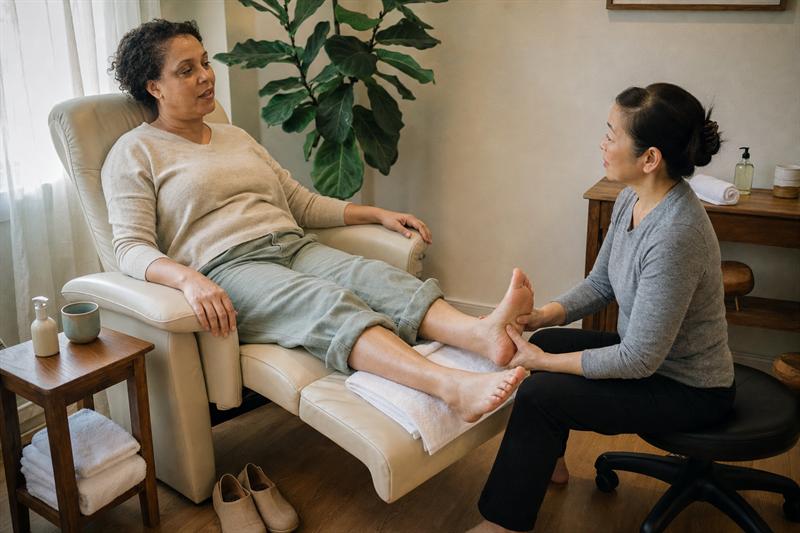
Quick Answer: A reflexology session is usually simple to prepare for: wear comfortable clothes, choose shoes that are easy to remove, and be ready to discuss pressure, foot sensitivity, and comfort. For many first-time clients, the main concern is simply not knowing what to expect or which questions to ask.
The Healing Corner offers reflexology as a complementary wellness service. You generally do not need special clothing, a complicated routine, or a perfectly defined goal before your appointment.
What Happens During a Reflexology Session?
A reflexology session generally includes an opening conversation, time to get comfortable, foot-focused hands-on work, and an opportunity to ask questions before leaving. Understanding this flow can make a first appointment feel less uncertain.
The Appointment Usually Begins With a Conversation
The appointment may begin with a discussion about what brought you in, what you hope to get from the session, and what would help you feel comfortable. You do not need to use wellness terminology or explain everything perfectly. A simple comment such as “my feet are sensitive,” “I prefer light pressure,” or “this is my first session” provides useful direction.
Sharing questions or comfort concerns early gives the practitioner helpful context before the hands-on portion begins.
Getting Comfortable for the Hands-On Portion
Reflexology commonly focuses on the feet. You should generally expect to remove your shoes and have your feet accessible while remaining in comfortable everyday clothing.
The goal is not to follow a particular routine or meet an appearance standard. The important point is that you can settle into a comfortable position and speak up if you need an adjustment. Arriving rushed, uncomfortable in your clothing, or unsure whether to say something can make it harder to relax during the appointment.
Pressure, Sensitivity, and Communication During the Session
Pressure can be discussed throughout the session rather than endured in silence. Some people prefer lighter touch, while others are comfortable with firmer pressure. Feet can also feel sensitive, ticklish, tired, or sore for everyday reasons.
- Say if the pressure feels too intense.
- Mention if you are ticklish or have a sensitive area.
- Ask to shift position if you are not comfortable.
- Request a pause if you need one.
You do not need to push through discomfort. Pain is not required for a session, and tenderness in one area does not by itself identify a health concern. Clear feedback helps keep the session comfortable.
Wrapping Up and Asking Follow-Up Questions
At the end of the session, take a moment to ask any remaining questions about the experience, comfort, or future scheduling. If possible, avoid planning an immediate high-pressure transition afterward. A few minutes to regroup can make the end of the appointment feel less abrupt.
For a closer look at the service itself, visit the Reflexology page.
What Should You Wear to a Reflexology Appointment?
Wear comfortable, everyday clothing and shoes that are easy to remove. Since reflexology is commonly foot-focused, the practical goal is easy access to your feet and enough comfort to sit or recline without feeling restricted.
Choose Comfortable, Easy-to-Move-In Clothing
Choose clothing that helps you relax. Loose or flexible everyday clothes are usually more practical than restrictive clothing, complicated layers, or anything that makes it hard to settle comfortably.
You do not need to buy a special outfit for reflexology. What matters is avoiding distractions that make it harder to focus on the appointment.
Wear Shoes and Socks That Are Easy to Remove
Wear shoes that come off and go back on easily. You can arrive in socks, but your feet generally need to be accessible during a foot-focused session.
Clean, comfortable feet and footwear are generally enough. Many people worry about whether their feet look “right” for an appointment, but that concern is usually unnecessary.
What You Usually Do Not Need to Bring
You generally do not need special equipment, a detailed preparation kit, or complicated products. What helps most is arriving with relevant information and questions.
- Any comfort concerns involving your feet
- Questions about pressure or session flow
- Information about a recent foot or ankle injury
- Any skin concern affecting the feet that should be discussed first
How to Prepare for Your First Reflexology Appointment
Preparing for reflexology is less about following rules and more about reducing avoidable discomfort. The most practical approach is to arrive comfortable, unhurried when possible, and ready to communicate.
Arrive Ready to Share Relevant Information
Let the practitioner know about foot sensitivity, a recent injury, skin concerns affecting the feet, or anything else that could affect your comfort. This does not turn the session into medical care; it simply gives the practitioner useful context for the appointment.
If you are exploring reflexology because you want a quiet reset, relaxation, or a complementary wellness experience, say that too. You do not need a detailed explanation to justify a visit. Helpful information is simple: what you are comfortable with and what you hope to understand.
Plan for Comfort Before and After the Appointment
Eat and drink in a way that helps you feel comfortable, and avoid arriving overly hungry, rushed, or distracted if you can. The point is not to create a perfect pre-session routine. It is to avoid conditions that can make it difficult to settle in or communicate clearly.
It can also help to leave enough time after the appointment to put your shoes back on, gather your thoughts, and transition into the rest of your day. Scheduling every minute tightly can make an otherwise calm appointment feel rushed.
Bring Questions Instead of Trying to Guess What Is Normal
Questions about clothing, pressure, session length, comfort, and service fit are reasonable to ask before booking. Guessing can lead people to delay scheduling or arrive anxious about details that can be answered directly.
If you are still deciding between options, this guide on how to choose a wellness service explains how assessments, reflexology, aromatherapy, and other services may suit different wellness interests.
Does Reflexology Hurt or Feel Uncomfortable?
Reflexology should not require you to tolerate pain. Pressure and sensitivity differ from one person to another, so the practical standard is simple: if something feels too intense or uncomfortable, say so and request an adjustment.
Pressure Preferences Can Differ
Some people enjoy firmer pressure. Others prefer a lighter touch, especially during a first appointment or when their feet are sensitive. There is no need to tolerate more pressure than feels right for you.
A sensitive spot on the foot does not, by itself, confirm an imbalance, toxin buildup, or an issue elsewhere in the body. The useful information is how the pressure feels to you during the session.
Speak Up When You Need an Adjustment
Use clear, simple language if something needs to change. You can say that pressure is too firm, that you are ticklish, that your foot is tender from recent activity, or that you need to shift position.
Ignoring discomfort can create more tension and make it harder to relax during the appointment. Direct communication is the appropriate next step when pressure or positioning does not feel right.
What Might You Notice After a Reflexology Session?
After a reflexology session, give yourself a moment to notice how you feel and transition back into your day. There is no single response that every person should expect, and a specific sensation afterward does not prove that a particular change has taken place.
Give Yourself a Moment to Check In
You may simply want a quiet moment before returning to work, errands, or family responsibilities. That is a practical reason to avoid immediately rushing out when your schedule allows.
It can be tempting to interpret every post-session feeling as a sign that something is being released or corrected. A more useful approach is to notice your comfort and ask questions if anything about the visit is unclear.
Keep Post-Session Guidance Practical
Choose comfortable footwear, move through the rest of the day at a manageable pace, and avoid turning ordinary wellness habits into a strict recovery protocol. Reflexology does not generally require a complicated aftercare routine.
If you have urgent, severe, unexplained, or worsening symptoms, seek appropriate medical attention rather than relying on a wellness appointment.
When Should You Ask Questions Before Booking Reflexology?
Ask questions before booking when there is a clear reason the appointment setup needs more discussion. Addressing an unresolved concern before you arrive can make the session feel more comfortable and straightforward.
Situations Worth Discussing Ahead of Time
- You are unsure whether a foot-focused session is appropriate for you.
- You have had a recent foot or ankle injury.
- You have wounds, irritation, or a skin concern affecting your feet.
- You have pregnancy-related questions.
- You have experienced significant health changes or new symptoms.
These situations do not all mean the same thing, and they should not be treated as a one-size-fits-all list. What they have in common is that they may affect comfort or whether the session should be discussed in advance.
When Medical Guidance Should Come First
Reflexology is a complementary wellness service, not a substitute for medical diagnosis, treatment, or urgent care. Urgent, severe, unexplained, or worsening symptoms should be addressed through appropriate medical care first.
If you are unsure how a foot-focused wellness appointment fits with your health history, consider discussing that question with an appropriate healthcare professional. A practitioner conversation can then focus on the practical details of the wellness session and your comfort preferences.
Is Reflexology the Right Wellness Service for You?
Reflexology can be a practical starting point for someone interested in a foot-focused complementary wellness experience. It is not the only option, and choosing a starting point can feel harder when people assume they must already know exactly which service they want.
Start With the Kind of Support You Are Looking For
Some people are drawn to a session centered on the feet and relaxation. Others are deciding between reflexology, aromatherapy, perception reframing, an assessment, or another available service.
The decision can start with the experience you are looking for and the questions you want answered. It does not need to start with broad promises or pressure to choose a service before you understand what it involves. You can explore available wellness services to see the broader range of options.
Use a Free Consultation to Get Clarity Before Booking
A free consultation provides a place to discuss your questions, preferences, and comfort considerations before choosing a service. This can be especially useful when the real question is not whether you are interested in wellness support, but where to begin.
The Healing Corner offers a free consultation so clients can sort through practical concerns instead of guessing. When you are deciding between a foot-focused session and another wellness approach, a conversation can provide useful clarity before scheduling.
Key Takeaways
- Wear comfortable clothing and shoes that are easy to remove.
- Expect an opening conversation about comfort, questions, and relevant information.
- Speak up if pressure, positioning, or foot sensitivity needs adjustment.
- Do not treat pain or tenderness as proof that reflexology is working.
- Ask questions before booking when an injury, skin concern, pregnancy-related question, or health change affects your comfort or session planning.
- Use a free consultation when you need help choosing among wellness services.
Conclusion: Feel More Prepared for Your Reflexology Visit
The real barrier to a first reflexology appointment is often not what to wear. It is not knowing what will happen, what questions to ask, or whether it is acceptable to speak up about comfort. When those details are unclear, people can arrive tense, stay quiet about discomfort, and leave without the clarity they wanted.
The Healing Corner is a practical next step when you want to understand the appointment process and choose a wellness service with more confidence. Schedule a free consultation to discuss your questions, comfort considerations, and a suitable place to begin.
Frequently Asked Questions
What should I wear to a reflexology appointment?
Wear comfortable everyday clothing and shoes that are easy to remove. Since reflexology commonly focuses on the feet, the important detail is having easy access to your feet while remaining comfortable enough to sit or recline.
You do not generally need special clothing or a complicated preparation routine. Socks are fine for arriving, but your feet typically need to be accessible during the session.
Do you keep your clothes on during reflexology?
Comfortable everyday clothing is generally appropriate for a foot-focused reflexology session. The practical focus is on access to the feet, not on following a special dress code.
Comfort, not formality, shapes the experience. Clothing that feels restrictive or makes it difficult to settle in can become an unnecessary distraction during the appointment.
What happens at your first reflexology appointment?
A first reflexology appointment typically begins with a conversation about your questions, comfort preferences, and relevant information such as foot sensitivity or a recent injury. The hands-on portion commonly focuses on the feet, and you can communicate about pressure or positioning throughout the session.
You do not need to arrive already knowing what is normal. The opening conversation is where practical expectations can become clear.
Does reflexology hurt?
Reflexology should not require you to tolerate pain. Some people prefer lighter pressure, while others are comfortable with firmer touch, so the right level is the one that feels manageable and comfortable to you.
Foot tenderness does not automatically identify a health issue or prove that a session is working. If pressure feels too strong, the useful response is an adjustment rather than pushing through discomfort.
How should I prepare for reflexology?
Prepare by wearing comfortable clothing, choosing easy-to-remove shoes, and mentioning any foot sensitivity, recent injury, or skin concern that affects comfort. Arriving with questions about pressure, timing, or session flow is more useful than trying to follow a strict preparation routine.
The factor that matters most is communication. When a practitioner understands your comfort needs before the hands-on portion begins, the appointment has a clearer starting point.
Should I ask a healthcare professional before booking reflexology?
Medical guidance is important when you have urgent, severe, unexplained, or worsening symptoms, because reflexology is not a substitute for diagnosis, treatment, or urgent care. Questions about a recent injury, a skin issue affecting the feet, pregnancy, or a significant health change may also be worth discussing with an appropriate healthcare professional before a foot-focused wellness session.
The distinction matters: healthcare guidance can address health-related concerns, while a reflexology conversation can address how the session is structured and what may support your comfort.