Why This Question Matters for New Clients
Most people are not comparing two ideas in the abstract. They are trying to decide where to start. Is this something to bring to a doctor, or is this the right time for supportive wellness care?
That is where confusion begins. Holistic wellness and medical care are not interchangeable, and treating them that way can delay the right next step. At Dr. Barbara Samaroo’s The Healing Corner, this question comes up when new clients want support but also want a clear understanding of where wellness fits and where it does not.
A common situation is feeling off, run down, tense, or out of balance and looking for wellness support before deciding whether the concern needs medical evaluation. If the real need is diagnosis, testing, or treatment, supportive care is not the first place to start.
What Holistic Wellness Can Support
Holistic wellness focuses on the whole person. In practice, that usually means support around stress, rest, relaxation, body awareness, and broader wellness goals rather than trying to define a medical condition.
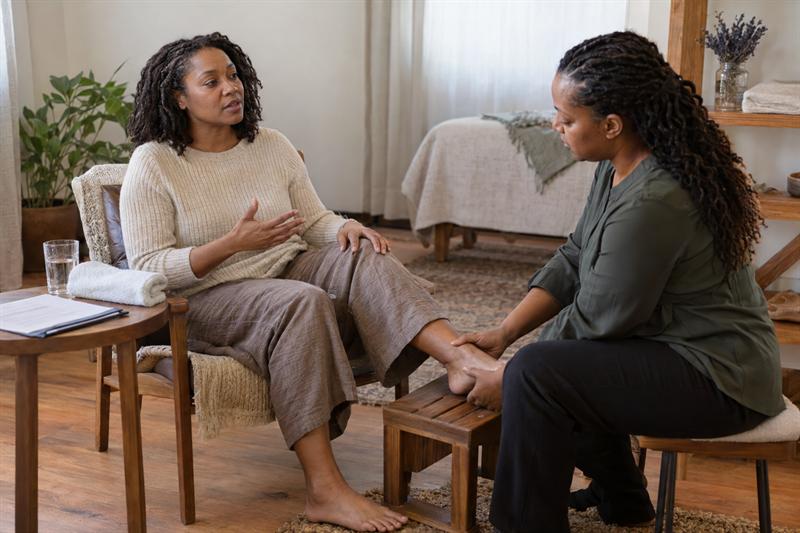
At Dr. Barbara Samaroo’s The Healing Corner, services such as reflexology, aromatherapy, raindrop therapy, perception reframing, yoni steaming, and ionic foot detox are best understood as supportive wellness options. They may be a fit when the goal is non-diagnostic support and the person is looking for a more intentional, whole-person approach.
If the goal is to feel more grounded, reduce tension, support relaxation, or build a wellness routine, holistic services can make sense in that setting. If the goal is to figure out what a symptom means, the need shifts from support to evaluation.
Examples of supportive wellness goals
- Stress reduction support
- Relaxation and restoration
- Support for overall well-being
- Mind-body awareness
- Complementary support alongside other care when appropriate
For readers who want a broader introduction, What Is Holistic Wellness? A Beginner’s Guide to Whole-Person Support explains how this kind of care is generally framed.
What Holistic Wellness Is Not Designed to Do
Holistic wellness is not designed to replace emergency care, medical diagnosis, or treatment for serious health concerns. That boundary matters because it affects what kind of help a person actually needs.
A service can feel supportive and still be the wrong first step. Problems can start when someone tries to explain away a symptom instead of getting it evaluated. If the issue is ongoing, unexplained, or changing, the need is no longer just support. The need is medical evaluation.
This confusion often grows when people assume that a natural or supportive approach can do the same job as medical evaluation. It cannot. Supportive care and medical care serve different purposes. One is there to support wellness. The other is there to determine what is happening and what may need to happen next.
What supportive care does not replace
- Diagnosis
- Emergency evaluation
- Treatment for serious or rapidly changing symptoms
- Monitoring of known medical conditions by licensed medical providers
When to See a Doctor Before Trying Holistic Wellness
This is the main decision point. Medical care should come first when symptoms are new, severe, sudden, worsening, or unexplained. That is the line between a wellness goal and a medical question.
A common reason for delay is that a symptom has not completely stopped daily life. But if a concern is growing, repeating, or interfering with normal routines, that usually points to the need for medical evaluation before any supportive service is considered.
This also applies when there is already a diagnosed condition in the background. Once a symptom sits within a larger medical picture, the issue is not just comfort. It becomes a question of whether the change fits the known condition or needs medical attention.
Signs medical evaluation should come first
- Sudden or intense symptoms
- Rapid changes in how someone feels
- Unexplained symptoms that do not have a clear cause
- Symptoms that continue, worsen, or interfere with daily life
- Concerns involving an existing diagnosed medical condition
- Situations where medical clearance may be appropriate before certain services
If any of these sound familiar, do not treat the issue like a routine wellness decision.
- The symptom is new and has no clear explanation
- The symptom is getting worse instead of settling down
- The issue is affecting sleep, daily function, or normal routines
- There is already a diagnosed condition involved
In that situation, the next step is usually medical evaluation first, not added support.
A Simple Way to Decide Where to Start
The simplest question is also the most useful: Is the goal support, or is the goal to find out what is wrong? That distinction clears up most of the confusion.
If the concern involves diagnosis, uncertainty, severity, or possible treatment needs, start with a doctor. If the concern centers on stress relief, relaxation, general wellness support, or a structured conversation about supportive options, a holistic consultation may be the right first step.
At Dr. Barbara Samaroo’s The Healing Corner, this difference usually becomes clear quickly. People who benefit most from a first wellness consultation generally already know they are looking for support. People who are still trying to interpret a symptom usually need a different starting point.
For a closer look at that process, What to Expect From Your First Holistic Wellness Consultation explains how an initial conversation can help clarify goals and fit.
Start with medical care when…
- Diagnosis is needed
- Symptoms are new or worsening
- Safety is unclear
- The issue may require testing or treatment
Start with holistic wellness when…
- The goal is non-diagnostic support
- Stress relief is the main concern
- Relaxation and overall well-being are the priority
- A consultation is needed to discuss whether a service is a good fit
How Holistic Wellness and Medical Care Can Work Together
These two approaches can work together when they are serving different roles. Medical care addresses evaluation, diagnosis, monitoring, and treatment. Holistic wellness supports the broader picture of how someone feels, functions, and cares for themselves.
What often causes confusion is the assumption that using both means both are doing the same job. They are not. One addresses medical questions. The other supports the person around those questions.
That distinction matters because it shapes expectations. Someone might seek reflexology, aromatherapy, or perception reframing as part of a broader wellness routine while a physician handles the medical side of an ongoing concern. That is different from using wellness services to avoid evaluation altogether.
Readers comparing models of care may also find it helpful to read Holistic Wellness vs. Alternative Medicine vs. Integrative Health: A Plain-Language Guide.
What New Clients Should Know Before Booking
If the fit is unclear, the most useful thing a new client can do is explain the real concern directly. This is where many booking mistakes start. People focus on the service they think they want instead of describing what is actually going on.
At Dr. Barbara Samaroo’s The Healing Corner, a free consultation can help clarify whether someone is looking for supportive wellness care or whether the situation points somewhere else first. That kind of conversation is useful because it starts with the actual concern rather than guessing from a service name alone.
The goal is simple: clearer expectations and a better fit from the start.
For practical preparation, How to Prepare for a Wellness Consultation: A New Client Checklist walks through what to think about before the appointment.
Helpful information to share before a visit
- What the main concern is
- How long it has been happening
- Whether symptoms are new, worsening, or unexplained
- Any diagnosed conditions or current medical care
- Questions about whether a service is an appropriate fit
Key Takeaways
- Holistic wellness may support overall well-being, but it does not replace medical diagnosis or emergency care.
- New, severe, worsening, or unexplained symptoms generally need medical evaluation first.
- Supportive wellness services fit best when the goal is non-diagnostic care such as relaxation, stress support, or whole-person wellness.
- A common mistake is using wellness services to answer a medical question they are not meant to answer.
- Clear next steps depend on whether the issue is about support or evaluation.
Conclusion
The real issue is not choosing between two competing philosophies. It is starting in the wrong place. When a symptom needs diagnosis, testing, or treatment, delaying medical care can lead to more confusion and a longer path to answers.
That is why this decision matters. Supportive wellness can be valuable, but it works best when it is used for the right purpose and at the right time. If the issue is non-diagnostic and the goal is stress support, relaxation, or whole-person care, Dr. Barbara Samaroo’s The Healing Corner can be a practical next step because the approach begins with clarity about fit, not assumptions.
For readers who want supportive wellness guidance and want to sort out the right starting point, Dr. Barbara Samaroo’s The Healing Corner offers a clear path forward. Visit the Contact | The Healing Corner page to take the next step.
Company Approach
At Dr. Barbara Samaroo’s The Healing Corner, the approach is not to blur the line between wellness support and medical care. The goal is to help people understand that line clearly so they can make a better decision from the start.
This matters because a common pattern is booking based on interest in a service name rather than the actual concern that needs attention. A more useful approach is to look at the goal first. If the goal is support, restoration, and whole-person wellness, the conversation can move forward from there. If the goal is evaluation of a symptom, that needs to be recognized for what it is.
That clarity builds trust. It also helps new clients avoid a common mistake in this space, which is expecting a wellness appointment to answer a medical question.
FAQ
Can holistic wellness replace medical care?
No. Holistic wellness supports overall well-being, but it does not replace diagnosis, emergency evaluation, or treatment for serious medical concerns.
The main distinction is purpose. Wellness services are built around support, relaxation, and whole-person care. Medical care is built around identifying what is happening and deciding what treatment or testing may be needed. When those roles get blurred, people often delay the kind of care that answers the real question.
When should someone see a doctor before booking a holistic wellness service?
A doctor should come first when symptoms are sudden, severe, worsening, unexplained, or affecting daily life. Those signs move the issue out of the wellness category and into the evaluation category.
There is a clear difference between wanting help with stress and trying to make sense of a symptom that is getting worse. One is a support decision. The other is a medical question. That difference matters because the wrong starting point can delay the right response.
What kinds of concerns are appropriate for holistic wellness support?
Holistic wellness support is most appropriate when the goal is non-diagnostic care such as stress relief, relaxation, body awareness, or general well-being. That is where services are being used for support rather than explanation.
What commonly gets misunderstood is that feeling off can describe two very different situations. It can mean someone wants help settling their system and improving overall wellness, or it can mean there is an unexplained symptom that needs attention. The deciding factor is whether the visit is for support or for answers.
Can holistic wellness and medical care be used together?
Yes, when they are being used for different purposes. Medical care addresses diagnosis, treatment, and monitoring. Holistic wellness addresses support, restoration, and whole-person care.
The useful distinction is that using both does not mean they overlap completely. It means each serves a separate role. This often works best when the medical side is being handled clearly and wellness support is being used to address the broader experience of stress, tension, or balance.
How do I know whether a wellness service is a good fit for my situation?
Ask what problem you are trying to solve. If the goal is support, relaxation, or general wellness, a wellness service may be a fit. If the goal is to find out what a symptom means or whether it needs treatment, that points to medical care first.
The factor that changes the decision is uncertainty. When someone is still trying to figure out whether something is wrong, that usually means the issue is not ready to be treated like a routine wellness appointment.
What should I share before a first holistic wellness consultation?
Share the main concern, how long it has been happening, whether it is new or getting worse, and any diagnosed conditions or current medical care that affect the situation. Those details matter because they help clarify whether the appointment goal is support or whether the issue belongs somewhere else first.
A useful distinction here is that the most important information is not just which service sounds appealing. It is why the service is being considered in the first place. That usually tells much more about fit than the service name alone.