
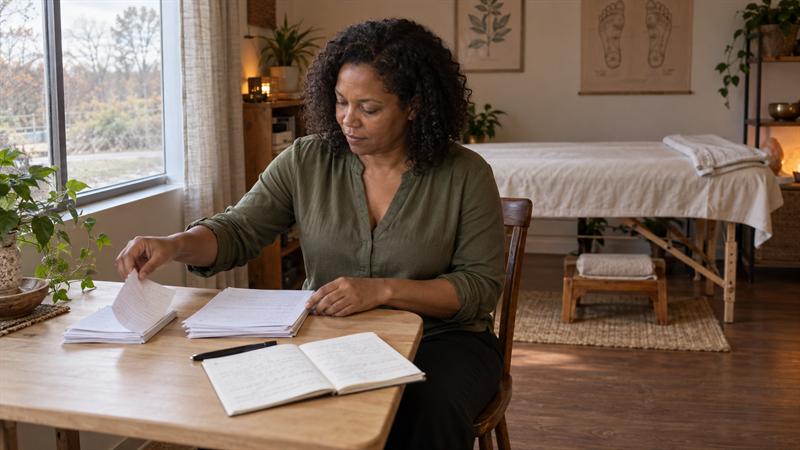
Quick Answer: After a holistic wellness consultation, the hardest part is often deciding what to do first. A helpful next step is to sort what was discussed into clear categories: what needs attention now, what to track at home, what supportive care fits your goals, and what belongs in a medical conversation.
What to Do After a Holistic Wellness Consultation
A consultation can bring clarity, but it can also leave you with several possible directions. That is where many people get stuck. Instead of trying to act on everything at once, it helps to follow a simple order: review, prioritize, track, decide, and follow up where it makes sense.
At Dr. Barbara Samaroo, The Healing Corner, this is a familiar post-consultation pattern. A person may leave feeling encouraged, but the next step can feel less obvious when several concerns came up at once. When everything feels important, it becomes harder to move forward clearly.
- Review what was discussed
- Prioritize one or two main concerns
- Track patterns that matter
- Decide whether supportive care or medical follow-up comes next
- Choose the next action based on fit, not pressure
If you want a refresher on how that first visit is usually structured, what to expect from your first holistic wellness consultation gives helpful context.
Start by Reviewing What Was Discussed
Go back to the main concerns that came up during the consultation. Look for patterns, symptoms, stressors, lifestyle habits, or questions that came up more than once. Then separate observations from recommendations.
That distinction helps. An observation can show what may need attention. A recommendation can help guide what to do next. When those get mixed together, it becomes easier to overreact or put everything off.
Separate Immediate Actions From Future Options
Some next steps need attention now. Others are simply options to consider after you have had time to reflect. A common mistake is assuming every suggestion needs to happen right away, which can lead to confusion and poor follow-through.
If something was discussed as a short-term priority, treat it that way. If it was mentioned as a possible support option, keep it in the future-options category until it clearly matches your goals. That makes the process easier to manage.
Turn Your Consultation Notes Into a Simple Next-Step Plan
Your notes should become a short plan, not a long list of possibilities. That usually means choosing one or two priorities and deciding what you need to observe, adjust, or schedule next. A useful post-consultation plan is simple enough to follow and specific enough to guide real decisions.
This is where many people lose momentum. They leave with helpful information, but no clear order. When that happens, the recommendations may stay on paper and little changes.
If you want to understand how consultation and follow-up work together, this guide to wellness assessment appointments and follow-up can help connect the steps.
Identify Your Top One or Two Priorities
Choose the concerns that are most disruptive, most consistent, or most important to your daily life right now. That could be stress, poor sleep, ongoing discomfort, emotional overload, or a broader wellness goal that has been hard to act on.
This usually becomes harder when too many goals compete for attention. If you try to address everything at once, the result is often a weak plan and inconsistent follow-through. One or two priorities create focus.
Write Down What to Track at Home
Track the changes that help you make better decisions later. That usually includes symptoms, discomfort patterns, energy levels, sleep, stress, and anything that seems to make things better or worse.
Keep it simple. A short note such as “tension increases after long workdays” is often more useful than a vague impression that something felt off. Once people start noticing timing and patterns, their next decisions often become much clearer.
Decide What to Do This Week, This Month, and Later
Break your next steps into short-term and later-stage actions. This week might be for reviewing notes, tracking patterns, or narrowing down one support option. This month might be for trying one selected service, revisiting your priorities, or preparing for a follow-up discussion.
Later steps belong in the plan too, but they should not crowd the immediate ones. A time-based plan can help prevent the common mistake of treating every idea as urgent. That can lead to hesitation instead of progress.
How to Decide Whether You Need Another Wellness Session
Not every consultation should be followed by another appointment right away. The more practical question is whether you still need guidance to act clearly on what was discussed. If the answer is yes, another session may help. If the answer is no, a short observation period may be more useful.
Clear decision-making matters here. Rebooking too quickly can happen before you have enough information. Waiting too long can happen when a person keeps thinking about next steps but never turns them into action.
Signs a Follow-Up May Be Helpful
A follow-up is often helpful when the consultation raised important questions that still need to be sorted. It may also help when you need support turning recommendations into a realistic plan.
- You still are not clear on which concern should come first
- You are deciding between services and need help matching them to your goals
- You started tracking patterns and now need help making sense of what you are seeing
- You understand the recommendations but have not been able to apply them consistently
When these signs are present, the issue is often not effort. The issue may be lack of structure. That is what follow-up can help address.
When It May Make Sense to Pause and Observe
Sometimes the right next step is to slow down and watch what becomes clearer over a short period of time. That makes sense when you are still processing the consultation, when your patterns are not yet clear, or when a medical concern needs to be addressed first.
Pausing is not the same as avoiding action. It is a deliberate choice to gather better information before committing to the next step. That works best when the pause has a purpose, such as tracking symptoms or narrowing your priorities.
If these signs sound familiar, it may be time to choose a clear next step:
- You keep revisiting your notes but still do not know what to do first
- You are trying multiple changes at once and nothing feels clear
- You noticed symptoms becoming more frequent or more disruptive
- You are delaying the next step because the options feel scattered
When post-consultation confusion starts replacing follow-through, the problem is no longer information. The problem is decision-making, and that usually needs to be addressed directly.
When Supportive Holistic Services May Fit Into Your Next Steps
Supportive services work best when they are matched to a specific goal. Choosing at random can lead to disappointment because the mismatch, not the service itself, is often the issue.
At Dr. Barbara Samaroo, The Healing Corner, supportive services are best understood as part of a broader wellness conversation. They are not all meant for the same kind of need. The better question is not “What sounds good?” but “What fits what came up in the consultation?”
If you are comparing options, this guide on how to choose a wellness service can help you narrow the decision.
Matching Services to Your Goals
Holistic medicine may fit when the main need is broader wellness planning and supportive guidance. Reflexology may fit when someone wants a body-focused service that supports relaxation and physical awareness. Aromatherapy or Raindrop Therapy may fit when calming support or a restorative experience makes the most sense.
Perception Reframing may be more relevant when stress patterns, thought patterns, or emotional perspective are part of the concern. Yoni Steaming and Ionic Foot Detox are better viewed as elective wellness options, not automatic next steps. A common mistake is choosing the most unfamiliar or most interesting service first instead of the one that best fits what was discussed.
Questions to Ask Before Booking a Service
Before booking, the most useful questions are practical.
- What is this service meant to support?
- How does it connect to the goal that came up in the consultation?
- Is this the right time for it, or should it wait until other priorities are clearer?
- Am I choosing this because it fits, or because I do not know what else to do?
Clear questions can protect you from random next steps and help you choose support that makes sense.
When to Bring Your Concerns to a Medical Doctor
Holistic wellness support does not replace medical care. If the consultation brought attention to new, worsening, persistent, or unusual symptoms, that usually means a medical conversation needs to happen. Ignoring that line can create delays and make the situation harder to sort out later.
This is one of the most important distinctions in the whole process. A wellness consultation can help organize what you are noticing, but it is not the same as identifying the cause. For a clearer breakdown, this guide on holistic wellness vs. medical care explains where that boundary matters most.
Symptoms That Deserve Medical Attention
Pay close attention to symptoms that are new, worsening, persistent, or affecting normal daily function. Ongoing pain, changes that feel unusual for your body, or anything that starts interfering with work, sleep, movement, or daily responsibilities deserves medical review.
If you are seeing a clear pattern of worsening or increasing disruption, observation alone is usually no longer enough. This is often where delays happen when people keep waiting for more clarity instead of responding to what is already clear.
How to Use Your Consultation Insights in a Medical Conversation
Your consultation notes can help you have a more useful medical conversation. Bring the patterns you noticed, the timing of symptoms, what seems to make them better or worse, and the questions you still have.
The key is to use those notes for organization, not self-diagnosis. A common pattern is arriving at a doctor visit with a general feeling that something is wrong but no clear examples. Specific observations can make the conversation more productive because they show what changed, when it changed, and why it stands out.
A Simple Post-Consultation Checklist
- Review your notes and identify the main concern
- Choose one or two priorities instead of trying to do everything
- Track relevant changes in symptoms, stress, sleep, or discomfort
- Decide whether your next step is supportive care, follow-up, or a medical conversation
- Write down any questions that came up after the consultation
A checklist can reduce decision fatigue. Without one, it is easy to keep rethinking the same information without moving forward.
Key Takeaways
- The biggest challenge after a holistic wellness consultation is often not information. It is lack of clear sequencing.
- You do not need to act on every recommendation at once.
- The best next step depends on what matters most right now and whether any symptoms need medical attention.
- Supportive services work best when they match a specific goal, not when they are chosen at random.
- Tracking patterns at home often makes follow-up decisions much clearer.
Conclusion
After a holistic wellness consultation, the real challenge is usually not whether you learned something useful. It is whether you know how to turn that information into the right next step. If that step is not handled well, it is easy to stay stuck between too many options, delay needed care, or choose support that does not clearly fit the concern.
That is why a practical follow-up path matters. At Dr. Barbara Samaroo, The Healing Corner, the focus is on helping people make sense of what came up, recognize what needs attention now, and move toward the kind of support that fits. If your consultation raised important questions and you need clearer direction on what comes next, a follow-up conversation may be a practical next step.
Company Approach
At Dr. Barbara Samaroo, The Healing Corner, the approach to post-consultation support is grounded in clarity. Often, people do not need more information right away. They need help sorting what matters now, what to monitor, and what belongs in a different care conversation.
That approach matters because this is where confusion can turn into delay. When a person has several recommendations but no order, follow-through often drops. When a person understands how a service connects to a goal, what to track, and when medical care needs to come first, decisions can become more useful and more confident.
FAQ
What should you do right after a holistic wellness consultation?
Review what was discussed and sort it into simple categories: what needs attention now, what to track, and what is only a future option. A common mistake is treating every recommendation as equally urgent. In many cases, one or two priorities matter far more than the rest, and that is what should shape the next step.
How do you know if you need another wellness session?
You may need another session when the first consultation gave you direction but not enough clarity to act. That can happen when several concerns came up at once, when you are unsure which service fits best, or when you started tracking patterns and now want help making sense of them. If the main problem is still confusion, the next step should help resolve that confusion.
Should you see a doctor after a holistic wellness consultation?
If the consultation brought attention to symptoms that are new, worsening, persistent, or affecting daily life, that usually means a medical conversation should come next. The useful distinction is this: a wellness consultation helps organize what you are noticing, but medical care is where concerning symptoms are evaluated more directly. That difference becomes important when symptoms are no longer occasional or unclear.
How do you choose the right wellness service after a consultation?
Choose based on the goal discussed, not on which service sounds most appealing. For example, a body-focused support option serves a different purpose than a broader wellness planning service or a mindset-centered service. What changes the decision is not the name of the service. It is whether the service actually fits the reason you are seeking support.
What should you track after a wellness consultation?
Track patterns that make later decisions easier: symptoms, timing, energy, sleep, stress, and what seems to make things better or worse. A short, specific note is often more useful than a general impression. “Discomfort increases by evening” gives you something to work with. “I do not feel right” usually does not.
Can a holistic wellness consultation replace medical care?
No. A holistic wellness consultation supports self-awareness, planning, and supportive care decisions, but it does not replace medical care for symptoms that need diagnosis or closer evaluation. That distinction matters even when a consultation is helpful and revealing. Useful insight still serves a different role than medical assessment.