
A routine can look healthy on paper and still feel empty in daily life. That is often where the problem starts. When wellness habits are disconnected from values, beliefs, or a deeper sense of purpose, consistency gets harder and the routine can start to feel mechanical.
At Dr. Barbara Samaroo, The Healing Corner, this can be a common pattern for people who are trying to care for themselves but still feel uncentered. The issue is often not effort. The issue is that the routine is not fully connected to the whole person.
Why wellness can feel incomplete without meaning
Many wellness routines focus on what to do, but not why it matters. That often leads to short bursts of motivation followed by inconsistency, frustration, and the feeling that something is still missing.
A common pattern is that people know the basics of self-care, but the habits do not always last because they feel detached from identity. Sleep, movement, hydration, rest, and quiet time all matter, but they often feel different when they are part of a life that feels aligned. This is one reason whole-person wellness support resonates with many people. It makes room for the spiritual and emotional side of care, not just the physical side.
When healthy habits start to feel mechanical
Healthy habits can start to feel mechanical when they become tasks without connection. A person may go through the motions, check the boxes, and still feel scattered, tense, or emotionally flat. That can leave a routine looking consistent for a while without feeling sustainable.
This often shows up when people copy routines that look impressive but do not fit real life. The routine may be disciplined, but it does not feel personal. That disconnect can strip the meaning out of it.
The role of purpose in whole-person wellness
Purpose can turn a routine into a practice. It gives daily habits a reason to exist beyond productivity or appearance. When a person knows what a routine is supporting, whether that is peace, steadiness, spiritual grounding, patience, or better boundaries, it becomes easier to return to.
Purpose does not have to be dramatic. In whole-person wellness, purpose is often expressed in ordinary decisions like making space to breathe before reacting, setting aside time for reflection, or choosing rest before exhaustion takes over. Meaning often supports consistency better than pressure does.
What faith and wellness mean in everyday life
Faith and wellness come together when care for the body, mind, and emotions also reflects what a person believes and values. In daily life, that may look like prayer, gratitude, reflection, rest, service, quiet time, or habits that help a person stay grounded rather than rushed.
The key distinction is that faith is not just an extra activity added onto a routine. It can shape the purpose of the routine itself. That fits naturally with a plain-language view of holistic wellness, where the whole person matters and wellness is not reduced to one dimension.
Faith as personal grounding, not just ritual
Faith can be expressed through ritual, but it often goes deeper than ritual alone. It can shape how a person approaches patience, relationships, gratitude, stewardship, rest, and self-awareness. That is what makes it relevant to wellness.
For one person, faith-centered wellness may include prayer and scripture. For another, it may include reflective silence, gratitude, service, or intentional pauses during the day. What matters is not performing a routine that looks spiritual. What matters is whether the routine helps keep a person grounded in what they believe.
Spiritual wellness and the mind-body-spirit connection
Spiritual wellness is often understood as the part of wellness that deals with meaning, values, connection, and inner grounding. When that dimension is ignored, people may feel like they are caring for their bodies while neglecting what is happening internally.
This can become more noticeable when stress builds and the routine has no space for reflection. A person may keep functioning without feeling settled. In a mind-body-spirit approach, the goal is not just to stay busy with healthy habits. The goal is to create a rhythm that supports the whole person.
Signs your routine may need more meaning, not just more discipline
Many people assume they need more motivation. Often, that is not the real issue. If a routine keeps breaking down, it may mean the structure is not aligned with the person’s values, current stress level, or actual needs.
- The routine feels like obligation instead of support.
- The habits look healthy, but they do not create a sense of grounding.
- The routine is easy to abandon during stress because it was never anchored in meaning.
- There is a growing desire for support that includes spiritual, emotional, and physical care together.
Going through the motions
Going through the motions is one of the clearest signs that a routine has lost connection. A person may still follow parts of it, but there is little emotional engagement and no sense of renewal. That often leads to inconsistency because the routine feels like one more demand.
Feeling disconnected from your values
This often shows up when a routine has been borrowed from someone else’s lifestyle, beliefs, or energy level. A practice can be good in general and still be wrong for the person doing it. If the routine does not reflect real values and real capacity, it can become hard to maintain.
Wanting wellness support that reflects the whole person
Some people reach a point where standard advice no longer feels like enough. They want support that acknowledges stress, physical tension, emotional overload, and inner life together. That desire for whole-person support is one reason many people look for more grounded conversations through spaces like Real Talk Health Talk, where wellness is explored in a more complete and practical way.
If you recognize these patterns, it may be time to make a change.
- Your routine works only when life is calm, then disappears under pressure.
- You feel disciplined for short periods but not genuinely grounded.
- You keep adding more habits, but the routine still feels thin or disconnected.
- You want support that helps you slow down, reflect, and reconnect.
When these signs are present, the next step is often not more discipline. It is a routine built around meaning and support that fits your life.
How to build a faith-informed or purpose-centered wellness routine
A purpose-centered routine works best when it is simple, repeatable, and clearly tied to what matters. This is the part many articles skip. People do not just need inspiration. They need a structure they can actually use.
Start with one grounding question
Start with a question that helps define what the routine is supposed to support. Questions like “What helps me feel centered?” or “What do I want this routine to support?” create direction right away.
This matters because a routine without direction often turns into imitation. A routine with a clear grounding question is easier to shape and easier to return to when life gets busy.
Choose practices that match your values
Choose practices that fit both belief and capacity. That may include prayer, journaling, gratitude, scripture reading, quiet time, mindful walking, or intentional rest. The right choice is often the one a person can repeat honestly, not the one that sounds most impressive.
A common mistake is choosing too many practices at once. That can lead to overload, and overload can lead to abandonment. A smaller routine with real meaning usually holds up better over time.
Create anchors for morning, midday, and evening
Simple anchors often work better than complicated schedules. Morning may be a moment of prayer or intention. Midday may be a pause to breathe and regroup. Evening may be gratitude, journaling, or a short check-in with what the day held.
This is where consistency improves. When a routine is attached to moments that already exist in the day, it becomes more realistic and easier to maintain.
Leave room for flexibility and real life
A meaningful routine should support life, not control it. If the routine only works under ideal conditions, it may keep breaking down under pressure. This can become more noticeable during caregiving seasons, work stress, travel, grief, or emotional exhaustion.
Flexibility is not a weakness in a routine. It is often what keeps the routine alive. For readers carrying heavy responsibilities, caregiver micro-routines for rest, boundaries, and everyday balance offer a useful example of how meaningful habits can stay small and steady without losing their value.
Simple practices that can support spiritual wellness
Spiritual wellness does not require a dramatic routine. It often grows through small, repeated practices that bring a person back to attention, meaning, and steadiness.
Prayer, reflection, or journaling
These practices create space to notice what is happening internally. They can help a person clarify concerns, gratitude, needs, or next steps. That is especially valuable when life feels noisy and reactive.
When there is space to reflect, the routine can start to support clarity instead of just activity.
Quiet time and breath awareness
Quiet time helps interrupt the pace that keeps people disconnected from themselves. Breath awareness can create a brief reset during a stressful day and make it easier to respond with intention rather than urgency.
These practices matter because stress often tightens both body and attention. Without a pause, that tension can carry forward into the rest of the routine.
Gratitude, service, and intentional rest
Spiritual wellness is not only private or inward. It can also show up in how a person rests, relates, gives, and pays attention to others. Gratitude can create perspective. Service can create connection. Intentional rest can create room to recover before depletion takes over.
What often goes wrong is that rest gets treated like a reward instead of part of the routine. Once rest is delayed too long, fatigue and irritability can become harder to ignore.
Supportive body-based wellness practices
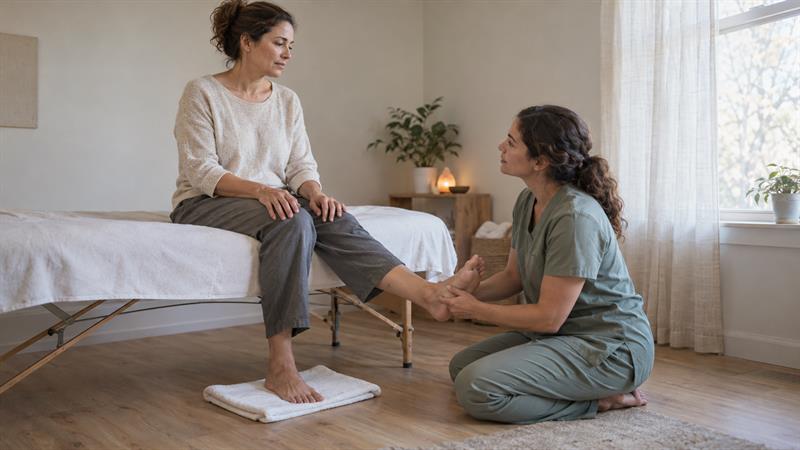
For some people, body-based wellness practices help create the pause that reflection alone has not created. Supportive services such as reflexology, aromatherapy, raindrop therapy, or perception reframing may fit naturally into a broader wellness routine when the goal is to slow down, reconnect, and pay closer attention to what the body is carrying.
These services often work best when they are part of a larger pattern of awareness, not isolated attempts to fix everything at once. A meaningful routine usually grows through rhythm and support, not intensity.
How holistic wellness support can complement a purpose-driven routine
Some people do not need more information. They need support that helps them reconnect what they are doing with why they are doing it. That is where holistic wellness support can make a difference.
At Dr. Barbara Samaroo, The Healing Corner, a purpose-driven routine is approached as part of whole-person care. That means paying attention to physical tension, emotional strain, stress patterns, and spiritual disconnection together rather than treating them like separate issues.
When people want support that includes body, stress, and reflection
This often comes up when someone feels scattered, out of rhythm, or stretched thin for too long. They may have tried to manage it with more discipline, but the deeper issue is that the routine does not create enough grounding to hold under pressure.
This is where routines tend to fray. Stress patterns can stay in place. Rest may get delayed. Reflection may disappear. The person keeps functioning, but the routine stops feeling replenishing.
Where services may fit naturally
Services may fit naturally when they support a broader intention such as slowing down, reconnecting to the body, or creating space for clarity. Reflexology may appeal to someone seeking structured body-based support. Aromatherapy or raindrop therapy may fit when sensory comfort and quiet restoration are part of the goal. Perception reframing may fit when the routine needs more internal clarity, not just more activity.
The most practical choice is often the one that matches the person’s current need, comfort level, and energy. For readers deciding between options, how to choose a conversation-only or low-touch wellness session can help clarify what kind of support fits best.
Common mistakes to avoid when building a faith and wellness routine
Most routines do not fail because the idea was bad. They fail because the structure was disconnected, overloaded, or unrealistic. If these mistakes are not corrected, the routine can become one more source of frustration.
Treating wellness like a checklist
When wellness becomes a checklist, the routine may stay active but lose meaning. This can result in pressure without grounding. A person completes the habits, but the routine does not always feel restorative.
Copying someone else’s spiritual routine
Other people’s routines can inspire ideas, but they cannot replace personal alignment. What supports one person’s faith and wellness may feel forced or exhausting to another. This is one reason copied routines can break down quickly under real-life stress.
Expecting one habit to change everything
One helpful habit can make a difference, but it does not carry the full weight of a person’s wellness alone. Lasting change usually comes from a pattern of small practices working together. Expecting one habit to do all the work can lead to disappointment and repeated restarting.
Key Takeaways
- Faith and wellness connect best when daily habits reflect personal purpose and inner grounding.
- Routines often break down when they become mechanical, overloaded, or disconnected from values.
- A strong routine is simple, repeatable, and flexible enough to hold up in real life.
- Spiritual wellness can be supported through reflection, prayer, gratitude, rest, and body-based care.
- Whole-person support may become important when a person wants more than habit advice and needs help reconnecting body, stress, and meaning.
Conclusion
The real problem is not just inconsistency. The real problem is a routine that no longer reflects the person living it. When that goes unaddressed, wellness habits can become mechanical, stress may keep building, and the routine may stop offering real support.
This is why taking a more intentional next step can be practical. Waiting can lead to more disconnection, more stop-and-start effort, and more frustration with routines that never feel grounded. Dr. Barbara Samaroo, The Healing Corner can be a strong next step for people who want support that connects faith, reflection, body awareness, and whole-person wellness in a more meaningful way.
Whether the need is conversation-based guidance, body-based support, or help choosing the right wellness approach, the next step should be simple and clear. Dr. Barbara Samaroo, The Healing Corner offers a path forward for people who want a routine that feels aligned, realistic, and rooted in what matters.
Company Approach
At Dr. Barbara Samaroo, The Healing Corner, the approach is not to pile on more wellness tasks. The focus is on helping people understand what feels out of rhythm, what keeps repeating, and what kind of support actually fits.
That matters because this usually is not just a scheduling problem. It is often an alignment problem. When routines are built around the whole person, including stress patterns, body awareness, reflection, and personal purpose, they tend to become more usable and more honest.
For people who are ready to move from general advice to a more grounded next step, Dr. Barbara Samaroo, The Healing Corner offers services and conversations designed to support that shift.
FAQ
What is the connection between faith and wellness?
Faith and wellness connect when beliefs, values, or spiritual grounding shape daily care. That means a wellness routine can include not only physical habits, but also practices that support meaning, reflection, gratitude, rest, or prayer.
The important distinction is that faith is not just added on top of wellness. It helps explain why the routine matters. A morning walk, for example, may be exercise, but it can also become quiet time for reflection and spiritual reset. That difference often changes whether the habit feels personal or performative.
How do you create a spiritual wellness routine that feels realistic?
A realistic spiritual wellness routine starts with one clear purpose and one or two practices that fit daily life. It often works better to choose a short prayer, brief journaling habit, or midday pause that can actually be repeated than to design a long routine that only works on ideal days.
What many people misunderstand is that meaningful routines do not have to be elaborate. They have to be usable. The routine becomes realistic when it fits the person’s beliefs, schedule, energy, and actual responsibilities.
Can a wellness routine include prayer, journaling, or reflection?
Yes. Prayer, journaling, and reflection fit naturally into a wellness routine because they can help slow the pace, clarify what a person is carrying, and reconnect daily habits to values or faith. They can sit alongside physical care rather than replace it.
For example, someone might pair evening stretching with gratitude journaling or begin the day with prayer before checking messages. The key point is not the exact format. The key point is that the practice helps create grounding rather than more pressure.
Why do healthy habits stop working when they feel disconnected?
Healthy habits often stop working when they lose emotional and personal connection. A routine may still look organized, but if it no longer reflects real values or real needs, it starts to feel like obligation instead of support.
This often leads to inconsistency, especially during stressful seasons. Meaning changes that. A habit tied to purpose often has more staying power than a habit tied only to pressure or appearance.
What are simple ways to bring more meaning into a daily wellness routine?
Simple ways include starting the day with one intention, ending with gratitude, using a reflection question, or choosing one habit because it supports a value instead of a trend. These small changes can shift a routine from automatic to intentional.
A useful example is asking, “What kind of care do I need today?” before starting the day. That question changes the routine from something a person performs to something that responds to real life. What matters most is not how impressive the routine looks, but whether it stays connected to purpose.
When should someone look for guided holistic wellness support?
Guided holistic wellness support may become relevant when a person feels too scattered, tense, or disconnected to build a meaningful routine alone. This often happens after repeated stop-and-start attempts, long periods of stress, or seasons where body strain and emotional overload are both present.
The issue at that point is often not lack of information. It is lack of support that connects reflection, body awareness, and practical routine-building. That is when guided support starts to make sense because the routine needs structure, not just more ideas.