
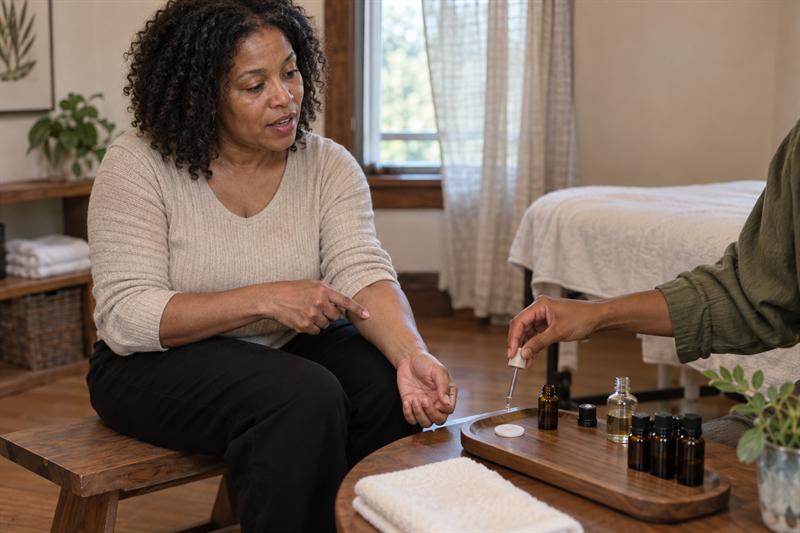
At Dr. Barbara Samaroo’s The Healing Corner, this is a common point of hesitation for new clients. People may be interested in the service, but what they often want to know is simple: what will happen in the room, how strong the oils may feel, and whether the session can be adjusted if something does not feel right.
If that is where you are, this guide is here to help. It focuses on the practical questions that can make an essential-oil wellness appointment clearer, more comfortable, and easier to choose with confidence.
Why asking questions before an essential-oil session matters
Essential-oil services are not all experienced the same way. The scent level, the way oils are introduced, whether they are inhaled or applied to the skin, and how the room is set up all shape the session.
This is where confusion often starts. Someone books based on the service name alone, then later realizes the real issue was scent intensity, uncertainty about topical oils, or not knowing they could speak up about comfort. Asking a few clear questions before the session can help prevent that disconnect.
If you are still deciding between service types, Aromatherapy vs. Raindrop Therapy: What Is the Difference? gives a broader comparison. This article is narrower. It focuses on what to ask before the appointment begins.
- Ask how the oils will be used, not just which service is being offered.
- Ask what can be adjusted if the scent, skin contact, or pace feels too strong.
- Ask what the session environment is like so there are fewer surprises.
Some people worry that asking questions will make them sound difficult. In practice, clear questions usually lead to a better fit and a more comfortable session from the start.
Questions to ask before an aromatherapy session
Aromatherapy sounds straightforward, but the experience can vary more than people expect. Some sessions focus more on scent and atmosphere, while others include topical application or a more structured approach to oil use.
If you are trying to decide whether an appointment feels right, these are the most useful questions to ask first.
For more background on this service, the Aromatherapy/Emotional Healing page can help you understand how the service is presented.
Which oils are typically used, and how are they selected?
This question helps you understand whether the session follows a fixed routine or whether the oils are chosen with your preferences and comfort in mind. That difference matters because a personalized session can feel very different from one that follows the same sequence every time.
Many first-time clients assume “aromatherapy” means one standard experience. It often does not. The way oils are selected can tell you whether the session is shaped around your response to scent or around a preset format.
Will the oils be inhaled, applied topically, or both?
This question changes expectations right away. A scent-centered experience and a skin-contact experience are not the same, even if both fall under aromatherapy.
If oils are inhaled, the main factor is usually how the scent feels in the moment and how strong it is in the room. If oils are applied topically, the focus becomes more specific because dilution, skin comfort, and placement start to matter.
How are oils diluted before skin contact?
If the session includes topical use, ask this directly. It is one of the clearest ways to understand how the service is handled and whether the process is being explained carefully.
People sometimes skip this question because they think it sounds too technical. It is not. It is practical. Once oils are going on the skin, dilution becomes part of the actual experience, not a minor detail in the background.
What if certain scents feel too strong or unpleasant?
This is one of the most important questions in an aromatherapy session because scent response is personal. A fragrance that feels calming to one person can feel overwhelming or distracting to someone else.
Some people assume they need to tolerate whatever is used once the session starts. That can lead to a poor experience. Scent tolerance is not a small preference. In aromatherapy, it often shapes whether the whole session feels supportive or uncomfortable.
Can the room setup be adjusted for ventilation or comfort?
The room matters more than many people expect. In scent-based services, comfort is not just about the oils themselves. It is also about how the air feels, how concentrated the fragrance seems, and whether the setup feels easy to settle into.
If you already know you are sensitive to strong smells or enclosed spaces, room setup becomes part of the decision.
Questions to ask before a raindrop therapy session
Raindrop therapy usually raises a different set of questions because it is more clearly body-based. People often want to know where the oils are used, how the session is structured, and how comfort is handled throughout the appointment.
That shift matters. With raindrop therapy, the decision is not only about scent. It is also about topical application, body area involvement, and whether the process feels like the right fit for you.
You can also review the Raindrop Therapy service page for a service-specific overview.
Which oils are used during raindrop therapy?
This question helps you understand whether the service follows a standard sequence or allows room for adjustment. It also gives you a clearer sense of the overall sensory experience before the appointment begins.
What matters most here is not memorizing oil names. What matters is understanding whether the oils are used in a consistent routine, adapted for comfort, or discussed with you beforehand. That can tell you more about the session than the ingredient list alone.
Where are the oils applied, and what does the process involve?
This is the question that helps people picture the appointment more clearly. If you cannot visualize the session, it is harder to know whether the service feels right.
- Ask which body areas are involved.
- Ask whether the session follows a set sequence.
- Ask how the oils are introduced during the appointment.
This is often misunderstood when people group raindrop therapy into the same mental category as general aromatherapy. Raindrop therapy is typically described as more structured and more body-focused, so process questions matter more.
How is skin comfort handled during the session?
This question matters because topical oil use and body-based work involve real sensory feedback. If something feels too strong, too concentrated, or simply uncomfortable, you need to know whether the session can be adjusted in the moment.
When comfort is discussed before the session, there is usually less uncertainty about what to say if something needs to change.
What should clients share about scent or touch preferences beforehand?
For raindrop therapy, both matter. Some people focus only on the oils and forget that touch preferences, body boundaries, and pressure tolerance are also part of the experience.
With first appointments, clients are sometimes prepared to talk about scent but not about how the body-based part of the service feels. That gap can affect the session more than people expect.
How can someone pause, modify, or stop part of the session if needed?
This question gives you a practical sense of how communication works once the appointment starts. It also tells you whether comfort is treated as part of the session plan or as something to mention only if there is a problem.
If you are considering a service that involves scent, topical oils, and body-based contact, clear communication matters. It helps shape whether the experience stays comfortable from beginning to end.
Questions that apply to both aromatherapy and raindrop therapy
Some questions matter no matter which service you are considering. These are the questions that help you judge fit, comfort, and overall readiness without getting lost in service labels.
If you are still comparing several options, Complementary Wellness Services: A Guide to Choosing the Right Appointment can help place these services in a broader context.
What should I share about sensitivities or personal comfort concerns?
Share anything that affects how you respond to scent, skin contact, or the general sensory environment. That includes dislike of certain fragrances, hesitation about oils on the skin, or discomfort with a strong scent in a small room.
These are not minor preferences. In essential-oil services, they often shape whether the experience feels manageable or overwhelming. If you already know something tends to bother you, that detail belongs in the conversation early.
What should I wear or avoid before the appointment?
This is a practical preparation question, and it is worth asking. Clothing comfort, ease of movement, and whether strong personal fragrance might affect the session can all matter depending on the service structure.
Preparation is not just about arriving on time. It is also about reducing avoidable friction during the session itself. Small details before the appointment often affect comfort more than expected.
What does the session environment feel like?
Ask about the atmosphere, not just the service steps. Some people decide based on technique alone and overlook the fact that quietness, scent presence, room feel, and overall sensory load shape the appointment in a major way.
This is where fit becomes clearer. If you already know you settle better in a calm, lightly scented, easy-to-breathe environment, then the room experience becomes part of the decision, not an afterthought.
Is there a consultation before the service begins?
A brief consultation helps connect the service to your actual comfort level and expectations. Without that conversation, clients are more likely to enter the session with unanswered questions that should have been clarified first.
At Dr. Barbara Samaroo’s The Healing Corner, that early conversation matters because people usually make better decisions when they understand what the session includes and how their preferences fit into it. If you want help organizing those questions, How to Prepare for a Wellness Consultation: A New Client Checklist is a useful place to start.
A simple pre-appointment checklist
Use this checklist before booking or before your first session. It covers the questions that most often change the decision.
- Which oils are typically used?
- How are the oils selected for the session?
- Will the oils be inhaled, applied topically, or both?
- How is dilution handled if oils are applied to the skin?
- What if a scent feels too strong or unpleasant?
- Can the room setup be adjusted for ventilation or comfort?
- Which body areas are involved, if the service is body-based?
- How can the session be modified if something feels uncomfortable?
- What should be shared in advance about scent, touch, or comfort preferences?
- Is there a consultation before the service begins?
Key Takeaways:
- The best pre-session questions are the ones that clarify fit, not just service definitions.
- Scent intensity, topical use, and room setup often affect comfort more than people expect.
- Aromatherapy and raindrop therapy are easier to choose when you understand how the session is actually carried out.
- Unspoken preferences are where many first-visit issues begin.
When it makes sense to discuss your preferences in advance
Some situations need more than a quick question at check-in. If you already know you are particular about scent, unsure about topical oils, or hesitant about body-based services, it makes sense to bring that up before the session day.
This is where timing matters. When preferences are discussed early, the appointment starts with more clarity. When they are left unspoken, confusion often shows up during the session, when it is harder to relax and easier to feel uncertain.
If any of these sound familiar, it makes sense to talk through them before the appointment is set:
- You like the idea of essential oils but regularly find strong scents uncomfortable.
- You are comfortable with aroma in a room but unsure about oils being applied to the skin.
- You are interested in raindrop therapy but do not know what body areas are involved.
- You tend to stay quiet during appointments even when something feels uncomfortable.
That is usually the point where a pre-service conversation becomes important. The goal is not to complicate the appointment. The goal is to reduce the chance of a mismatch that could have been identified early.
Conclusion: the best questions are the ones that help you feel informed and comfortable
The real issue is not that aromatherapy or raindrop therapy are hard to understand. It is that people sometimes try to choose these services without enough clarity about scent strength, topical use, room environment, body-based contact, and how adjustments are handled. When that gets missed, the session can feel more uncertain and less comfortable than it needed to be.
At Dr. Barbara Samaroo’s The Healing Corner, that early clarity matters because it can help prevent common first-visit disconnects. Once clients understand how the service is structured and what can be adjusted, the decision often becomes easier and the appointment feels more grounded from the start.
If you are weighing aromatherapy or raindrop therapy and want a clearer next step, Dr. Barbara Samaroo’s The Healing Corner is a practical place to start. The next move is to use these questions, review the service fit, and move into a conversation that addresses comfort, expectations, and session readiness directly instead of guessing your way into the appointment.
Company approach
Dr. Barbara Samaroo’s The Healing Corner approaches essential-oil wellness services as experiences that should be understood before they begin, not figured out in the middle of the session. That matters because many first-visit issues are linked to unanswered questions about scent, skin contact, pacing, and personal comfort.
This is why a consultation-first approach makes practical sense. When expectations are clarified early, clients are in a better position to choose the service that fits, explain what tends to bother them, and reduce the chance of avoidable mismatches.
FAQ
What should I ask before my first aromatherapy session?
Ask which oils are likely to be used, whether the oils are inhaled or applied topically, how scent strength is handled, and whether the room setup can be adjusted for comfort. Those questions tell you what the appointment will actually feel like, which is usually what first-time clients need most.
Aromatherapy is not one uniform experience. One session may feel light and scent-centered, while another includes topical use and a stronger sensory presence. That is why process questions usually matter more than general background information.
Is it okay to ask what essential oils will be used during a session?
Yes. That question helps you understand whether the service follows a standard routine or whether the oil selection is shaped around your preferences, comfort, or session goals.
The more useful answer is usually not just a list of oils. It is an explanation of how those oils are chosen. That often reveals whether the appointment is fixed, flexible, or somewhere in between.
Should I ask about dilution before essential oils are applied to my skin?
Yes, because once oils are going on the skin, dilution becomes part of the real session experience. It is not a small technical detail in the background.
This question matters because it shifts the conversation from vague wellness language to the actual handling of topical oils. That distinction usually helps you understand whether the provider explains the process clearly and whether the service feels like the right fit.
What if I am sensitive to strong scents during aromatherapy or raindrop therapy?
That usually means scent intensity needs to be treated as a key decision factor, not a minor preference. A person can be interested in the service itself and still find the fragrance level too strong for a comfortable session.
What often gets missed is that liking essential oils in general is not the same as being comfortable with a concentrated scent environment during an appointment. In that case, questions about alternatives, scent strength, and ventilation can change the decision.
What happens during a raindrop therapy session?
Raindrop therapy is generally presented as a body-based essential-oil service, so the session is usually about more than aroma alone. People typically want to know where the oils are applied, whether the process follows a set sequence, and how body-based comfort is handled throughout the appointment.
That matters because people often group it too loosely with aromatherapy. The more body-focused the service feels, the more important it becomes to understand process, placement, and communication before the session starts.
How do I know whether aromatherapy or raindrop therapy is a better fit for me?
The deciding factor is usually the experience you are comfortable with, not which name sounds more appealing. If your main focus is the scent experience and overall atmosphere, aromatherapy is often the more natural starting point. If you are also weighing topical application, body area involvement, and a more structured body-based process, raindrop therapy usually needs closer consideration.
What changes the decision most is understanding delivery method, scent intensity, amount of skin contact, and how adjustable the session is. Those details usually tell you more than the service label on its own.