The choice between one-on-one and group holistic wellness formats starts with what you want from the session. A question about your personal circumstances needs a different setting from a general discussion or a community learning activity.
Dr. Barbara Samaroo of The Healing Corner offers one-on-one consultations, Real Talk Health Talk, and group workshops. Comparing their purposes helps you choose a starting point without assuming that every session includes individual recommendations or a hands-on wellness service.
Key Takeaways
- One-on-one consultation: A setting for individual questions and personal circumstances without other participants present.
- Live discussion: Shared exploration of a wellness topic, with opportunities to contribute determined by the session’s structure.
- Workshop: Learning organized around a topic or goal, with activities determined by the agenda.
- Choose by purpose, privacy, and participation: No format is inherently better, and wellness education does not replace needed medical or mental health care.
One-on-One vs. Group Wellness Formats: The Main Differences
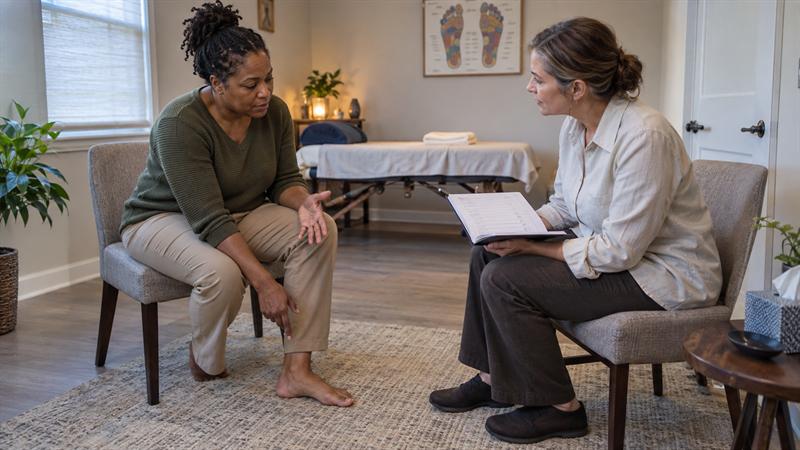
A one-on-one consultation centers the conversation on one person. A live discussion brings participants together around a shared topic. A workshop follows a learning agenda. The main differences are how much attention your questions receive, what participation involves, and whether the setting is appropriate for personal information.
One-on-One Consultation: Space for Individual Questions
A one-on-one consultation is a practical starting point when your question requires personal context. The conversation is individual, but the practitioner’s qualifications and the appointment’s scope determine what can be addressed.
- Purpose: Discuss individual goals, questions, and relevant circumstances.
- Individual attention: The conversation focuses on you rather than a group.
- Participation: A direct exchange between you and the practitioner.
- Privacy considerations: Other group participants are not present; recordkeeping and privacy practices still matter.
- Limitations: “Consultation” does not automatically mean diagnosis, treatment, or a detailed wellness plan.
A format mismatch can arise when a question requires personal history but the session follows a shared agenda. There may not be enough time or an appropriate setting to explore those details. The guide to what to expect from your first holistic wellness consultation provides a closer look at this starting point.
Live Discussion: Exploring a Shared Wellness Topic
A live discussion suits general questions and shared exploration rather than an extended review of one person’s circumstances. Real Talk Health Talk is the discussion offering to consider within this comparison.
- Purpose: Explore a wellness topic through conversation.
- Individual attention: Attention is shared rather than reserved for one participant.
- Participation: Opportunities to speak and ask questions depend on the session rules.
- Privacy considerations: Information shared with the group is available to other participants.
- Limitations: A wellness discussion is not a substitute for individual guidance or clinical group therapy.
If your question makes sense without sensitive details, a shared discussion is a reasonable starting point. If answering it requires your health history, move that question to an appropriate individual setting rather than disclosing more than you intended.
Wellness Workshop: Learning Around a Defined Goal
A workshop is a practical choice when you want organized learning about a particular topic. Its agenda gives the session direction, rather than allowing each attendee’s personal questions to determine the content.
- Purpose: Work through a defined topic or learning objective.
- Individual attention: Teaching serves the group; individual question time varies.
- Participation: Exercises or demonstrations are included only when specified in the agenda.
- Privacy considerations: Activities and discussion can involve sharing with others.
- Limitations: Structured learning does not necessarily include individual guidance, hands-on services, or take-home materials.
For organizers, an appealing title is not enough. The session also needs a learning goal that fits the audience. The guide to wellness workshops for community groups, caregivers, and youth explores this format in more detail.
Which Holistic Wellness Format Fits Your Needs?
Choose according to what you want to discuss and how you want to participate. These hypothetical situations show how the same broad interest in wellness can lead to different starting points.
- Choose one-on-one when personal circumstances are central to your question.
- Choose a live discussion when you want to explore a general topic with others.
- Choose a workshop when you want learning organized around a defined goal.
When You Want to Discuss Personal Circumstances
Suppose you want to explain your wellness goals and ask how an offering relates to your circumstances. A one-on-one consultation is the better starting point because those details belong at the center of the conversation.
A private setting does not automatically make the practitioner equipped to answer every question. Medical diagnosis or treatment advice should come from an appropriately qualified healthcare professional, not from the wellness format alone.
When You Want to Explore a Topic With Others
Suppose you want to understand a wellness topic and hear questions you have not considered. A live discussion fits that purpose without turning the session into an individual consultation.
The important boundary is between general information and personal advice. An answer to another participant’s question does not establish what is suitable for you, even when parts of their situation sound familiar.
When You Want Structured Learning for Yourself or a Community Group
Suppose you are arranging a session for a community group with a shared wellness interest. A workshop provides a structure for that learning, provided its agenda matches the audience’s needs.
Selecting a title before defining the goal can make planning harder. Without a clear objective, organizers have less basis for judging the activities, accessibility, and facilitator qualifications. Start with what participants should understand, then assess whether the workshop supports that goal.
Clarify the format before committing your time. A conversation about fit is the practical next step if:
- Your main question requires sensitive personal details.
- You expect individual recommendations from a shared discussion.
- You are organizing a workshop but have not defined its learning goal.
These situations call for clarification before enrollment. Ask Dr. Barbara Samaroo of The Healing Corner whether the advertised free consultation is the appropriate place to discuss your goal and the available formats.
Online Discussion vs. Wellness Workshop: What Changes?
“Online” describes how you attend; “discussion” and “workshop” describe how a session is organized. A discussion centers on conversation, while a workshop follows a learning agenda. Joining online does not tell you how much speaking, activity, or individual attention to expect.
Compare the session details rather than assuming that joining from home means listening quietly or participating privately:
- Agenda: Is the session driven by discussion or planned teaching?
- Questions: Are they handled throughout or during a designated period?
- Activities: Does participation involve exercises, materials, or small-group work?
- Technology: What device, connection, camera, or microphone is needed?
- Privacy: Is the session recorded, and could someone nearby overhear you?
Group privacy rules set expectations, but they cannot guarantee another participant’s behavior. Online access does not remove the need for an appropriate private setting when a question involves sensitive information.
Questions to Ask Before Choosing a Format
Ask what the session covers, how participation works, and what is included. Those details are more useful than a format label when comparing appointments or deciding whether a group session fits.
- What is the session’s purpose, and what falls outside its scope?
- What relevant qualifications does the facilitator hold?
- How much time is available for individual questions?
- Are speaking, introductions, or activities required?
- What are the privacy and recording practices?
- How long is the session, what does it cost, and what is included?
- Where does it take place, and what accessibility or technology requirements apply?
- How are questions handled when they need individual follow-up?
If you are in the Accokeek, Maryland area, location is part of the decision. Establish where the selected offering takes place rather than assuming every format uses the same venue or is available online.
What Does the Free Consultation Include?
The Healing Corner advertises a free consultation. The offer alone does not explain what it includes, how long it lasts, or how it relates to other appointments.
- What topics and questions are included in the free consultation?
- Is it separate from a paid session, service, or follow-up appointment?
- Which later appointments or services have fees?
These distinctions help you understand what you are arranging without assuming that “free consultation” includes a complete wellness service.
Choosing a Format Is Different From Choosing a Wellness Service
A session format describes the setting, not the service you will receive. Asking about reflexology or aromatherapy during a discussion does not mean the session includes either service or establishes its suitability for you.
When considering the options at The Healing Corner, separate three decisions: the question you want answered, the setting that fits it, and any service you are considering. Attending a workshop or consultation should not be mistaken for choosing a particular wellness service.
Questions about how symptoms, medications, pregnancy, or a medical condition affect a service’s suitability need guidance from an appropriately qualified healthcare professional. A general wellness discussion cannot resolve those individual safety questions.
Frequently Asked Questions About Holistic Wellness Formats
Is a Live Wellness Discussion the Same as Group Therapy?
No. A general wellness discussion explores topics and questions, while group therapy is a clinical service with its own therapeutic framework. Bringing people together to discuss well-being does not make a session psychotherapy, and the outcomes of clinical group therapy should not be assumed to apply to general wellness discussions.
Do I Have to Share Personal Information in a Wellness Group?
Not necessarily; participation requirements vary. Introducing yourself or discussing a general topic is different from sharing sensitive health information. If privacy affects your choice, look specifically at speaking requirements, whether personal questions have a separate route, and whether the session is recorded. Those details determine what participation involves.
Can I Attend a Workshop Before Booking a One-on-One Consultation?
The deciding factor is whether that workshop has an intake or consultation prerequisite. Offering both formats does not automatically mean one must come first. A workshop open to direct enrollment provides a different entry point from one that requires an individual conversation before participation.
Is a Group Wellness Session Less Expensive Than a Private Consultation?
Not necessarily. Price depends on the offering, session length, and inclusions, not just whether it is private or shared. The free consultation advertised by The Healing Corner does not determine the price of other appointments. Compare each session’s cost alongside what it includes.
Can I Combine One-on-One Consultations With Discussions or Workshops?
Yes, when the offerings are available and appropriate, different formats can serve different purposes. Someone might attend a workshop for structured learning and use a private consultation for individual questions. Combining formats is not inherently a required progression, and more sessions do not automatically produce better outcomes.
Conclusion: Choose the Setting That Fits Your Purpose
Contact Dr. Barbara Samaroo of The Healing Corner when you need help choosing among these formats. The issue is usually a mismatch between your question and the setting: personal concerns can remain unanswered in general discussion, while an undefined learning goal makes workshop selection harder.
Clarifying the purpose before enrollment helps avoid spending time in a session designed for something else. Ask which wellness format fits your needs, explain whether you want private discussion, shared exploration, or structured learning, and ask what the free consultation includes.