
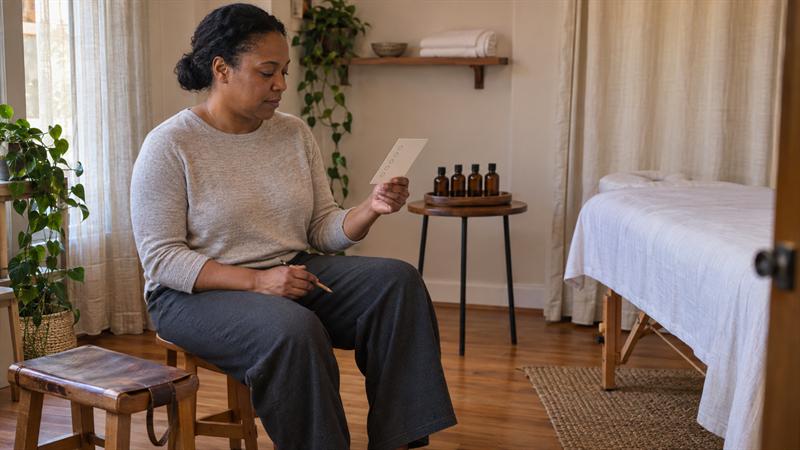
At Dr. Barbara Samaroo, The Healing Corner, this is a common concern for first-time clients and for people returning to wellness services after an unclear or uncomfortable past experience. The issue is often not whether someone wants support. It is whether they understand how the session is likely to feel once it begins.
That difference matters. A person can feel open to holistic wellness and still need clarity about body contact, essential oils, warmth, pressure, or modesty before moving forward. When those details stay vague, hesitation grows and the booking decision becomes harder than it needs to be.
Why sensory comfort matters before booking a holistic wellness service
Sensory comfort is a practical part of choosing the right appointment. It answers a question that service descriptions often miss: not just what a session is for, but what it may feel like to receive it.
This is where many people pause. They read about benefits and understand the purpose of the service, but they still cannot tell whether the experience will feel calming, too intense, too exposed, or simply unfamiliar. For readers comparing options, this guide to choosing a wellness service can help narrow the field, but sensory comfort is often what determines whether a person feels ready to book.
Comfort questions are often about predictability, not hesitation
Most comfort questions are really questions about predictability. People want to know what kind of input their body and senses will be asked to process during the session.
This often comes up before a first visit. Clients are not necessarily resisting the service itself. They are often trying to avoid being caught off guard by strong scent, unexpected pressure, added warmth, or a privacy setup they did not anticipate. That is where problems can start. A service that sounded appealing on paper can feel like the wrong choice if the sensory experience was never made clear.
Why body-based services can feel very different from each other
Two services can support similar goals and still feel very different in practice. One may be more touch-centered, another more aroma-centered, and another may involve warmth or more private setup considerations.
It is easy to assume that all holistic wellness services feel roughly the same if they fall under relaxation or body-based care. They do not. The service name tells part of the story. The sensory experience often tells the rest.
The five comfort areas to think through before your appointment
Before booking, it helps to sort your concerns into five categories. That keeps the decision simpler and makes it easier to ask direct questions.
- Touch: how much hands-on contact is involved and where
- Scent: whether essential oils or aromatic products play a central role
- Heat: whether warmth, steam, or heated elements are part of the experience
- Pressure: whether the service typically feels light, moderate, or firm
- Privacy: what to expect with clothing, room setup, and personal boundaries
When people skip this self-check, they may choose based on the service name alone. That can lead to mismatches. A person who might have felt comfortable with one option may end up avoiding the whole category because the first appointment felt too intense or too unfamiliar.
Touch: where and how contact is involved
Touch is often the first thing people think about, but they do not always break it down far enough. The real question is not just whether a service is hands-on. It is how much contact is involved, which areas are typically included, and whether the experience feels broad or focused.
This often comes up with clients considering reflexology or other body-based services for the first time. They may be comfortable with a focused foot-based session but not with a more layered or wider body-based experience. That distinction often changes the decision more than the overall service category does.
Scent: essential oils, aroma intensity, and sensitivities
Scent is not a small detail when it is central to the service. For some people, fragrance adds comfort and helps them settle in. For others, strong aroma becomes the main barrier to booking.
This is where readers often underestimate the difference between services. Aromatherapy and Raindrop Therapy may sound similar at first glance, but the sensory experience is not identical. This comparison of aromatherapy and raindrop therapy helps clarify those differences, especially for readers who want support but need more control over scent intensity.
Heat: warmth, steam, hot towels, or heated elements
Heat changes the feel of a service quickly. For some clients, warmth helps them relax into the session. For others, it creates discomfort or raises concern before they even book.
This often gets overlooked until the last minute. A person may focus on the purpose of the service and forget to ask whether warmth or steam is part of the setup. That can create uncertainty that could have been resolved early with one direct question.
Pressure: light, moderate, or firm techniques
Pressure tolerance is one of the main reasons a service feels supportive or too intense. When people say they are unsure about a session, what they often mean is that they do not know how much sensation or firmness to expect.
This is especially important in reflexology and other touch-based services. If you are comparing options, it helps to understand what a session typically feels like rather than relying on the service name alone. This reflexology expectations guide is useful for readers who want a clearer picture of setup, pressure, and first-visit flow.
Privacy: clothing, draping, room setup, and personal boundaries
Privacy concerns are rarely abstract. They usually come down to details such as clothing, positioning, room setup, and how much of the service involves direct body focus.
This often comes up with more personal services. If those expectations are not explained clearly, a reader fills in the blanks on their own, and that can make the appointment feel more intimidating than it needs to be. Privacy is not a side issue. It is often a deciding factor.
What to ask before a holistic wellness session
The best pre-booking questions are direct, practical, and tied to the exact part of the experience that concerns you. When people ask broad questions, they often get broad answers. When they ask sensory-specific questions, they usually get clearer information faster.
Questions about the service experience
- What does the session usually involve from start to finish?
- Is the experience mainly hands-on, scent-based, heat-based, or a combination?
- What should a first-time client expect during the appointment?
These questions work because they move the conversation beyond general benefits. They help reveal what the session actually feels like, which is what many uncertain clients need to know.
Questions about customization and adjustments
- Can pressure be adjusted if it feels too strong?
- Is scent optional, lighter, or central to the service?
- Is warmth part of the session, and if so, how is it used?
- Can concerns be addressed during the appointment if something feels uncomfortable?
A common mistake is assuming that if something feels uncomfortable, the only options are to tolerate it or cancel altogether. That mindset can keep people from asking useful questions early. What often helps is identifying the exact factor that concerns you and asking about that directly.
Questions about sensitivities, modesty, and boundaries
- What should I know if I am sensitive to strong scents or pressure?
- What is the privacy setup like for this service?
- What should I expect around clothing, positioning, or room setup?
- How can I share boundaries before the appointment begins?
These questions matter because discomfort is often tied to one specific issue, not the whole service. If you identify that issue early, the decision often becomes much clearer.
If you already know that scent, pressure, privacy, or warmth has been a problem before, it helps to address that before you book.
- Strong fragrances have made previous services hard to tolerate
- Firm pressure leaves you tense instead of settled
- Unclear privacy expectations make you avoid booking altogether
- You want wellness support but keep postponing because the experience still feels vague
When those signs are present, the next step is not more guessing. It is getting specific about service fit.
How different holistic wellness services may feel from a sensory-comfort perspective
Service fit becomes easier once the comparison is based on sensory experience instead of broad goals. This is where many readers finally see why one option feels approachable and another does not.
Reflexology
Reflexology is often a strong fit for people who prefer a more focused experience rather than a broader full-body session. The main comfort variable is usually pressure, followed by how the session is set up and what to expect from the foot-centered focus.
What commonly gets misunderstood is that a focused service does not automatically mean a mild sensory experience. Focused pressure can still feel intense if the person has not prepared for it.
Aromatherapy
Aromatherapy is often most influenced by scent comfort. For some people, that feels supportive right away. For others, aromatic intensity is the main question that determines whether the service feels like a fit.
This is why readers should not treat scent as a minor add-on. In some services, it is one of the core features shaping the experience from beginning to end.
Raindrop Therapy
Raindrop Therapy usually feels more layered because it combines more than one sensory element. A reader who is comfortable with essential oils in theory may still find that a combined scent-and-touch experience requires more preparation.
This is a common pattern. Interest in essential oils does not always equal comfort with a more involved sensory session. That distinction often decides whether a first visit feels grounding or too much at once.
Yoni Steaming
Yoni Steaming brings privacy and warmth to the front of the decision. For many readers, those are the two questions that matter most before anything else.
What often goes wrong is assuming the concern is about the service category itself, when the actual issue is setup clarity. Once privacy, comfort, and session flow are explained clearly, the decision often becomes easier to make.
Ionic Foot Detox
Ionic Foot Detox may appeal to readers who want a lower-touch experience. In that case, the main comfort questions usually center on setup, duration, and whether a foot-focused appointment feels more approachable than a hands-on bodywork session.
For readers who are open to wellness support but cautious about direct body contact, this distinction matters. It helps separate “I do not want support” from “I want a different kind of experience.”
Holistic wellness guidance and perception reframing for those wanting less body-based input
Some people want support that feels less sensory and less hands-on from the start. Holistic wellness guidance or perception reframing can make more sense in those cases because the main hesitation is not about wellness itself. It is about starting with a body-based service that feels too layered too soon.
This is an important distinction. When the core barrier is sensory comfort, starting with a less body-centered option can give the person a clearer entry point.
Signs one service may be a better fit than another
Once you know which comfort factor matters most, the decision usually becomes more practical. Instead of comparing every service at once, you compare them based on the one issue most likely to shape your experience.
If scent is the main concern
Look first at whether aroma is central to the service or more secondary to the overall experience. If scent is what makes you hesitate, service fit usually depends less on the goal of the session and more on how prominently fragrance shows up within it.
If pressure is the main concern
Pressure concerns usually point to a need for clearer expectations, not a reason to avoid wellness support altogether. If you are unsure how firm a service typically feels, that uncertainty can turn into tension before the appointment and discomfort during it.
If privacy is the main concern
Privacy concerns usually mean the service needs better explanation before it feels approachable. If you are stuck on clothing, setup, or modesty expectations, that is the issue to solve first. Everything else stays secondary until that is clear.
If you want a gentler first experience
A gentler first experience usually means starting with fewer layered sensory inputs. If you already know that multiple variables at once feel like too much, that may point toward a simpler entry point or a consultation-first approach rather than jumping straight into the most involved option.
How to share your preferences clearly before booking
Clear communication solves more than many people expect. The problem is that people often try to sound easygoing and end up leaving out the exact detail that would have helped match them to the right service.
At Dr. Barbara Samaroo, The Healing Corner, this often comes up with first-time clients. They do not need a complicated script. They need a few plain, specific phrases that explain what matters most.
Helpful phrases clients can use
- “I’m interested in this service, but I’m sensitive to strong scents.”
- “I’d like to understand how much pressure is usually involved.”
- “Can you tell me what the privacy setup is like?”
- “Is there a gentler option for a first appointment?”
These phrases work because they identify the real issue quickly. They shift the conversation from general curiosity to actual fit.
Why a consultation can make the first visit easier
A consultation helps when the problem is not lack of interest, but lack of clarity. It gives the client room to sort through options before committing to a sensory experience that still feels uncertain.
That matters most when the concern is specific and recurring. If pressure, scent, or privacy has already affected past decisions, a more guided starting point can save time and lead to a better fit. Readers preparing for that conversation may find these questions to ask at a wellness consultation helpful, along with this article on how to prepare for a wellness consultation.
Key Takeaways
- Sensory comfort is often the missing piece between interest in a service and confidence in booking it.
- The five main comfort factors are touch, scent, heat, pressure, and privacy.
- Much of the hesitation around booking comes from unclear expectations, not lack of interest in wellness support.
- Different services can support similar goals while feeling very different in practice.
- The clearest next step is to identify your main comfort concern and choose based on that factor first.
Conclusion
The real challenge is not just choosing a wellness service. It is choosing one without understanding how it will feel once touch, scent, heat, pressure, and privacy become part of the experience. If that piece is ignored, people may delay booking, choose the wrong starting point, or leave a session feeling the service was not for them when the real issue was fit.
At Dr. Barbara Samaroo, The Healing Corner, the better next step is to address the comfort barrier directly instead of pushing past it. That is especially practical if you have been putting off booking because one sensory factor keeps stopping you. A clearer service match often starts with a direct conversation, and Dr. Barbara Samaroo, The Healing Corner offers a simple way to move forward when you need help choosing the right starting point.
Company Approach
Dr. Barbara Samaroo, The Healing Corner approaches wellness decisions by looking at the whole experience, not just the service label. That matters because a session can be right in purpose and still feel wrong in delivery if the sensory fit is off.
A common pattern is that clients already know roughly what kind of support they want. What they need help with is identifying the specific part of the experience that keeps creating hesitation. Once that is clear, the path forward often becomes more practical, more specific, and easier to act on.
FAQ
Can you ask to adjust scent, pressure, or warmth during a holistic wellness session?
Yes. Those are reasonable topics because they directly shape whether the session feels settling or overstimulating. The important distinction is that some services use scent, pressure, or warmth as central parts of the experience, while others use them more lightly.
For example, a person may be comfortable with touch but not with strong aromatic products, or may enjoy warmth but dislike firmer pressure. That means the real question is not just whether adjustment is possible. It is how much that element defines the service in the first place.
What should you ask before booking reflexology or aromatherapy for the first time?
Ask what the session usually involves, what a first-time client should expect, and which sensory factor tends to stand out most. That gives you a clearer picture of how the service feels, not just what it is called.
With reflexology, the key concern is often pressure and focused contact. With aromatherapy, the main issue is often how prominent scent is throughout the session. That difference matters because many first-time questions are really about sensation, not purpose.
How do you know if a wellness service may feel too intense for a first visit?
A service tends to feel more intense when it combines multiple sensory inputs at once, especially touch plus scent or warmth plus privacy concerns. Intensity is not only about firm pressure. It is also about how many variables the person is managing at the same time.
This often comes up when someone is interested in a layered service but has never started with a simpler one. If the experience includes several comfort factors that already make you pause, that often means a gentler starting point will feel more manageable.
What if you are sensitive to essential oils or strong scents?
If strong scent is the sticking point, the most important detail is whether aroma is central to the service or more secondary. That distinction changes the decision far more than general interest in wellness does.
A person may like the idea of holistic support and still need a service where fragrance is less prominent. What often gets misunderstood is assuming all wellness services use scent in the same way. They do not, and that is often what makes one option workable and another hard to tolerate.
How much privacy should you expect during a body-based wellness service?
Privacy expectations depend on specifics such as clothing, setup, positioning, and how the service is carried out. A broad answer is rarely enough because people usually want to understand one or two exact details that affect comfort.
For one person, the key issue is modesty. For another, it is whether the appointment feels exposed, unfamiliar, or too personal. The useful distinction is that privacy is often not a side concern. It is the factor that determines whether the service feels approachable at all.
Is a consultation helpful if you are not sure which wellness service fits your comfort level?
Yes, especially when the main barrier is uncertainty about the experience rather than uncertainty about wanting support. A consultation helps sort out what is actually making the decision feel difficult.
For example, someone may think they are unsure about reflexology, when the real issue is concern about pressure. Another person may think they want aromatherapy but realize scent intensity is the real concern. That kind of distinction changes the starting point and often leads to a better fit.