
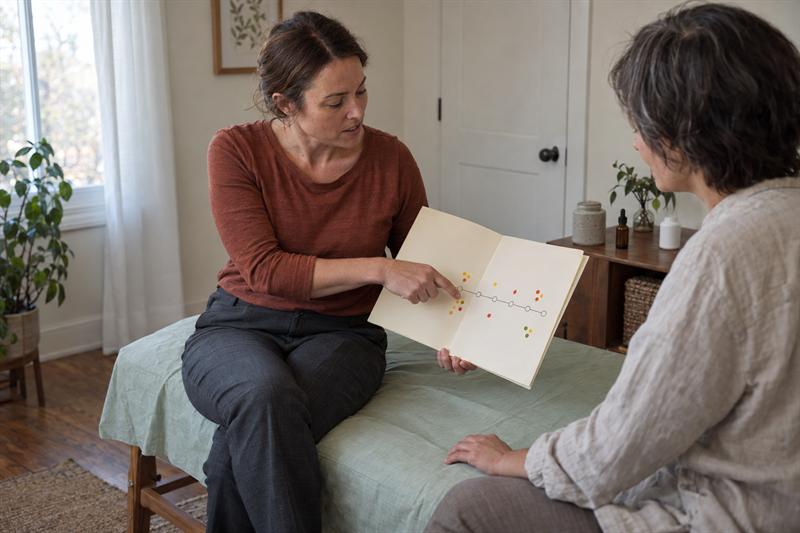
If you are wondering how to ask a doctor about holistic wellness after a wellness assessment, the goal is simple: give your provider useful information they can evaluate. At Dr. Barbara Samaroo, The Healing Corner, this is a common point of confusion. People may leave a consultation with helpful observations, then feel unsure how to explain those concerns in a medical setting.
A wellness assessment can help you notice patterns. Your doctor’s role is different. A licensed healthcare provider evaluates symptoms, health history, and whether medical follow-up is needed. When those conversations are handled clearly, the next step is usually easier to see.
Why this conversation matters
A wellness assessment may draw attention to sleep changes, digestive discomfort, stress, energy shifts, or other patterns that deserve a closer look. That can be useful. Problems usually start when those observations are treated like a diagnosis instead of a starting point for a better question.
Your healthcare provider needs details they can evaluate. That means symptoms, timing, severity, what has changed, and what is affecting daily life. If you are unsure whether a concern belongs in a wellness conversation or a medical one, Holistic Wellness vs. Medical Care: When to See a Doctor First offers a clear breakdown.
Wellness assessments can offer context, but they are not medical diagnoses
A wellness assessment can highlight themes and questions. It does not diagnose a medical condition. That distinction matters because it changes how you present the information. Instead of saying a wellness visit “found” a problem, describe what you noticed and what you want evaluated more clearly.
It also helps to understand the process before the visit. Wellness Assessment Appointment: Consultation, Assessment, and Follow-Up Explained can help clarify what belongs in a follow-up conversation.
Your doctor needs clear symptoms, patterns, and history
Doctors can usually do more with “I have had interrupted sleep, low energy, and headaches for several weeks” than with “I feel out of balance.” Many people know something feels off, but they have not translated that feeling into details a provider can assess. This is where communication often breaks down, and it can leave a visit feeling unclear or incomplete.
What to bring to your appointment
Bring a short, organized picture of what is going on. Medical appointments can move quickly, and scattered information makes it harder to focus on the main concern.
- A short symptom timeline
- Notes from your wellness consultation
- A list of current medications, supplements, and therapies
A short symptom timeline
- When the symptoms started
- How often they happen
- Whether they are improving, worsening, or changing
- What seems to trigger them or ease them
This helps your provider see patterns instead of isolated complaints. A common problem is mentioning symptoms out of sequence, which makes it harder to tell what is recent, what is ongoing, and what is getting worse.
Notes from your wellness consultation
Bring your notes as context, not proof. Focus on themes, observations, or questions that came up during the consultation. If you had an assessment such as iridology, it may help to review What to Expect at a Holistic Iridology Appointment: How to Prepare so you can explain the visit clearly.
What often goes wrong here is simple: people present wellness notes as if they settle the issue. That creates confusion. Notes are most useful when they support a symptom conversation, not when they replace one.
Current medications, supplements, and therapies
- Prescription medications
- Over-the-counter products
- Supplements, teas, oils, or wellness products
- Complementary services you are currently using
This matters because your provider needs the full picture. Leaving out supplements or supportive services can create blind spots. If something changed after starting a product, a bodywork routine, or an essential-oil wellness service, that detail belongs in the conversation.
What to share with your healthcare provider
The clearest approach is to stay specific. Broad wellness language can sound meaningful, but it often does not help a provider decide what needs evaluation, what should be monitored, and what is less urgent.
Symptoms you have noticed
Share the actual symptoms first. That may include pain, fatigue, headaches, digestive changes, sleep disruption, skin changes, mood changes, menstrual changes, or something else that feels different from your normal. Then describe what the symptom feels like and how it affects your day.
If a symptom is affecting sleep, work, concentration, eating, or movement, say that clearly. That makes the concern easier to assess because the impact is no longer vague.
Changes in sleep, digestion, stress, energy, or pain
These are common topics in wellness conversations, and they also matter in medical visits. The key is to describe the change. “I have been waking up during the night most nights” is more useful than “my sleep feels off.”
This gets harder when people wait too long to describe the pattern. Once several symptoms overlap without a timeline, it becomes more difficult to explain what began first and what changed next.
Relevant family or personal medical history
Include any existing diagnoses, recent illnesses, major life changes, and family patterns that seem relevant. This does not need to be a long story. It needs to give your provider enough context to understand what may influence the next step.
How to talk about a holistic wellness assessment without confusion
This is the part many people struggle with. They do not want to sound dismissive about the wellness consultation, but they also do not want to overstate what it means. The clearest approach is to present the assessment as something that raised questions or helped you notice patterns worth discussing medically.
If you want a simple planning framework before that conversation, After a Holistic Wellness Consultation: A Simple Next-Step Planner for Supportive Care and Medical Conversations is a useful companion.
Helpful ways to describe the assessment
- Say it was a wellness consultation that helped you notice patterns or concerns
- Say you would like help evaluating certain symptoms
- Keep the focus on your experience, not on a conclusion
That wording keeps the conversation grounded. It tells your provider why you are bringing it up without asking them to respond to a claim that has not been medically established.
What not to claim or assume
- Do not say the assessment found or diagnosed a condition
- Do not ask the doctor to confirm a conclusion that was never medically established
- Do not rely on vague statements without symptoms or context
This is where conversations often go sideways. A provider cannot evaluate “my assessment says this is the issue” the same way they can evaluate “I have had these symptoms for this long, and they are getting worse.” One creates friction. The other creates clarity.
Sample phrases patients can use
- “I had a wellness assessment and I want to discuss a few symptoms I have been tracking.”
- “The consultation raised questions about my sleep and digestion, and I would like to understand whether medical follow-up makes sense.”
- “I am using some complementary wellness services, and I want to make sure my provider knows the full picture.”
These phrases work because they describe what happened without overstating what it means. They also move the conversation toward evaluation, which is the real goal.
Questions to ask your doctor after a wellness assessment
Good questions help keep the appointment focused. They help your provider zero in on what should be evaluated, what should be tracked, and what would change the urgency of follow-up.
Questions about symptoms and possible next steps
- Could these symptoms point to something that needs evaluation?
- What details should I keep tracking?
- Are there changes that would make you want me to follow up sooner?
These questions are practical because they invite a clear response. They also help you understand what matters most instead of leaving the appointment with broad reassurance and no direction.
Questions about labs, referrals, or monitoring
- Are any tests, referrals, or follow-up appointments worth discussing?
- Would monitoring symptoms over time be helpful before deciding next steps?
- Should any existing conditions or medications change how these symptoms are evaluated?
A common misunderstanding is that every concern needs immediate testing. Sometimes the better next step is focused monitoring. Other times, the pattern may point to the need for fuller medical evaluation. The key is to ask what would change the plan.
Questions about combining medical care with supportive wellness services
- Are there any concerns about combining my current wellness practices with my care plan?
- What should I monitor if I am also receiving bodywork or complementary services?
- What information would you like me to share from future wellness visits?
This matters if you are using supportive services such as holistic wellness consultations, reflexology, aromatherapy, raindrop therapy, perception reframing, yoni steaming, or ionic foot detox. The goal is not to force everything into one category. The goal is to keep your provider informed so important context does not get lost.
If these signs sound familiar, it may be time to organize the conversation before your next appointment:
- You keep describing the issue with broad words like “off,” “unbalanced,” or “not right”
- You have more than one symptom, but no clear timeline
- You started supplements or supportive services and never mentioned them to your provider
- Your symptoms are changing, but you have not tracked what is getting worse
When these signs are present, a clearer medical conversation is usually needed.
When to seek medical care promptly
Some symptoms should not wait for another wellness visit or a routine follow-up. When something is new, severe, fast-changing, or clearly outside your normal pattern, the issue has moved beyond general wellness support.
Symptoms that should not wait for a wellness follow-up
- New, severe, or rapidly worsening symptoms
- Chest pain
- Trouble breathing
- Sudden weakness
- Fainting
- Significant bleeding
- Other urgent concerns that feel serious or abrupt
If you are unsure whether a concern belongs in medical care first, return to Holistic Wellness vs. Medical Care: When to See a Doctor First. Fast-moving symptoms usually call for medical attention rather than another wellness follow-up.
How holistic wellness services can fit into a broader care plan
Supportive wellness services fit best when they help you notice patterns, ask better questions, and stay engaged with your overall well-being. They do not replace medical evaluation for symptoms that need diagnosis, testing, or urgent care.
At Dr. Barbara Samaroo, The Healing Corner, that distinction matters. Services such as holistic wellness consultations, reflexology, aromatherapy, raindrop therapy, perception reframing, yoni steaming, and ionic foot detox are best understood as supportive options within a broader wellness picture, not as substitutes for licensed medical care.
Using wellness consultations to support awareness and questions
A consultation can help organize what you have been noticing. Many people know they do not feel like themselves but have trouble naming what changed first. Once sleep disruption, digestion, pain, stress, or energy changes are put into words, the next conversation often becomes more productive.
Choosing services that complement, not replace, medical evaluation
The most practical use of wellness services is as support alongside appropriate medical care, not instead of it. If your main problem is uncertainty, supportive services can help you clarify questions. If your main problem is worsening symptoms, the next step is not more observation alone. It is a clearer medical evaluation.
Key Takeaways
- Bring specific symptoms, timelines, and relevant history to your appointment
- Use wellness assessment notes as context, not as diagnoses
- Ask focused questions about next steps, monitoring, and what would change urgency
- Share medications, supplements, and supportive services so your provider has the full picture
- Seek prompt medical attention for severe, sudden, or rapidly worsening symptoms
Conclusion
The real problem is not having a wellness assessment. The real problem is bringing unclear, overextended, or incomplete information into a medical conversation and expecting a useful answer. When that happens, symptoms get described vaguely, important changes can be missed, and the next step may stay unclear.
Handled well, a wellness consultation can help you organize what you are noticing and ask better questions. Handled poorly, it can create confusion by replacing symptom details with conclusions. If you need help sorting through your concerns, preparing for a supportive wellness conversation, or understanding how services fit into a broader care plan, Dr. Barbara Samaroo, The Healing Corner can be a helpful next step. The focus is clear guidance, better questions, and a more grounded path forward.
FAQ
How do I ask my doctor about holistic wellness without sounding like I am self-diagnosing?
Describe what you are experiencing, not what you think has been identified. “I have had interrupted sleep, fatigue, and digestive changes for several weeks” is clearer than “my assessment showed I am out of balance.” The first gives your provider something to evaluate. The second usually leads to a conversation about wording instead of symptoms.
Should I bring notes from an iridology or wellness assessment to my medical appointment?
Yes, as background context. Notes can help you remember what questions came up and what patterns you noticed. The useful part is not the label in the notes. The useful part is the symptom pattern, timeline, or concern those notes help you explain more clearly.
What information matters most when talking to a healthcare provider after a wellness consultation?
The most important details are your symptoms, when they started, how often they happen, whether they are changing, and what medications, supplements, or services are part of the picture. A short symptom timeline is usually more helpful than a long story. It helps your provider see what is recent, what is ongoing, and what is getting worse.
Can holistic wellness services and medical care work together?
Yes, when each stays in its proper role. Supportive services can help with awareness, stress, comfort, and clearer questions. Medical care handles diagnosis, evaluation, and treatment decisions. What usually creates trouble is not using both. It is expecting one to do the job of the other.
What should I do if a wellness assessment raises concerns but I am not sure whether they are medical?
Look at whether the issue is new, persistent, worsening, or affecting daily life. That distinction matters more than the wording used in the assessment. A vague concern becomes a medical question once there is a clear symptom pattern, visible progression, or disruption to normal function.
When should symptoms be checked by a doctor instead of waiting for another wellness appointment?
When they are severe, sudden, rapidly changing, or interfering with normal life. Chest pain, trouble breathing, fainting, sudden weakness, and significant bleeding are clear examples. Less urgent symptoms also move into medical territory when they continue to build, overlap, or worsen without a clear explanation.