At Dr. Barbara Samaroo’s The Healing Corner, this is a common decision point. Many people are interested in holistic wellness but do not want to begin with hands-on care. They want a starting point that feels clear, respectful, and manageable.
That usually means the first question is not “Which service sounds best?” It is “What kind of setting feels comfortable enough to start?” Once that becomes clear, the service choice usually becomes clearer too.
Why someone might prefer a conversation-only or low-touch wellness session
Some people want support, but they do not want touch, bodywork, or a sensory-heavy appointment as the first step. That is not avoidance. It usually means the session format needs to match the person’s comfort level first.
A common pattern is wanting more information before committing to a hands-on service. Problems often start when people skip that step. They book something that sounds helpful, then realize the format itself does not feel right. That can lead to second-guessing, cancellations, or showing up still unsure of what they want.
- Privacy matters more than trying a new modality right away
- The person wants to ask questions before deciding on bodywork
- They prefer a slower introduction to wellness support
- They want education, reflection, or discussion instead of a table-based service
This is something Dr. Barbara Samaroo’s The Healing Corner often hears from first-time clients. They are not avoiding support. They are trying to begin in a way that feels steady and informed. That often leads to better decisions than forcing a service format too early.
What counts as low-touch holistic wellness?
Low-touch holistic wellness means the session is centered on conversation, education, guided reflection, or shared discussion rather than physical contact. A non-contact wellness session can still provide structure and direction. It simply removes the pressure of starting with a body-based experience.
That can include a one-on-one consultation, a live discussion format, or a workshop. It can also include conversation-based support such as perception reframing, depending on what the person wants to work through and how much privacy they want.
Low-touch does not mean less useful. It means the session is focused on understanding, direction, and comfort first. That is different from body-based services such as reflexology, aromatherapy, or raindrop therapy, which involve a more sensory or physical experience. For a broader look at available options, the services page shows how these formats fit within the larger wellness menu.
The main low-touch wellness options and who each one is best for
One-on-one consultation
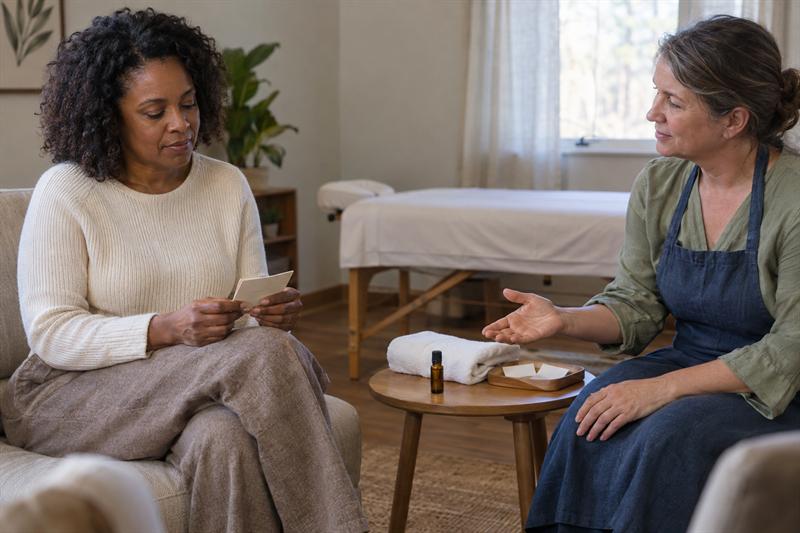
A one-on-one consultation is often a good fit for someone who wants privacy, individualized guidance, and room to ask direct questions. This format works well when the main issue is uncertainty. The person knows they want support, but they need help sorting through goals, concerns, or which service makes sense first.
This is often a practical choice when someone does not want to discuss personal concerns in a group setting. It can also be a strong starting point for someone considering holistic wellness services or perception reframing but wanting to understand the fit first. If the choice still feels unclear, this guide on one-on-one consultation vs. live discussion vs. workshop breaks down the differences in plain language.
Wellness discussion group
A wellness discussion group is often helpful for someone who wants a lower-pressure way to learn. The person may want to listen first, reflect on what they hear, and engage without the intensity of a private appointment. That can create more breathing room when someone is still figuring out how they want to approach wellness support.
This format may work well for people who learn by hearing other questions and perspectives. Group discussion can make the process feel more approachable because it shifts the focus from “What do I need to say about myself?” to “What do I need to understand first?” The article on what to expect from an online wellness discussion group gives a clearer picture of how that format works.
Workshop or educational session
A workshop is often a good fit when the person wants structured information around a clear topic. The goal is less about personal planning and more about learning in an organized format. That can make workshops useful for people who want a stronger educational foundation before deciding whether one-on-one support is needed.
This format can also make sense for community groups, caregivers, and youth-centered audiences who benefit from shared learning around a specific subject. When someone wants a defined topic and a guided teaching format, a workshop is often more practical than a consultation. Dr. Barbara Samaroo’s The Healing Corner offers this type of structured learning through wellness workshops for community groups, caregivers, and youth.
Perception reframing as a conversation-based option
Perception reframing is a conversation-based option for people who want to examine thought patterns, reactions, or the way a situation is being interpreted. It can fit well when the person is looking for a reflective format rather than a group learning environment or a body-based service.
This is where low-touch support becomes especially useful. Sometimes the issue is not choosing between reflexology and aromatherapy. Sometimes the real need is stepping back, talking through what feels stuck, and gaining enough clarity to choose a direction that fits.
How to choose the right starting point for your comfort level
The most practical way to choose is by asking what feels manageable right now. If privacy matters most, a consultation is often the right place to begin. If the goal is lower-pressure learning with room to listen, a discussion group may make more sense. If the priority is organized teaching around a topic, a workshop is often the better fit.
A common mistake is choosing the format that sounds most familiar instead of the one that fits the decision stage. This can create a mismatch. The person may end up in a setting that feels too exposed, too general, or not focused enough on their questions.
- If you want private guidance, start with a one-on-one consultation
- If you want shared learning without pressure to talk much, start with a discussion group
- If you want structured information on a clear topic, start with a workshop
- If you feel stuck between several services, start with the format that gives the most clarity, not the most intensity
If the main barrier is uncertainty rather than lack of interest, that usually points to a low-touch starting point.
If any of these sound familiar, a low-touch starting point may make sense:
- You keep looking at services but still cannot tell what to book first
- You are interested in support but keep delaying because bodywork feels like too much right now
- You want guidance, but only in a format that gives you space to ask questions first
- You have ruled out helpful options too early because you assumed every session involves touch
When this pattern repeats, the issue is usually not motivation. It is the starting format, and that can keep the decision stuck.
Signs you may want to start with a non-contact wellness session first
If you want information before experience, a non-contact wellness session is often the better first step. It gives you time to understand the process, ask questions, and decide whether a body-based service fits later. Skipping that stage can keep the uncertainty in place.
- You want to understand the process before trying a body-based service
- You prefer conversation, reflection, or education over hands-on care
- You are interested in support but want to move at your own pace
- You are unsure which service matches your goals
- You want to build trust before exploring touch-based options
This is something Dr. Barbara Samaroo’s The Healing Corner commonly hears when people are new to wellness services or when they know they want support but are not sure what form it should take. If you want a broader comfort-based screening tool, this sensory-comfort guide for holistic wellness services helps identify what to ask before a session.
How a low-touch session can help clarify next steps
A conversation-first session helps separate curiosity from readiness. That matters because many people think they need to choose a modality first, when what they really need is clarity about goals, comfort, and pace. Once that becomes clearer, the next step often does too.
This is where low-touch support can be especially useful. It may point someone toward a broader wellness conversation when they want whole-person support. It may point toward perception reframing when the need is more reflective and perspective-based. It can also help someone decide whether reflexology, aromatherapy, or raindrop therapy is worth exploring later.
- Some people realize conversation and education are the main support they want
- Some people become more comfortable exploring body-based options after they understand the process
- Some people discover the right next step is different from the service they first considered
This point is easy to miss in generic wellness content. The value of a low-touch session is not that it delays support. The value is that it helps reduce the chance of starting in a way that does not fit.
Questions to ask before booking a low-touch wellness session
The best questions are the ones that clarify format, expectations, and what usually comes next. If those answers stay fuzzy, the person usually stays unsure. If those answers become clear, the booking decision often becomes easier.
- What happens during the session?
- Is the format one-on-one or group-based?
- How much participation is expected?
- Is the session mainly educational, reflective, or planning-focused?
- What usually comes next after this type of session?
- Is a free consultation available if I still need help choosing?
These questions help uncover what usually goes wrong. People book with the right topic in mind but the wrong format for how they actually want to engage. For more first-time guidance, this article on questions to ask at a wellness consultation gives a practical checklist.
Key Takeaways
- Low-touch holistic wellness is a strong starting point when touch is not the right fit yet.
- The best format depends on whether you need privacy, shared discussion, or structured education.
- A consultation, discussion group, or workshop can all provide useful support without starting with bodywork.
- The wrong start can keep people stuck. The right low-touch format often creates clarity and forward movement.
Conclusion
The real problem is not lack of interest in wellness support. The real problem is starting in a format that feels too exposed, too physical, or too unclear. When that is not addressed well, people may delay, overthink, or book a service that does not match how they want to begin.
At Dr. Barbara Samaroo’s The Healing Corner, the better approach is to choose the starting point by comfort level first, then build from there. That is why conversation-only and low-touch formats matter. They can reduce friction, create clarity, and help people move toward the kind of support that fits instead of pushing into a format too soon.
If you are stuck between wanting support and not wanting bodywork right away, Dr. Barbara Samaroo’s The Healing Corner offers a practical next step. A clear conversation, discussion format, or workshop can help you stop circling the decision and start with a service that matches your pace, questions, and comfort.
Company Approach
Dr. Barbara Samaroo’s The Healing Corner approaches this issue by treating comfort level as part of service selection, not as a side concern. That matters because a common pattern is assuming the “right” service is the one that sounds most relevant, even when the format itself feels wrong. When that happens, the process often stalls before it starts.
The stronger approach is to match the session format to the reader’s readiness. For some people, that means a private consultation. For others, it means learning through discussion or a workshop before making any decision about body-based care. That way, the first step supports understanding instead of creating more resistance.
FAQ
Can holistic wellness start without bodywork?
Yes. Holistic wellness can start with conversation, education, reflection, or guided discussion instead of hands-on care. In practical terms, that means someone can begin with a consultation, a discussion group, or a workshop and still receive useful support. What usually gets misunderstood is the idea that holistic wellness has to begin with touch. It does not. The better starting point is the one that matches the person’s comfort and decision needs.
What is the difference between a wellness consultation and a workshop?
A consultation is individualized, while a workshop is structured around a topic. A consultation is usually best when someone wants private guidance, has specific questions, or needs help deciding between services. A workshop is usually better when the goal is to learn in an organized way without making the session fully personal. The main distinction is whether the person needs tailored direction or general education.
Is a discussion group a good option if I am new to wellness services?
Yes, especially if the main need is a lower-pressure introduction. A discussion group gives people space to listen, reflect, and participate at a more comfortable pace. This may work well for people who are still learning the language of wellness or do not want the full focus on themselves right away. The important difference is that a group setting supports shared learning, while a consultation supports individualized planning.
What if I am interested in holistic services but uncomfortable with touch?
That usually means the format matters more than the modality right now. A conversation-only or low-touch session is often a good first step because it gives room to ask questions and understand options without moving into body-based care too soon. For example, someone may want to explore conversation-based support or perception reframing before deciding whether reflexology or aromatherapy fits later. The issue is not whether support is needed. The issue is choosing a format that feels workable enough to begin.
How do I know whether I need a one-on-one session or a group setting?
If privacy and personal context matter most, a one-on-one session is usually the better fit. If the person wants shared learning, lower pressure, or time to listen before opening up, a group setting usually makes more sense. A common mistake is thinking one format is more serious than the other. It is not. They serve different purposes. The deciding factor is how the person wants to engage, not how important the issue feels.
Can a free consultation help me decide which wellness service fits best?
Yes, when the main problem is not knowing where to begin. A free consultation is most useful when someone is comparing several valid options and needs help sorting by comfort level, goals, and format. Its value is not that it replaces every other service. Its value is that it helps narrow the choice so the next step is based on clarity instead of guesswork.