
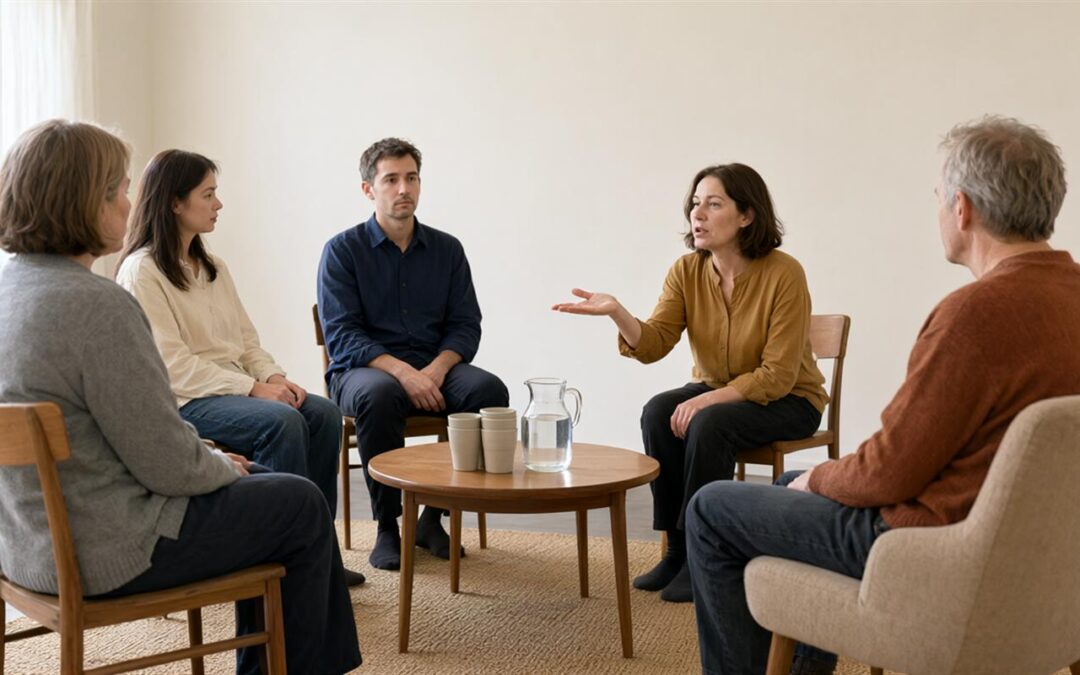
A small group can sit in a circle for half an hour and leave with something that stays with them through the week. That outcome is rarely the product of inspiration. It usually comes from a plan written days earlier, when the room was empty and nobody was waiting to speak.
If the search that led here was a “values centered wellness conversation,” what follows is the planning document behind it: one value at the center, a sequence that fits inside thirty minutes, and a close that sends each person out with a single next step. Structure matters more than wording. A group will forgive an awkward opening. It rarely recovers from a half hour with no shape at all.
Why a Thirty-Minute Frame Works for a Small Group
Thirty minutes is long enough for one honest answer from each person and short enough that people agree to come. That combination is harder to find than it sounds. An hour invites drift, and a fifteen-minute slot leaves no room for the second answer, which is usually the one worth hearing.
A short frame also changes what gets asked. One good question, answered by six people, produces more than six questions that the room politely declines. The constraint is the point: it forces the organizer to choose the value, choose the question, and trust the room with the rest.
What a Small Group Wellness Discussion Plan Needs to Hold
A workable small group wellness discussion plan fits on one page and holds five things: a purpose sentence, the names of who is in the room, the one value at the center, the order of the conversation, and the ask that closes it. Each element answers a question the room would otherwise ask silently. The purpose sentence answers why everyone is here. The names answer who is speaking and to whom. The value answers what is being discussed. The order answers what happens next. The closing ask answers what to do with the half hour once it is over.
Five elements, one page. If the plan runs longer than that, it is probably two sessions wearing one date, and the group will feel the squeeze somewhere around minute twenty.
Choosing the Value at the Center
One value, not six. The test is simple enough to apply in a hallway: can this group talk about it for twenty minutes without anyone needing to be corrected? Rest, patience, honesty, hospitality, courage, and gratitude pass that test. A phrase like “better boundaries” fails it, because it is an instruction dressed as a value, and someone in the room will be told, gently, that they are doing it wrong.
Listen for the word the group already repeats. Ask two or three people who know the community what keeps coming up in ordinary conversation, what people apologize for, what they celebrate. The value is usually already in the room; the plan only names it. The Healing Corner, a practice in Accokeek, Maryland, describes its work as balance of mind, body, and spirit, and a value can sit in any one of those three without the discussion turning clinical. Where a routine looks healthy on paper yet feels disconnected from purpose, the work of bringing personal purpose into a wellness routine covers that ground in more detail.
Designing a Faith Community Wellness Conversation
A faith community wellness conversation goes wrong in a predictable way: the language of the plan belongs to a different room. Use the words the community already uses. A group that says “the Lord” will not be helped by a plan that says “the universe,” and a gathering that prays before meals will notice a plan that opens with a breathing exercise borrowed from somewhere else.
If prayer, a verse, or a minute of silence is customary, build it into the first five minutes and let it belong to the group rather than to the facilitator. When the belief mix is unclear, ask one lay leader before the day arrives; a wrong assumption about the opening is louder than no opening at all. In a room with mixed beliefs, say the frame out loud: this half hour is about rest, or grief, or gratitude, not about settling doctrine. Doctrinal argument costs the wellness topic every time it starts, and thirty minutes is not enough to recover the room. Real Talk Health Talk, a live online conversation where faith meets wellness, is one example of a format that keeps the door open without requiring agreement on everything behind it.
A Thirty-Minute Run of Show
The plan below is a guardrail, not a script. Write it down, then hold it loosely enough that a real answer is not cut off at a minute mark.
- Minute 0 to 5: settle the room, name the purpose in one sentence, and say how the half hour will run.
- Minute 5 to 12: name the value at the center and ask what it looks like in an ordinary week.
- Minute 12 to 22: take one deeper question and let three or four people answer, without filling the pauses.
- Minute 22 to 27: ask each person for one small next step they can name before the next gathering.
- Minute 27 to 30: thank the room, confirm the next date, and close on time.
The times are approximate on purpose. What turns a list of values into a values centered wellness conversation is the order: naming, describing, sitting with one question, and choosing something to carry out. Skip the last block and the group leaves with a good feeling and no handle to hold.
Keeping the Room Steady: Silence, Dominance, and Disclosure
Three things happen in almost every small group, and each has a simple response. Silence needs ten seconds of patience and a narrower question. Not “what does rest mean to you,” but “what did rest look like on Tuesday?” One person answering everything needs a light redirect — “let’s hear from someone who hasn’t spoken yet” — and a round that gives each person a turn without inviting anyone to compete.
A disclosure heavier than the topic asked for is the third, and the response is restraint. Thank the person, do not interpret what was said, and do not offer a plan for their life in front of the whole room. Offer a private conversation after the session instead. When what was shared points toward medical care or crisis support, name that openly and route it to the appropriate professional rather than to the circle. A facilitator who needs more wording than the arc allows can borrow from a facilitation question bank for short community sessions, which carries ready-made prompts for opening, reflecting, and closing.
What to Leave Out of a Short Plan
Leave out diagnosis, advice, and fixing. A thirty-minute conversation is not a counseling session and not a medical appointment, and a group can hold something meaningful without resolving it. The moment an organizer starts solving, the room stops talking and starts waiting to be assessed.
Also leave out the handout nobody reads, the chain of icebreakers, and the instruction to share something vulnerable. Vulnerability offered under instruction is performance, and it sets a bar the rest of the half hour cannot meet.
When the Room Needs More Than a Conversation
Some rooms need teaching as well as talking. If the group keeps circling the same question, if the topic turns clinical, or if the circle is too large for everyone to speak, a facilitated session carries further than a plan an organizer runs alone. The wellness workshops for community groups, caregivers, and youth are 30 to 60 minute facilitated education sessions built around one audience need, and they suit caregiver groups, youth programs, senior centers, and local nonprofits.
Booking one is a conversation before it is a date. A free consultation comes before any booking, and weekday appointments run 8 AM to 5 PM Eastern, with Saturday and Sunday closed.
Key Takeaways
One value carries a half hour; six values carry nothing. A plan that fits on one page is a plan a volunteer can actually run. The close is a next step, not a summary of what was said. Silence usually means the question was too wide, not that the group is unwilling. And when the room needs information rather than reflection, a facilitated session is the honest answer.
Conclusion
The organizer who holds the room and the thirty minutes has more influence on the outcome than the topic does. Choose one value the group already lives by, write a single page, keep the close on time, and let the discussion be as ordinary as the week it came from. An organizer who wants to talk through the format before a date is set can contact the practice and ask.